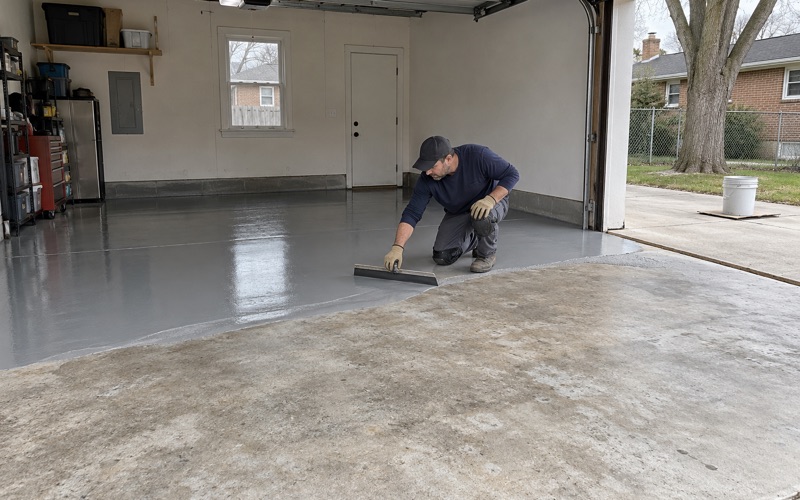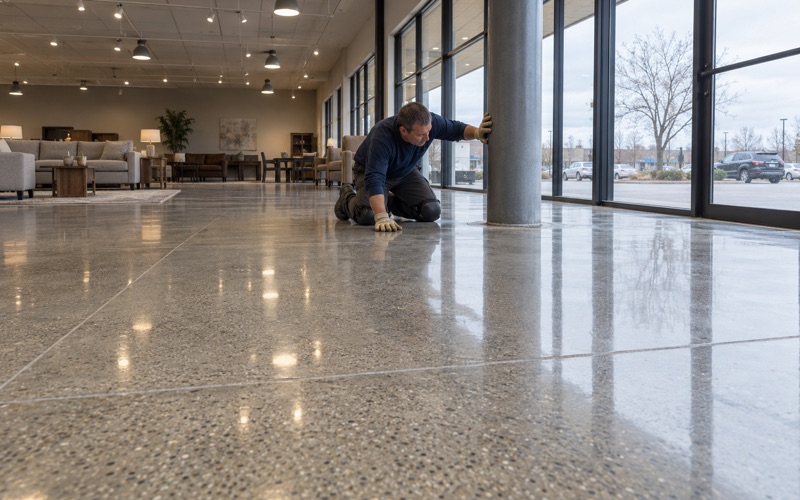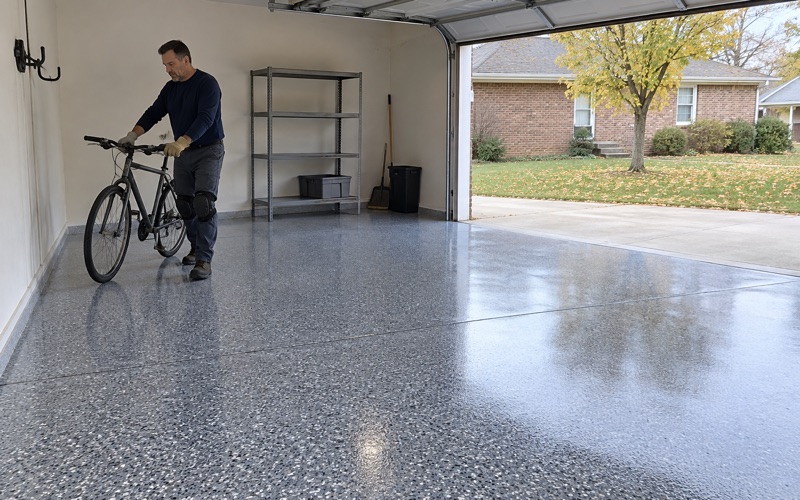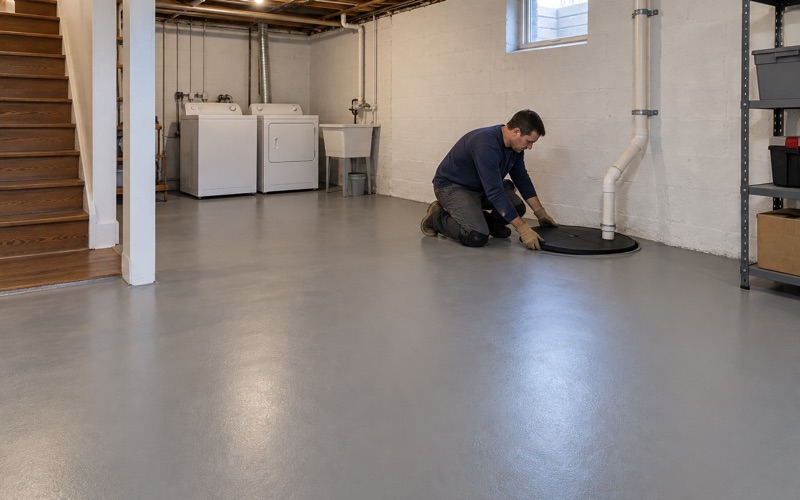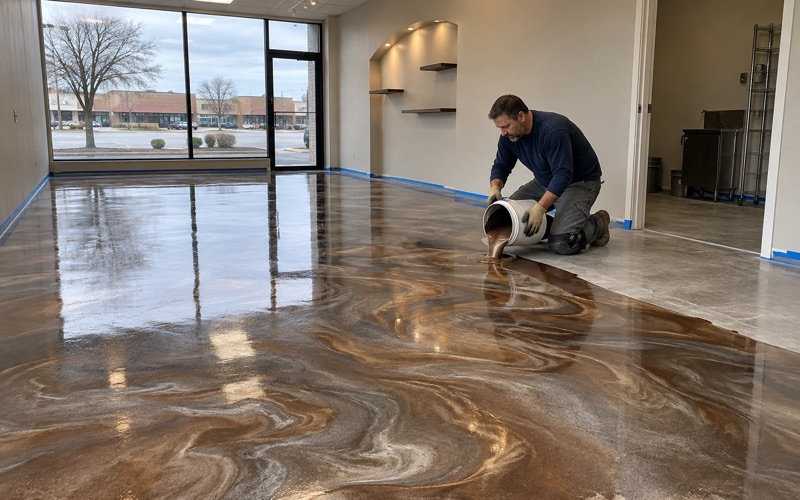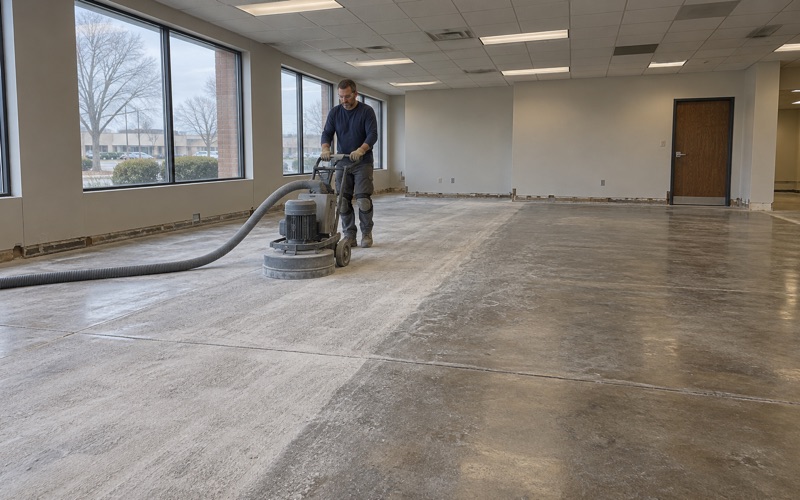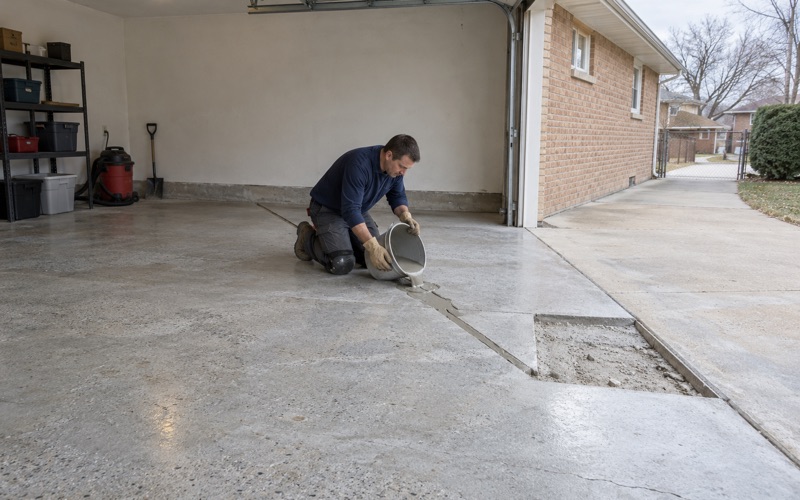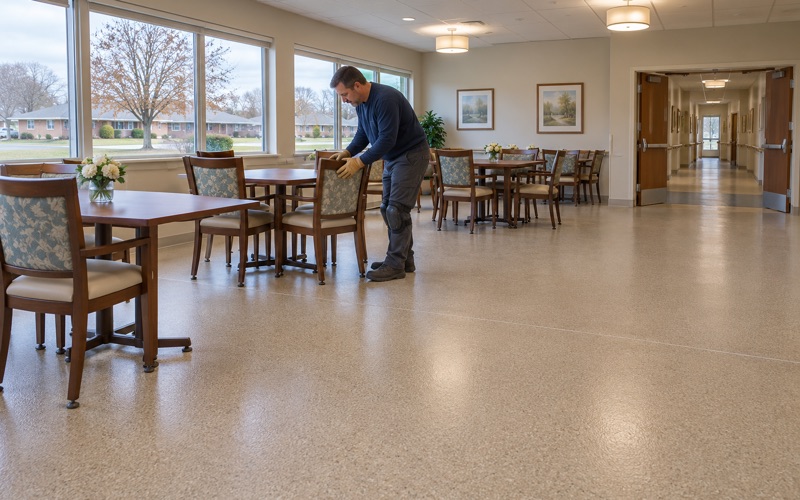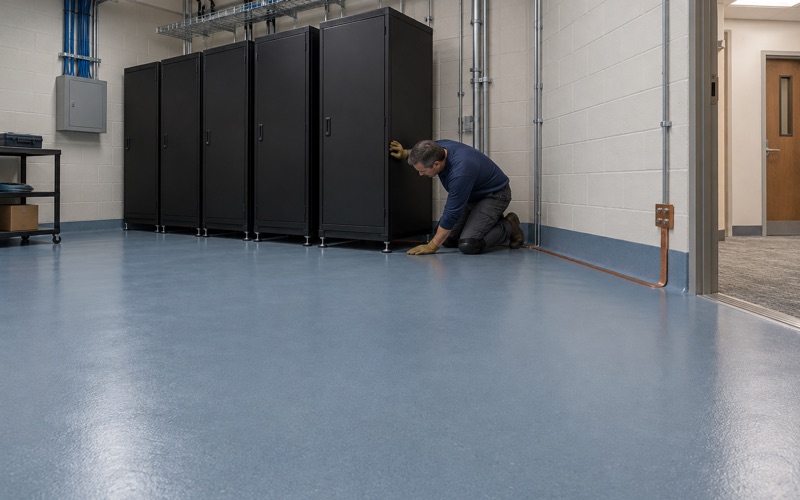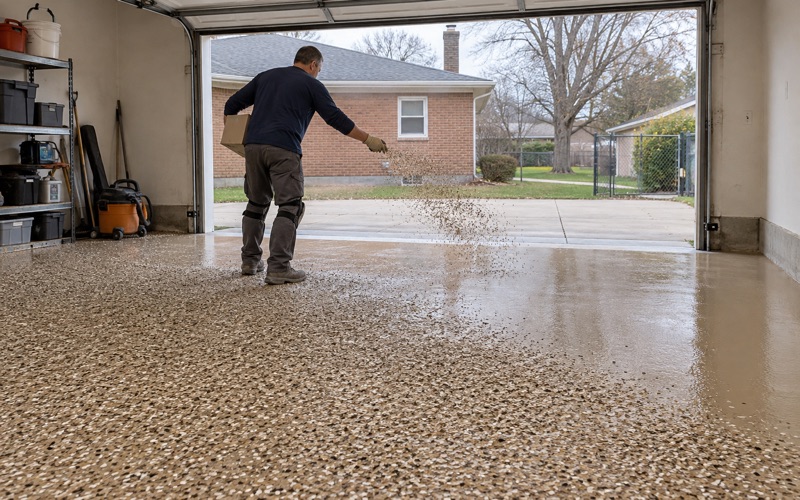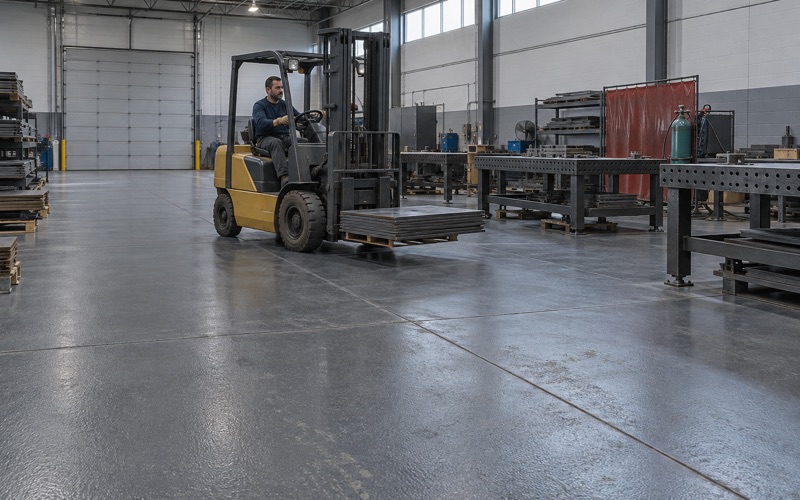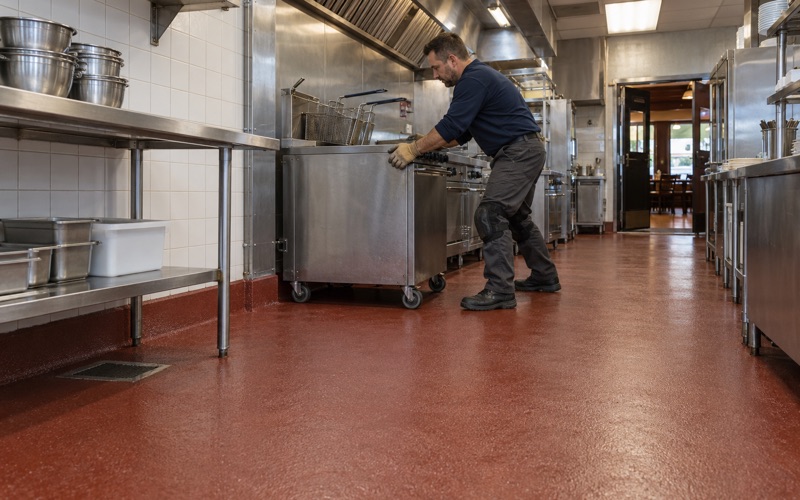
Oak Lawn Epoxy Flooring has spent more than 20 years installing epoxy flooring in Alsip shops, warehouses, garages and basements, and every job starts with the slab rather than the sales sheet. We open each floor with a diamond grinder or a shot blaster, never an acid etch, because a coating holds only as well as the profile it bonds to. A moisture test is written into the scope before any price is final.
Our proposals name the product line, the number of coats and the finished thickness, so whoever signs off can hold the installed floor against the quote. Cracks, spalls and failing old coatings are mapped on the first visit. When a slab needs repair or replacement before it should be coated, we say so plainly instead of hiding the problem under a fresh topcoat.
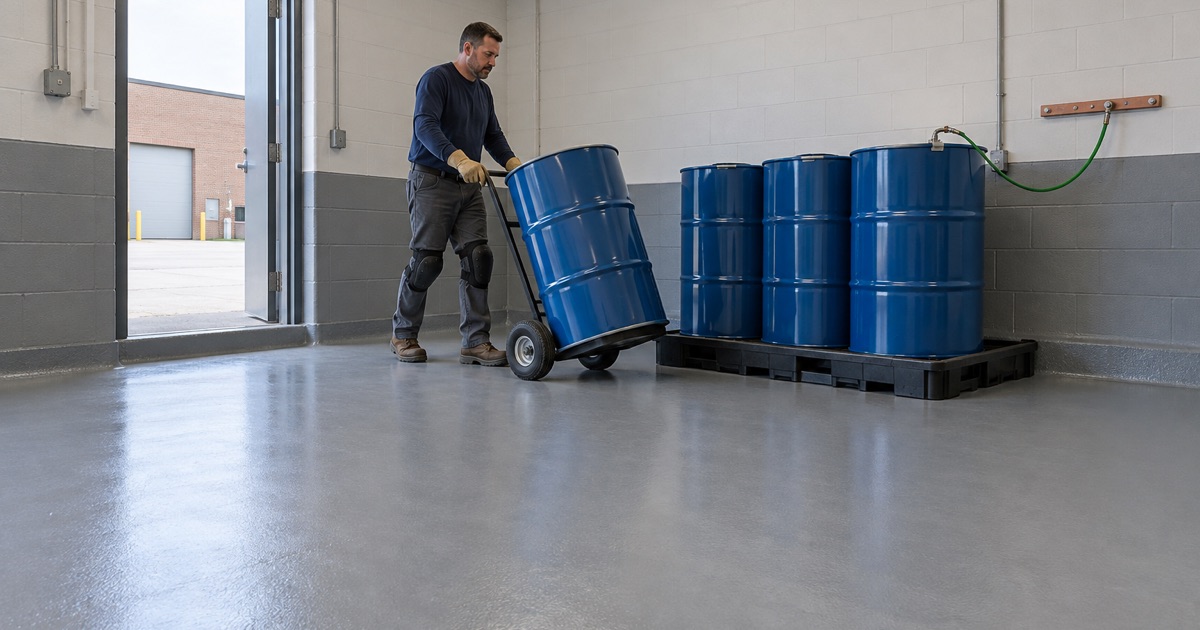
This page looks closely at one kind of Alsip floor: the production room where a flammable solvent is filled, mixed or stored. That floor has to do more than look clean. It has to stand up to the chemical, let a spill be contained and lifted, and fit inside a static-control plan that belongs to the plant’s own safety staff.
A Dental-Acrylics Maker on 117th Place
Reliance Dental and the DuraLay Line
Alsip makes dental acrylics. Reliance Dental Mfg. operates at 5805 W. 117th Place, an address that geocodes inside the village, in Worth Township, Cook County. The company makes the DuraLay pattern resin, DuraLay temporary crown and bridge, DuraSeal temporary filling acrylic, the Dura denture reline and rebase line, and Durasplint.
We name Reliance here as a local landmark, not as a customer. We have not seen what the company fills on site, how its rooms are laid out or what is on its floors. What we have read is its published safety data sheet, and that document says a great deal about what any floor near the product would have to do.
The village’s dental-materials cluster does not stop on 117th Place. GC America and GC Orthodontics America also carry Alsip addresses, GC America on West 127th Street. Every one of these plants writes its own chemical list, and a sound floor specification follows that list rather than a catalog page.
What the DuraLay Liquid Sheet Says
The safety data sheet for DuraLay Liquid names Reliance Dental Mfg., LLC at the 117th Place address in Section 1. Section 3 lists the contents as methyl methacrylate, CAS 80-62-6, at 90 to 100 percent. Section 2 classifies the liquid as Flammable Liquid Category 2, a highly flammable liquid and vapor, under the signal word Danger.
The precautionary statements read like part of a floor specification written by someone else: ground and bond the container and receiving equipment, use explosion-proof equipment and only non-sparking tools, and take precautionary measures against static discharge. Section 5 adds that the vapors are heavier than air and may travel to an ignition source, and it warns of runaway polymerization.
Section 6 covers the spill itself: extinguish all ignition sources, dike and contain the spill with inert material such as sand or earth, maximize ventilation, and wash the affected areas with plenty of warm water and soap. It also says to keep spills and cleaning runoff out of municipal sewers, and it notes that clean-up materials may be RCRA hazardous waste.
Looking for epoxy-flooring closer to Bridgeview? See Epoxy-Flooring Services in Bridgeview.
Methyl Methacrylate Against the Chemical-Resistance Chart
Why a Monomer Is a Different Test
Most chemical questions on a plant floor are about acids, caustics, oils or cleaners. Methyl methacrylate is a solvent-class monomer, and solvents tend to work on a cured film differently, softening, swelling or dulling it rather than etching it. A floor that shrugs off a degreaser can still be the wrong floor for a bench where monomer drips during filling.
So the first document we ask for is the coating manufacturer’s chemical-resistance chart, and we look for methyl methacrylate by name. If the chart leaves it out, or rates it only for brief splash contact, the plant’s engineers learn that before any money is spent. We do not promise a floor the monomer cannot touch; the resin maker’s published data is the evidence, and we hand it over.
Matching the System to the Exposure
Exposure decides the system as much as the chemical does. A filling bench where drips sit until the end of a shift is a harsher test than a storage aisle where a closed container might leak once in a long while. We map those zones with the plant’s staff, then check 100% solids epoxy, urethane cement and polyaspartic or polyurea topcoats against the chart for each one.
When the data says a coating tolerates a spill for a limited window, that window becomes part of the clean-up plan rather than a footnote. A floor rated for an hour of contact needs a spill crew working inside that hour, and the plant should know so before the first coat goes down.
Preparing the Slab for the Chemistry
Surface preparation matters more in a solvent room, not less. We grind or shot blast the slab to the profile the system calls for on the ICRI CSP scale and check that profile before the primer goes down. A coating with weak adhesion hands a solvent an edge to work under.
Moisture belongs in the same conversation. The slab gets ASTM F1869 calcium chloride testing or ASTM F2170 in-situ relative humidity probes, and the warranty exclusions are explained before the job is sold, with moisture named first. A plant that knows what a warranty leaves out can decide how to cover the gap.
Grounding, Bonding and the Static Question
The Decision Belongs to the Plant
The DuraLay Liquid sheet tells handlers to ground and bond containers and to guard against static discharge. Where the floor fits into that plan is an engineering question for the plant’s safety staff, not one an installer answers from a sales counter. We ask who owns the static program before we quote, and that answer shapes the rest of the proposal.
Some plants call for a floor with a measured resistance range, the static-dissipative and ESD flooring category. Others rely on grounding cables, bonded containers and conductive footwear, and want a plain, chemical-resistant floor underneath. We have no static rating on record for any system described on this page, so we will not call a floor anti-static on our own say-so.
What We Bring to That Conversation
When a plant asks for a resistance-rated floor, we bring the manufacturer’s published range and test method to its safety staff and build the proposal around that product line by name. The proposal states the coat count and the finished thickness, so the installed system can be measured against what the engineers approved rather than against a memory of a meeting.
The installation respects the hazard too. A room where flammable liquid is handled has to be cleared of monomer and vapor before grinding begins, and our crew sets that sequence with the plant instead of assuming it. Cure schedules follow slab temperature and the dew point spread at the surface, not a date on the calendar, so a coating is never rushed back into chemical service.
Coating Vapors in a Monomer Building
Floor coatings bring vapors of their own, so we choose products inside the Illinois VOC limits in 35 Ill. Adm. Code Part 223, which bind the person applying them. In a building that already manages a flammable monomer, a second vapor source is a scheduling decision, and we plan each coat around production and the plant’s ventilation rather than around our own convenience.
Epoxy chemistry adds one more check. Amine blush can form on a curing epoxy surface in cool, damp air, and a topcoat laid over it bonds poorly, which is the last thing a solvent floor needs. We check for it between coats and clean it off before the next layer rather than trusting the clock.
Diking a Spill and Keeping It Off the Drain
A Surface a Spill Can Be Lifted From
Section 6 of the sheet pictures a spill ringed with sand or earth, absorbed, lifted and then washed down with warm water and soap. The floor’s part in that is easy to state: a seamless, nonporous surface keeps the liquid on top where absorbent can reach it, instead of letting it soak into bare concrete or creep under a loose coating edge.
Texture is a tradeoff. A quartz aggregate broadcast gives footing when the floor is wet, but a heavy profile holds absorbent and residue in its valleys long after the spill is gone. We choose a texture the clean-up crew can actually sweep and wash, and we put samples in front of the people who will be holding the broom.
Floor Drains and the Runoff Rule
The sheet says to keep spills and cleaning runoff out of municipal sewers. In a production room with a floor drain, the coating layout matters: the slope, the joint where floor meets drain, and how a drain is protected during a spill all belong to the plant’s plan. A coating is no substitute for the secondary containment a plant’s environmental staff specify, and we never sell it as one.
Our own work follows the same rule. Grinding dust is captured at the machine by a vacuum, and nothing from the prep is rinsed toward a floor drain or a storm inlet. Alsip lies in MWRD’s Calumet-Sag Channel watershed planning area, and the district’s current list of significant industrial users names several Alsip plants.
Smaller Production Floors Around the Village
Alsip is described as about 60 percent residential and 40 percent commercial and industrial, and the Tri-State Tollway, I-294, runs through it. A smaller production or packaging room that handles a solvent, an adhesive or a resin at one bench faces the same questions on a smaller scale: what the sheet says, what the chart says and who owns the static plan.
Building permits and code questions go to the Village of Alsip Building Department, which works from a building code adopted in 2007 on an IBC basis, and the Alsip Fire Department is the village’s own. Illinois licenses no flooring or coatings contractor, so we check the village’s contractor license requirements before a job is booked rather than after the crew arrives.
From there the work is the same in a dental-materials room or a small fabrication shop. We walk the room, read the plant’s own safety data sheets, put the chemical-resistance chart beside them, and write a scope that names every coat, the finished thickness and what the warranty does not cover.
- 20+ Years Coating Concrete
- Moisture Tested Before Pricing
- Free Written Estimates