Oak Lawn Epoxy Flooring has been installing epoxy-flooring in Bellwood and nearby suburbs for more than 20 years, and the floors we think hardest about are working floors. A shop or plant slab is judged by what rolls across it, what drops on it and what gets swept off it at the end of a shift. Gloss comes last on that list.
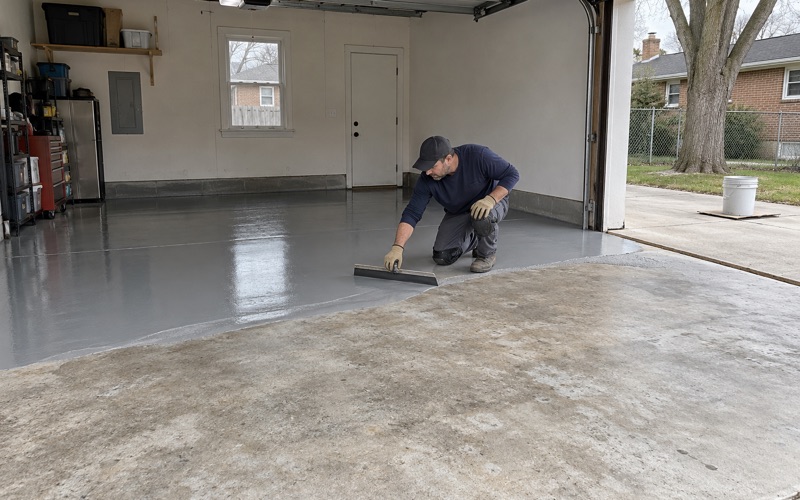
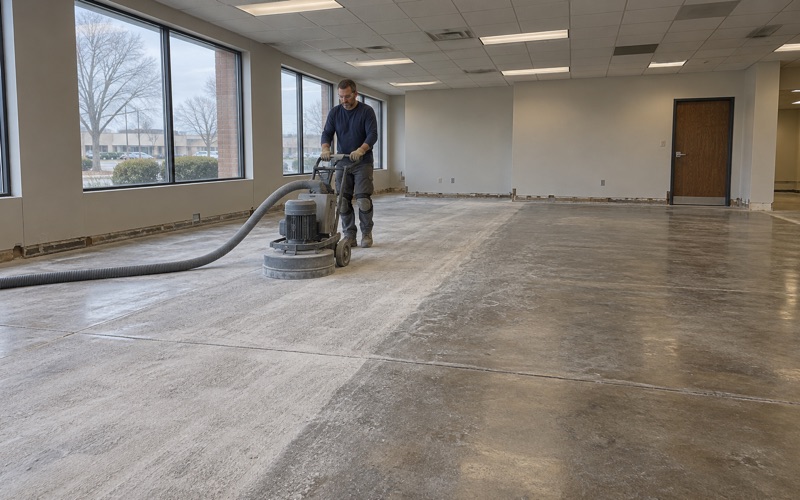
Every job starts with a map of the slab: cracks, spalls and any old coating are marked, and we tell you plainly when a section needs repair or replacement before anything goes over it. Then the concrete is opened with a diamond grinder or a shot blaster to a measurable ICRI surface profile, never acid-etched, so the primer has real texture to grab.
The written proposal names the product line, the number of coats and the finished thickness. It also includes a moisture test before the price is final, which means the floor you end up with can be checked against the paper you signed.
A Press Plant on 25th Avenue and What It Teaches About Floors
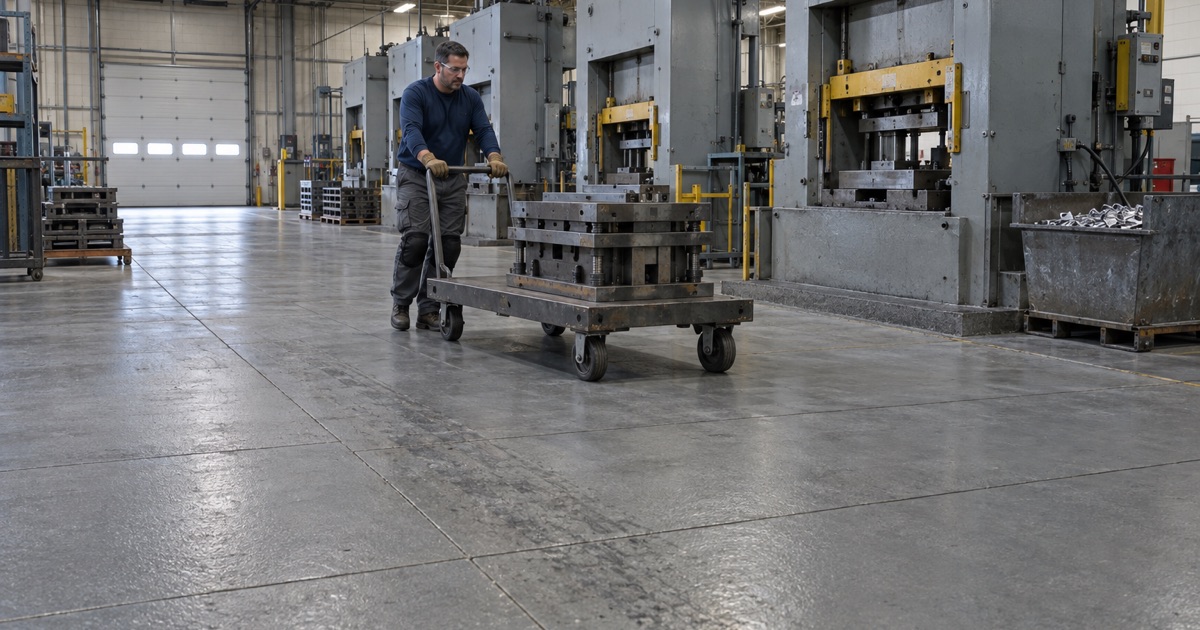
Bellwood is a village in Proviso Township, Cook County, and it still stamps steel. BorgWarner’s plant at 700 25th Avenue appears on the Metropolitan Water Reclamation District’s Significant Industrial Users list as of July 2025, filed under the federal metal finishing category. The company’s Bellwood job postings describe what the work inside looks like.
On the steel side, operators set up automatic presses that blank friction core plates, inspect the parts for flatness, hardness and concentricity, and clear material jams in the press. On the paper side, automatic presses blank friction material facings, and the postings put average output at about 60,000 facings per machine per shift. Both jobs end with the operator cleaning the work center and removing scrap from the area.
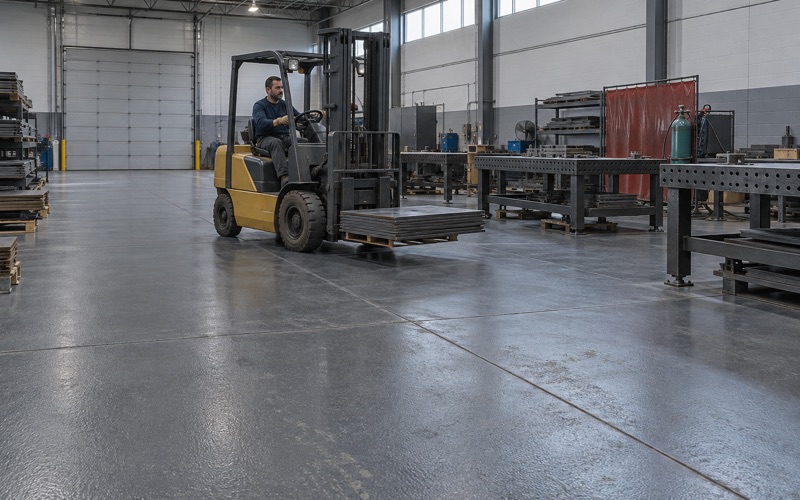
We have never worked inside that plant, and we do not know what its floors are made of. What the postings do describe is the kind of punishment a press-room slab takes. That makes them a useful model for any slab that carries steel tooling on small wheels, whether it sits in a plant bay or a detached garage.
Why output numbers matter to a floor
A line producing tens of thousands of parts a shift is a line that cannot stop for long. A floor under that kind of schedule usually gets one shutdown window, often a weekend or a holiday stretch, and the coating has to be cured and ready for load when the presses restart. That pushes system choice toward fast-return topcoats such as polyaspartic, or toward urethane cement where heat and impact are part of the exposure.
Cure follows the slab, not the calendar
A tight schedule still has to respect the concrete. We read slab temperature and the dew point spread at the surface before anything is mixed, because a coating laid on a cold, damp slab can develop amine blush or cure soft. If the window is too cold, we say so and move the date rather than gamble on a floor that has to be ground off later.
Looking for epoxy-flooring closer to Matteson? See Epoxy-Flooring in Matteson.
Die Carts, Hoists and the Heaviest Rolling Load in the Room
The Bellwood steel blanking posting lists a power die cart, a manual die cart and a hoist among the operator’s tools. The same posting makes breaking down setups at job changes, then transporting and storing all production tooling, part of the job. In floor terms, that is a heavy steel die riding on small wheels, over the same strip of concrete, again and again.
Small, hard wheels under a concentrated load are what tear thin coatings apart. The weight sits on a contact patch not much bigger than a thumbnail, and every pivot scrubs at the film. A thin roll-on epoxy over a lightly prepared slab will scuff first, then chip at the joints, and finally peel in a line that traces the cart’s route.
Building thickness where the carts travel
For a die-cart route we look at a 100% solids epoxy built to real thickness, often with a quartz aggregate broadcast locked between coats. Where hot parts, impact and washdown are all present, urethane cement is the stronger candidate. Either way, the proposal states the thickness for that path in writing, because the route is where a thin film fails first.
Joints, cracks and spalled edges
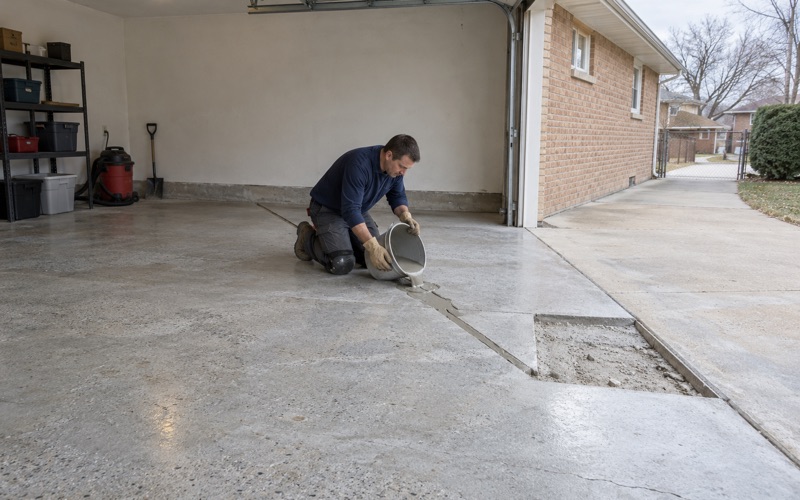
Saw-cut joints and cracks are the weak line under a cart wheel. We fill and level them before coating so a wheel rolls across instead of dropping into the gap and hammering the edge. Spalled joint edges are rebuilt with repair mortar first, since a coating can only bridge what is solid underneath it.
The landing zone under a hoist
Where a hoist lowers a die onto a cart, the floor below takes dropped weight rather than rolling weight. That zone earns the thickest section of the system and the most careful prep. If the slab there is hollow or broken, we would rather say it needs repair than seal over a void that cracks the first time something lands on it.
Steel Scrap, Slugs and a Floor Divided Into Jobs
Blanking a plate out of steel leaves skeleton strip and slugs behind, which is why clearing scrap from each work center is written into the operator’s routine. Scrap is a hazard to the coating as much as to boots. A sharp steel slug trapped under a cart wheel or a boot heel acts like a small chisel, gouging a soft topcoat with every pass.
Choosing a surface that survives scrap
Hardness and texture matter more than shine on a floor like this. A broadcast quartz surface sealed with a hard topcoat resists gouging and keeps its grip when grease from the presses gets tracked out, while a smooth high-gloss finish shows every scratch within weeks. We tune the texture to the room: enough bite for work boots, not so much that a broom cannot sweep slugs out of it.
Die-change areas, aisles and press bases
A press room is rarely one floor. There is the die-change area where carts park and hoists work, the aisle where people and forklifts move, and the bases of the presses themselves, where grease and lubricant tend to build up. We zone those areas with different build thickness and, where it helps, different colors, so the floor itself shows where a die cart should stop and where foot traffic belongs.
Striping and colored zones are built into the coating rather than painted on top. That way they wear at the same rate as the floor around them instead of flaking off ahead of it. A clear boundary between a die-change pad and a walking aisle also gives a supervisor something to enforce.
Keeping the dust out of the drains
Grinding an industrial slab throws off a lot of fine concrete dust and old coating. We capture it at the machine with a vacuum instead of rinsing it toward a floor drain or a storm inlet. The products we choose also sit inside the Illinois VOC limits for floor and industrial coatings, which bind whoever applies them.
From a Press Room to a Home Metal Shop
Plenty of the floors we are asked about are nothing like an industrial plant. They are a garage turned into a fabrication bench, a basement with a drill press and a band saw, or a two-car bay where someone welds on weekends. The mechanics are the same as the press room, only smaller.
Hard wheels on a home floor
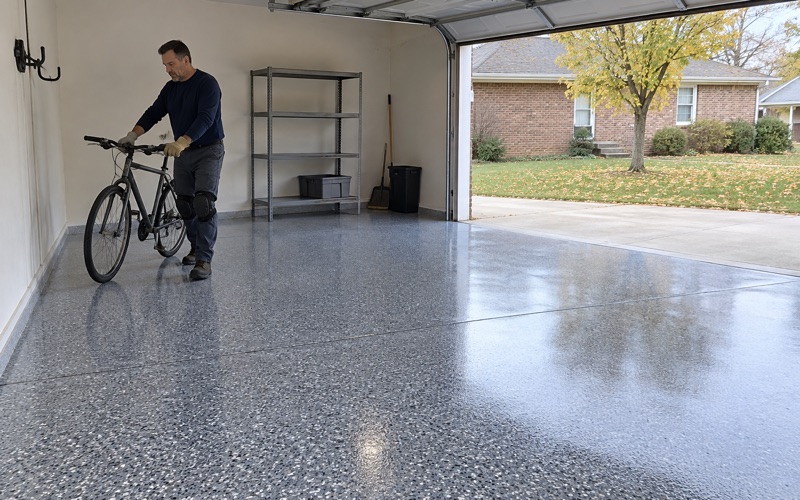
A rolling tool chest, an engine hoist or a welding cart on hard casters loads the floor the way a die cart does, on a few small contact points. Polyurethane casters are kinder than steel or hard nylon, but the coating still needs enough thickness to take a loaded cart turning in place. For a home shop we usually recommend a full-broadcast system with a polyaspartic or polyurea topcoat over a 100% solids base coat, rather than one thin coat with a light scatter of vinyl flake.
Offcuts, sparks and dropped stock
Steel offcuts from a cutoff saw land edge-first, and an angle grinder throws hot sparks across the floor. A harder topcoat over a textured broadcast hides small marks and resists the deep ones, and a quartz-filled system takes impact better than flake alone. Where hot slag falls every session, such as under a welding table, a steel plate or welding mat over the coating is still the right answer.
Moisture, warranties and paperwork
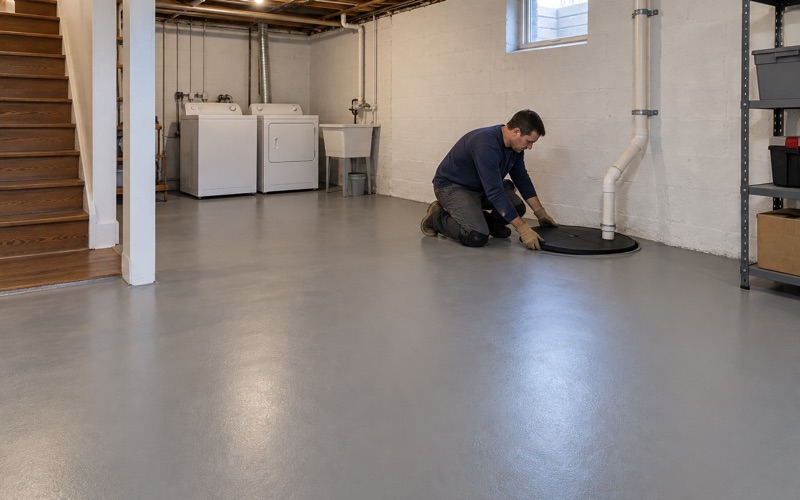
We test before the price is final, using ASTM F2170 in-situ relative humidity probes or an ASTM F1869 calcium chloride test. The proposal spells out what the coating warranty leaves out, and moisture is the first exclusion we name, because vapor rising through a slab can push any coating off it. Home jobs over the state threshold get a written contract and the Home Repair: Know Your Consumer Rights pamphlet before any grinding starts.
Who signs off in Bellwood
Illinois has no state flooring license, so we check the Village of Bellwood Building Department’s registration, bond and insurance requirements before booking the work. If a project grows beyond a coating into slab replacement, that department is the one to call about permits.
Whether the floor carries a die cart or a tool chest, the questions come in the same order: what rolls on it, what falls on it and what gets swept off it. We answer those first and pick the system second.
- 20+ Years Coating Concrete
- Moisture Tested Before Pricing
- Free Written Estimates