Oak Lawn Epoxy Flooring has handled epoxy-flooring in Chicago Ridge for more than 20 years, and the floors that teach us the most are the ones hosed down every single day. A kennel run, a grooming room or a dog wash bay is soaked, scrubbed and drained on a schedule that would ruin a coating chosen for looks alone.
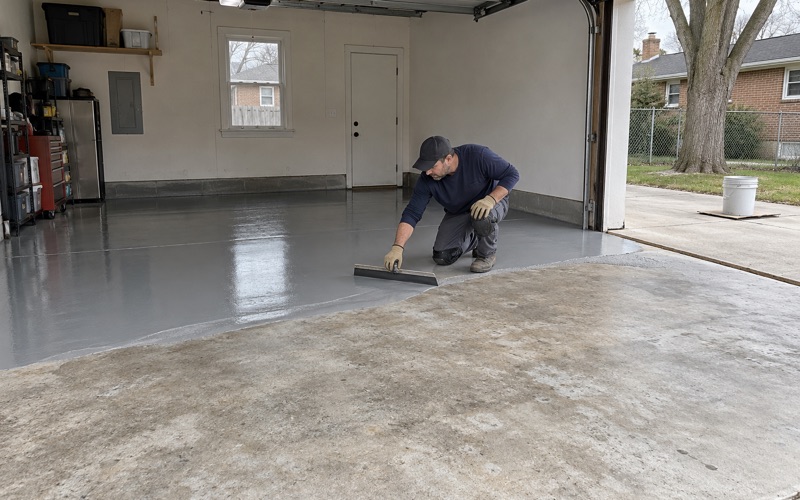
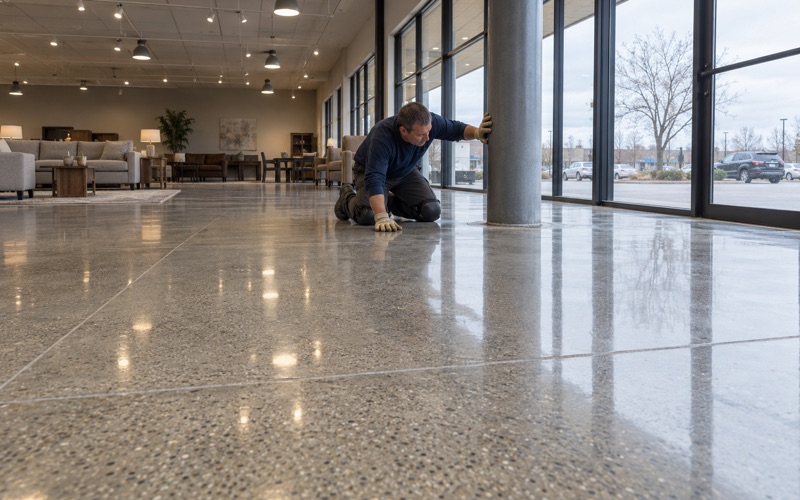
Those wet-use floors shape how we work everywhere. Each slab is opened with a diamond grinder or a shot blaster, never an acid etch, because a surface that lives under standing water depends on its bond more than on anything painted over it. A moisture test is written into the scope before the price is final, and the proposal spells out the product line, the coat count and the finished thickness, so you can measure the floor against the paperwork.
Before quoting, we also map cracks, spalls and any old coating already on the concrete. When a slab needs repair or replacement before it should be coated, we tell you at the walkthrough. A floor that gets washed daily exposes every shortcut faster than a dry one does, so it is better to settle those questions on day one.
A Shelter on Southwest Highway and the State’s Floor Rules
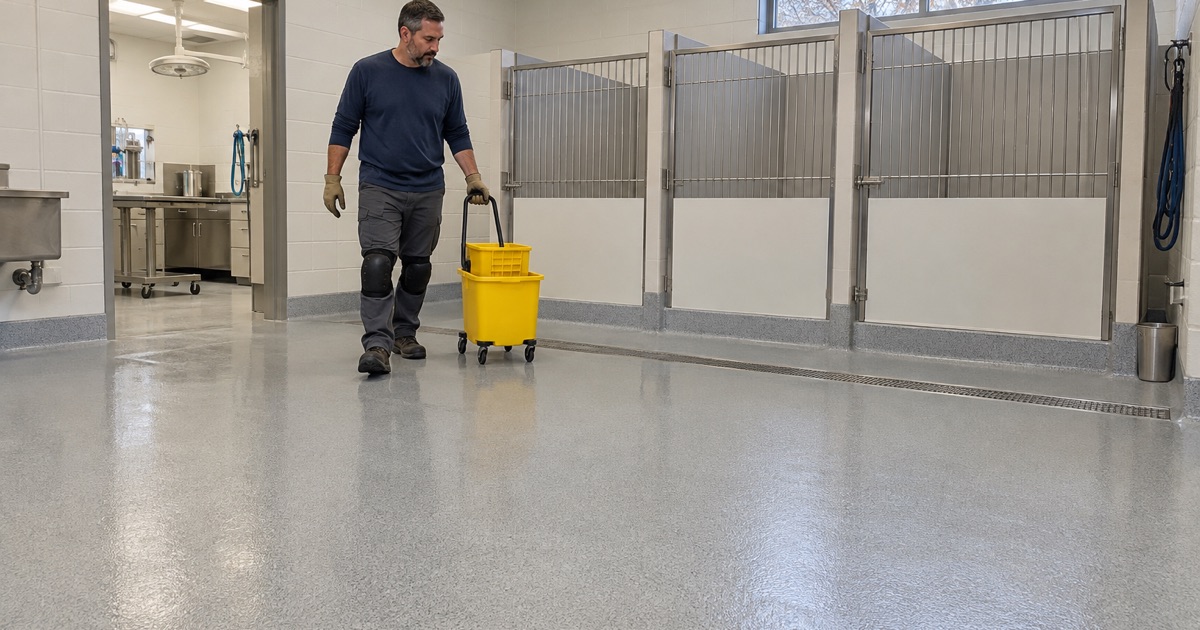
The Animal Welfare League in Chicago Ridge
Chicago Ridge is a village in Worth Township, Cook County, with 14,433 residents at the 2020 census. It is also the home of the Animal Welfare League’s location at 10305 Southwest Highway. The league, established in 1935, shelters stray, lost and unwanted animals, and its Chicago Ridge site is where adoptions take place.
The same address houses a low-cost clinic that is open to the public, offering vaccinations, spaying and neutering, microchipping and dental cleanings. The league runs a second facility on South Wabash Avenue in Chicago. We mention the shelter as a neighbor, not a client: we have not seen its floors, its run layout or the products it cleans with. What it offers is a clear local example of a building where hygiene is the whole point of the floor.
What 8 Ill. Adm. Code 25.20 Says
The rules under the Illinois Animal Welfare Act, at 8 Ill. Adm. Code 25.20, cover buildings that licensees use to house or display animals. Floors there “shall be of permanent construction to enable thorough cleaning and sanitizing,” and dirt or unfinished wood floors are unacceptable outside equine shelters. Cleaning must be performed daily, or more often if necessary, to prevent any accumulation of debris, dirt or waste.
The section goes on to say that for new construction or remodeling, runs are surfaced with concrete or other impervious material that can be cleaned and kept free from excessive accumulation of animal waste. Provision must also be made for adequate drainage, including gutters and discharge into a sewer, septic tank or filter field.
Reading the Rule as a Floor Installer
The rule names no coating, approves no product and certifies no installer. What it sets is a performance standard: a surface that comes completely clean every day and keeps doing so. Concrete is named as acceptable, but bare concrete is porous, and years of daily washing let it absorb moisture, odor and stains. That is why animal spaces of every size end up considering a sealed resinous surface over the slab.
Read that way, a kennel-run floor has three jobs. It has to shed water and waste instead of soaking them up, carry that water to a gutter instead of pooling it, and survive the cleaning routine as well as the animals.
Looking for epoxy-flooring closer to Evergreen Park? See Epoxy-Flooring Services in Evergreen Park.
Hosed Every Day: Water, Waste and Disinfectant on a Run
Standing Water and the Bond
A run cleaned daily spends a real share of its life wet. Water sits in low spots, works into hairline cracks and tests the edge of the coating wherever it was applied thin. Coatings on wash-down floors rarely wear through first; they lose their grip on the concrete, then peel back from the edges.
That is why we grind or shot blast to a measured profile on the ICRI CSP scale instead of etching with acid. An etch can leave residue and an uneven, shallow surface that holds a coating only until water finds the weak spots. A 100% solids epoxy base builds enough thickness to bridge minor surface texture, and a polyaspartic or urethane cement system on top suits floors that take hot water and repeated chemical cleaning.
Moisture From Below
Water arriving from above is only half the picture. A slab on grade can push vapor up from the soil, and a coating sealed over a damp slab can blister even if no one ever hoses it. We test with ASTM F1869 calcium chloride kits or ASTM F2170 in-situ relative humidity probes and compare the readings against the coating manufacturer’s limits.
When the numbers run high, we specify a moisture-mitigation primer rather than hoping the slab dries out. Moisture is also the first exclusion we name when we walk you through what a coating warranty does not cover, and we do that before the job is sold, not after a problem shows up.
Disinfectant, Waste and the Topcoat
Animal waste and the disinfectants used to clean up after it are both chemical exposures, and they arrive together every day. A coating does not disinfect anything by itself. Its job is to give the cleaning product a smooth, closed surface to work on and rinse from, with no open pores holding residue between washes.
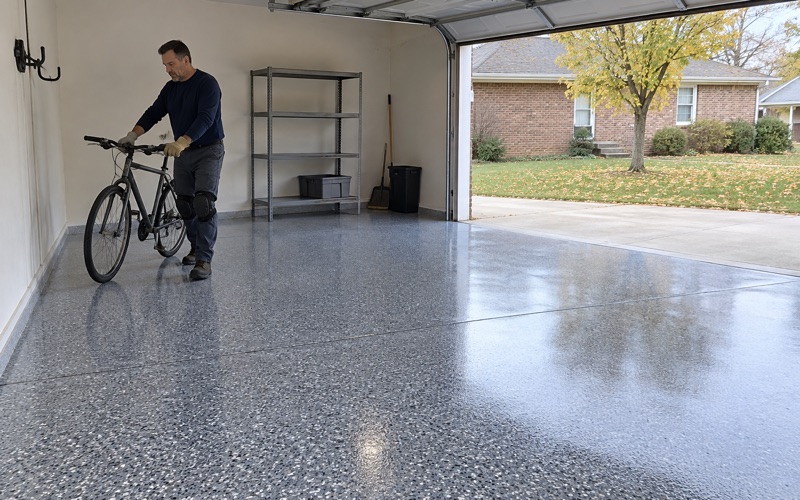
We choose the topcoat for chemical resistance against the cleaners the space actually uses, so it is worth showing us the product labels at the walkthrough. On a floor that people and animals both cross while it is wet, a fine quartz aggregate broadcast in the topcoat adds footing without creating texture that traps soil.
Slope, Gutters and a Sealed Curb Line
Keeping the Fall to the Gutter
The drainage language in 25.20 effectively makes a run floor a sloped floor. Water has to travel from the back of the run toward the gutter, and a coating that builds unevenly can create a small dam or a birdbath halfway down. Before we coat, we check the existing fall with a level along the length of the run.
Where the slab has settled or was never pitched correctly, we say so. A thin coating does not regrade a floor, and filling a low spot with resin is a repair decision to discuss openly, not something to bury in the topcoat. Sometimes the right answer is a patching mortar to restore the pitch before any coating goes down.
The Gutter Edge
The gutter and its grate edge are the wettest part of any run. A coating that stops short leaves raw concrete exactly where the flow concentrates, while one that simply runs over the edge with no termination tends to lift there first. We carry the system into the channel where its construction allows and finish it in a keyed cut, so water crosses one continuous surface on its way to the drain.
Sealing the Curb and Wall Line
Waste collects where the floor meets the curb, the kennel wall or the foot of a partition. If that joint is open, every wash pushes water and soil into it, and the seam becomes the dirtiest spot in the room. We run the coating up the curb or wall as an integral cove, the same idea the FDA Food Code applies to coved floor and wall junctures in food spaces.
A coved base leaves no right-angle seam for material to settle in, and it makes the daily hose-down faster because the water and debris roll back toward the floor. On partitions with metal posts, we detail the coating around each post base, since that is where corrosion and lifting usually begin.
New Runs, Remodels and the Dog Room at Home
When a Run Is Built or Remodeled
The impervious-run requirement applies on new construction or remodeling, which is exactly when a floor decision is made. If you are building a boarding room, a grooming space or a larger kennel area, plan the coating before the slab is poured: pitch to the gutter, a vapor retarder under the slab and a cure period long enough for the concrete to dry. Coating a brand-new slab too soon is one of the most common moisture failures we see.
In Chicago Ridge, the village permit sheet says all construction or remodeling work on or in any type of building needs a building permit, completed by the contractor doing the work with plans the Building Department has approved. Every contractor registers at Village Hall first, which for a general contractor means a $100 fee, a current certificate of insurance and a $10,000 surety or performance bond. Illinois has no state flooring license, so these village requirements are the ones we confirm before a job is booked.
A Dog Room or Wash Area at Home
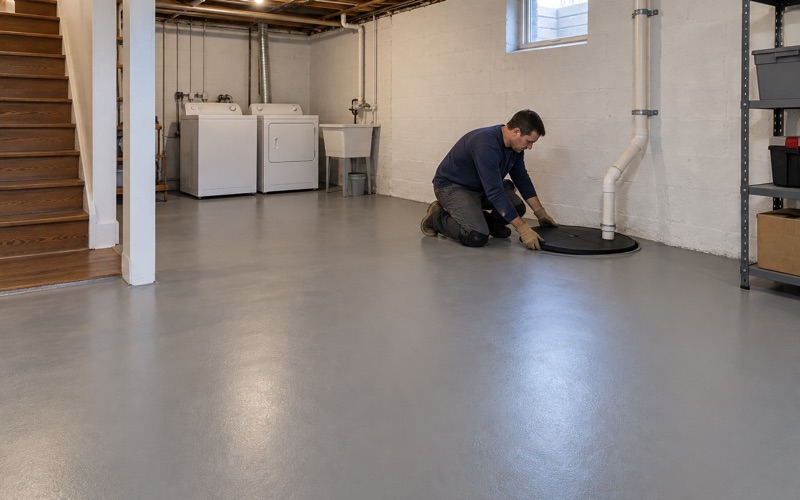
Most of the wet-use floors we coat are not shelters at all. They are a basement dog room, a laundry and wash area off the garage, or a corner of a garage set up for grooming. The same logic applies at a smaller scale: a closed surface that can be washed, a fall toward a floor drain where one exists, and a cove at the walls so wash water does not wick into drywall or a wooden sill.
Older slabs often carry paint or sealer from a previous owner, and that layer has to come off completely before anything new will bond. For home projects over the state threshold, we provide a written contract and the Home Repair: Know Your Consumer Rights pamphlet before any grinding starts. Grinding dust is captured at the machine with a vacuum rather than rinsed toward the floor drain.
What We Tell You Before You Commit
Not every slab is a good candidate. A floor with active cracking, a heaved section or chronic dampness may need repair or replacement first, and we would rather say that at the walkthrough than after a coating lets go. When the slab is sound and the prep is done right, the result is a floor you can hose down every day and expect to stay bonded for years.
- 20+ Years Coating Concrete
- Moisture Tested Before Pricing
- Free Written Estimates