
Oak Lawn Epoxy Flooring installs commercial kitchen flooring in Oak Lawn, IL, serving surrounding cities including Chicago Ridge, Evergreen Park, Worth, Alsip and Bridgeview. With 20+ years of coating concrete, we build seamless, slip-resistant floors for restaurants, bakeries, cafeterias, bars and food prep areas that need to pass inspection, stand up to hot water and keep staff on their feet.
A kitchen floor works harder than almost any other floor in a building. It sees boiling water, grease, sugar, acids from food and cleaning chemicals, heavy carts and constant foot traffic, often all in the same shift. Quarry tile with failing grout and coatings that peel in front of the dish machine are some of the most common problems we are called to fix.
Every kitchen proposal names the system, the thickness, the texture and the cove base details, and the work is scheduled around your service. The slab is ground, tested for moisture and repaired first, because no floor survives a kitchen if it is not bonded properly.
Floor Systems for Commercial Kitchens
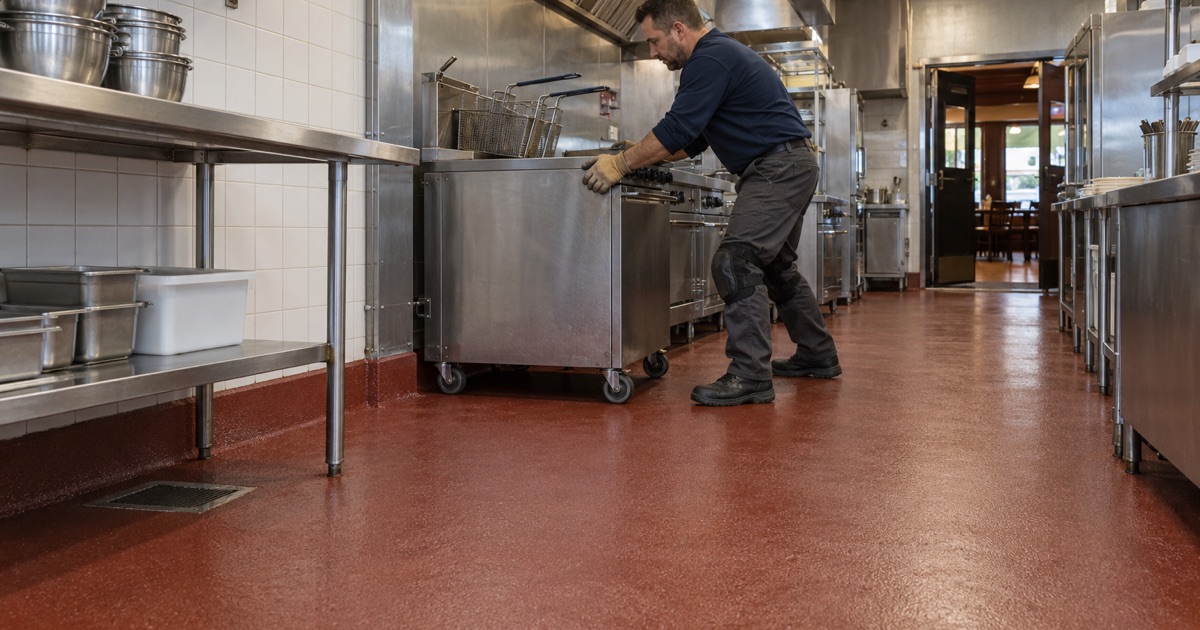
Urethane Cement for Heat and Washdowns
Urethane cement is the system we most often recommend for working kitchens. It tolerates thermal shock from boiling water and steam cleaning, resists many food acids and cleaning chemicals, and handles more moisture in the slab than standard epoxy.
It is installed as a troweled or self-leveling layer, often several times thicker than a typical coating, with a textured finish for grip. In dish areas, fryer lines and around kettles, it holds up where epoxy can soften or crack.
Epoxy and Quartz Systems for Dry Areas
Dry storage, front-of-house service areas and some prep rooms do not see the same heat and moisture. Epoxy and quartz broadcast systems provide a seamless, durable and easy-clean surface at a lower cost than urethane cement.
We match the system to each zone of the kitchen. A single restaurant may have urethane cement in the dish area and cook line, and epoxy with quartz in storage and service areas.
Texture and Slip Resistance
Kitchen floors need grip where water, grease and food spills are common. We add aggregate to the floor surface to provide slip resistance, adjusting the texture so it remains easy to clean.
The FDA Food Code calls for smooth, durable and easily cleanable floors, but it specifically allows anti-slip floor coverings in areas where slipping is a hazard. A properly textured resin floor meets both goals.
Meeting Health Code Expectations
Integral Coved Bases
The joint where floor meets wall is where grease, food and moisture collect. The FDA Food Code calls for coved, closed floor and wall junctures in many food areas, removing the sharp corner that cannot be cleaned properly.
We form integral cove bases from the same resin system as the floor, running a few inches up the wall in a smooth curve. Because the cove and floor are one continuous material, there is no seam for water or grime to get behind.
Drains, Slopes and Washdown Areas
Kitchens that wash floors with water need surfaces sloped toward drains so water does not pool. We rebuild slopes around floor drains and trench drains, sealing the floor tightly to drain bodies so water cannot travel under the floor.
In areas where water flushing is used for cleaning, cove bases and floor-to-drain transitions are especially important. A floor that holds water or lets it seep underneath becomes a sanitation problem and a slip hazard.
Inspections and Local Requirements
Food service businesses in Oak Lawn face health inspections, and the village notes that business licensing may involve additional health inspection costs. Public health oversight for the area comes through the Illinois Department of Public Health and Cook County, and floor finishes are among the things an inspector looks at.
We build floors with those expectations in mind and can provide product data sheets for your records. Drinking and eating places are one of the largest sales categories in the village, and keeping those kitchens open and compliant is the point of the work.
Installing Around Service
Removing Old Tile and Failed Coatings
Many kitchens have quarry tile with broken grout, or old coatings that are peeling. Tile and failed coatings are removed down to sound concrete, and the slab is ground to the profile the new system needs.
Damaged concrete, broken drain surrounds and low spots are repaired before the new floor goes down. Moisture is tested, since kitchen slabs often have years of water exposure and may need a system that tolerates higher moisture.
Nights, Weekends and Phased Work
Restaurants cannot close for a week. We plan installations after closing, over planned slow days or in sections so part of the kitchen keeps operating. Fast-curing urethane cement systems can often return to service the next day.
The schedule is agreed in writing, including which areas are closed, when equipment must be moved and when the floor is ready for traffic. Dust is captured at the grinder to protect food areas and equipment, and nothing is washed toward the floor drains.
Working Around Equipment
Cooking lines, walk-in coolers and dish machines are not easily moved. We plan with you which equipment can be pulled out, which needs a plumber or electrician to disconnect, and where the floor must be finished carefully around fixed equipment legs.
Where equipment sits on the floor permanently, we often recommend lifting it onto the new floor rather than finishing around it, because the area underneath is exactly where grease and moisture build up unseen. When that is not practical, the floor is sealed tightly to the equipment base so water cannot creep beneath the coating at the edge.
Compliance and Warranty
Products are selected within Illinois VOC limits for floor coatings, which apply to the applicator. Before the contract is signed, we explain what the warranty covers and excludes, with moisture from below the slab named first.
We also leave a written cleaning guide for your staff. Resin kitchen floors last longest when they are cleaned with the right degreaser and a deck brush rather than harsh acids, and when the cove bases are scrubbed along with the open floor rather than skipped at the end of a long shift.
- 20+ Years Coating Concrete
- Moisture Tested Before Pricing
- Free Written Estimates