
Oak Lawn Epoxy Flooring handles concrete floor repair in Oak Lawn, IL, serving surrounding cities including Chicago Ridge, Evergreen Park, Worth, Alsip and Bridgeview. In 20+ years of coating concrete, we have learned that the condition of the slab decides more about a floor’s lifespan than the coating does, so cracks, spalls and damaged surfaces are mapped and repaired before anything goes on top.
Concrete in this region takes a beating. Freeze-thaw cycles, road salt and calcium chloride brine, heavy vehicles and decades of settlement all leave their marks. Many of the garage and basement slabs we see were poured in the 1950s and 1960s, and they have had plenty of time to crack, scale and pit.
Our repairs are listed as their own lines in the proposal, not hidden in a total. And when a slab is too far gone to be repaired, with large broken sections or serious heaving, we say plainly that it needs replacement first rather than coating over a problem that will come back.
Crack Repair
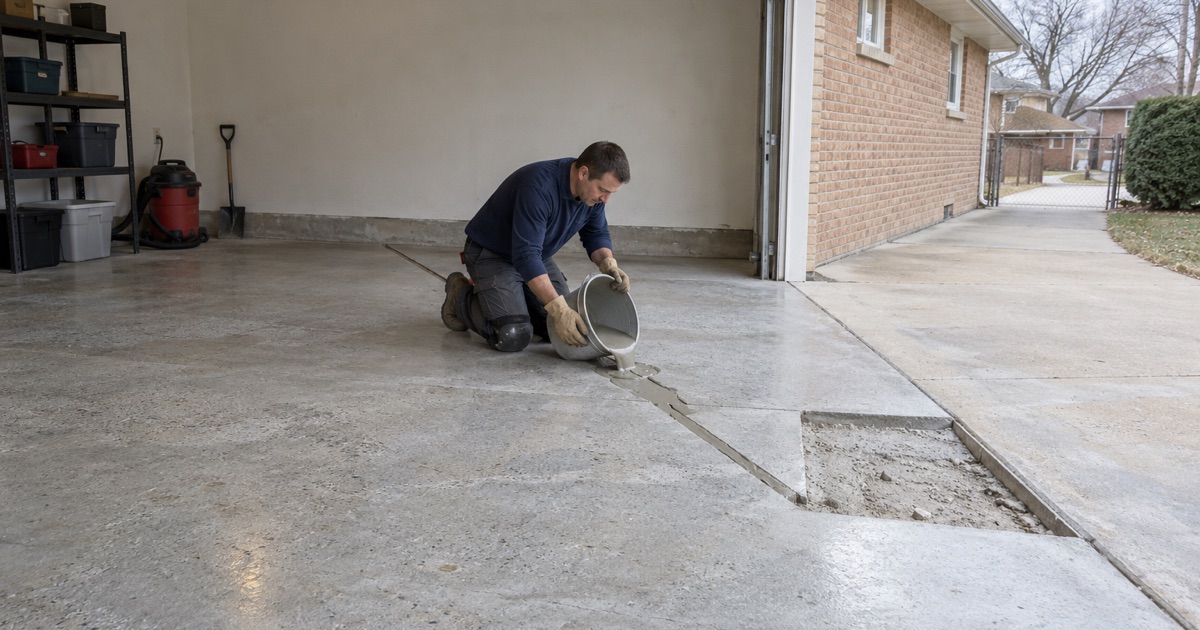
Hairline and Shrinkage Cracks
Almost every slab has hairline shrinkage cracks that formed as the concrete cured. They are usually stable and cosmetic, but they still need attention before coating, because they can telegraph through a thin finish and collect dirt.
We open hairline cracks slightly with a grinder or crack chaser, clean them and fill them with an epoxy or polyurea repair material. Once cured, the fill is ground flush with the surrounding floor so the coating sits on a smooth surface.
Structural and Moving Cracks
Wider cracks, cracks with vertical offset and cracks that keep growing are signs of movement under the slab. These need closer inspection, because a rigid fill in a moving crack will simply crack again.
For cracks that are still active, we use flexible fillers and may leave a joint in the coating at that line. When movement is serious or the slab is breaking into pieces, the right answer is concrete work by a concrete contractor before any coating.
Spalls, Pitting and Salt Scaling
Spalled Edges and Joints
Spalling is when pieces of concrete break away, often along joints, edges and around the garage door where tires and plows strike the slab. We cut back loose material to sound concrete, clean the area and rebuild it with a repair mortar suited to the depth and traffic.
Control joints with broken edges are rebuilt so the joint line is clean and square. Depending on the look you want, the joint can then be honored as a line in the coating or filled and coated over.
Pitting and Popouts
Pitting and popouts happen when small pieces of aggregate or weak paste break out of the surface, often due to freeze-thaw damage or reactive aggregate. They leave small craters across the floor that trap dirt and look worse over time.
We fill pits with an epoxy paste or a fast-setting repair mortar and grind the surface level. On heavily pitted floors, a skim coat may be needed to restore a smooth surface before coating.
Salt Scaling on Garage Floors
Rock salt and calcium chloride brine dripping from cars soak into bare concrete. As the brine freezes and thaws inside the surface, it breaks the top layer apart, leaving rough, flaking patches, usually near the door and under where cars park.
Repair means grinding off the loose, scaled layer down to sound concrete and rebuilding the surface with a repair mortar. A chemical-resistant coating then seals the floor so brine stays on top and can be cleaned off, rather than soaking in and starting the damage again.
Settlement, Unevenness and When to Replace
Low Spots and Uneven Surfaces
Slabs that have settled slightly or have uneven areas can collect water and create trip edges. We grind down high spots and fill low areas with leveling compounds or repair mortar, depending on depth.
Small settlement at a joint or along an edge is often repairable. Large areas that have dropped several inches are not something a coating contractor should fix, and we will point you toward concrete lifting or replacement instead.
When a Slab Needs Replacement
Some floors are past repair. Badly broken slabs, sections that rock under weight, severe heaving and floors with widespread deep scaling may cost more to patch than to replace, and a coating will not hold them together.
We would rather tell you that at the estimate than install a floor we expect to fail. If replacement makes sense, we can coat the new slab once it has cured long enough, which is usually several weeks.
Repairs Before Coating and Beyond
Matching Repairs to the Coating System
The repair materials we use are chosen to work with the coating that follows. Epoxy and polyurea fillers bond well with resin coatings, while cement-based repairs suit polished floors and areas that will stay bare.
Every repair is ground flush and checked before the base coat, so the floor finishes smooth and even. Under flake and quartz broadcasts, repairs disappear almost completely; under solid colors and metallics, they are less visible but may still show faintly.
Basement Floor and Drain Area Repairs
Basement floors often have patched trenches from plumbing work, damaged areas around floor drains and old tile adhesive. We repair those areas carefully, keeping the slope toward floor drains so water can still flow away, and we never seal over a drain or sump opening.
Where a trench was cut for an overhead sewer or a backflow valve, we check that the patch has cured and has not settled before grinding it flush. A patch that sits low or has pulled away from the original slab at its edges is cut back and rebuilt, so the joint between old and new concrete does not open up under the coating later.
Repairs in Occupied Businesses
Commercial repairs in clinics, stores and restaurants are scheduled around opening hours. Fast-setting repair materials let us patch spalls and joints overnight and return the floor to service the next morning, whether or not a full coating follows right away.
- 20+ Years Coating Concrete
- Moisture Tested Before Pricing
- Free Written Estimates