Oak Lawn Epoxy Flooring installs flake epoxy floor systems in Oak Lawn, IL, serving surrounding cities including Chicago Ridge, Evergreen Park, Worth, Alsip and Bridgeview. With 20+ years of concrete coating experience, we build flake floors for garages, basements, workshops and commercial spaces where owners want a durable, good-looking floor that hides everyday dirt and wear.
A flake floor, sometimes called a chip or broadcast floor, is built in layers: a pigmented base coat, a broadcast of colored vinyl flakes into the wet resin, and a clear topcoat that locks the chips in place. The finished surface looks like speckled granite or terrazzo and has a light texture underfoot.
It is the most popular system we install on garage floors, and for good reason. But a flake floor is still only as strong as the slab and the preparation under it, so every one starts with mechanical grinding, moisture testing and crack repair, and the proposal names the product line, the coats and the finished thickness.
How a Flake Floor Is Built
Grinding, Testing and Repairing the Slab
We open the slab with a diamond grinder or a shot blaster to the profile the base coat needs, removing old paint, sealers and the weak surface layer. Acid etching is not used, because it leaves an inconsistent profile and cannot remove coatings that are already on the floor.
The slab is tested for moisture before pricing, and cracks, spalls and pits are filled and ground flush. Flakes hide minor repairs very well, but they cannot stop a coating from peeling off a damp or contaminated slab, so this step is never shortened.
The Base Coat and Broadcast
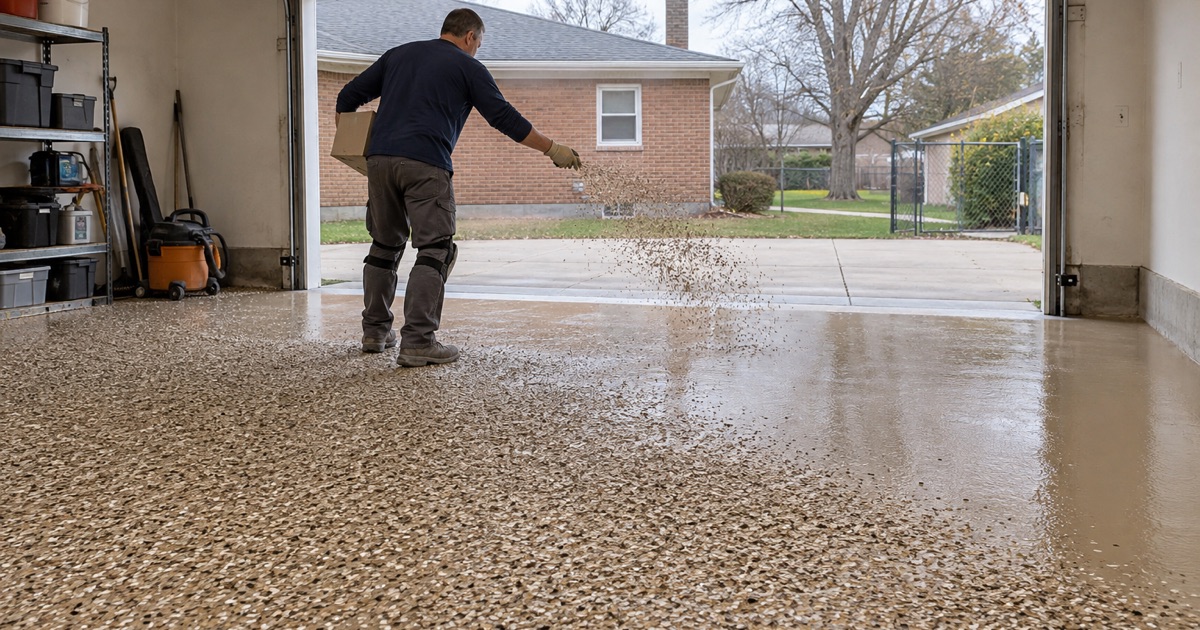
The base coat is usually a 100% solids epoxy or a polyaspartic, tinted to match the overall color of the flake blend. While it is still wet, we broadcast flakes by hand across the entire floor, throwing them up and letting them fall evenly rather than dumping them in piles.
For a full broadcast, we keep adding flakes until the base coat cannot hold any more, which is called broadcasting to rejection. Once it cures, loose flakes are scraped and vacuumed off, and the high points are knocked down so the surface is ready for the topcoat.
The Clear Topcoat
A clear topcoat seals the flakes, fills the texture and provides the wear surface. We typically use a polyaspartic or polyurea topcoat for its hardness, chemical resistance and UV stability, especially in garages where the door is often open.
The thickness of the topcoat controls the final texture. A single coat leaves more grip, while a second coat creates a smoother finish that is easier to mop. We discuss the tradeoff before the final coat goes down.
Choosing a Flake Blend
Chip Sizes and Patterns
Flakes come in several sizes. Small chips create a fine, speckled look that reads as a single color from a distance, medium chips are the most common choice for garages, and large chips give a bold, terrazzo-like effect.
The chip size also affects texture. Larger chips create more surface variation, while smaller chips lie flatter and produce a smoother finish under the same topcoat.
Color Blends and Lighting
Standard blends mix three to five colors, such as grays, tans, blacks and whites, to create a natural, stone-like look. Lighter blends make a garage or basement feel brighter, while darker blends hide tire marks and dirt but can look heavy in dim rooms.
We bring sample boards so you can see blends under your own lighting. Garage fixtures and basement bulbs can change how a color reads, and a blend that looks warm in a showroom may look different at home.
Full Versus Partial Broadcast
A partial broadcast scatters flakes over a visible base color, creating a lighter, more open look and using fewer flakes. It is more affordable but hides less of the slab and wears differently.
A full broadcast covers the base completely and creates a thicker, more uniform system. It hides slab imperfections, provides more texture and is the system we recommend for most garages and working spaces.
Where Flake Floors Work Best
Garages Through Illinois Winters
Flake floors are a strong match for garages that see road salt, brine and snowmelt. The textured surface gives better grip than a smooth gloss coating, and the pattern hides the salt film and tire marks that collect between cleanings. We pair garage flake floors with chemical-resistant base coats and UV-stable topcoats, so they resist hot tire pickup, deicing salts and the yellowing that standard epoxy shows in sunlight.
Basements, Workshops and Utility Spaces
In basements, flake floors cover old slabs that are stained or patchy and give laundry rooms and workshops an easy-clean surface. The texture helps near washers and utility sinks, and lighter blends brighten rooms with small windows.
Basements always get a moisture test first, and where readings are high we add a moisture-mitigation primer under the base coat so the flake system is not lifted by vapor from below.
Commercial Floors, Locker Rooms and Entries
Flake systems are also used in commercial spaces such as break rooms, locker rooms, retail back rooms, veterinary clinics and shop floors. They offer durability, slip resistance and a clean look at a moderate cost.
Commercial installs are phased around business hours, and we choose products within Illinois VOC limits for floor coatings. Fast-curing topcoats help get the space back in use quickly.
Cost and Warranty
What a Flake Epoxy Floor Costs
Price depends on the floor area, slab condition, the amount of repair, whether old coatings must be removed, moisture mitigation, the flake blend and the topcoat. Full broadcast systems cost more than partial broadcasts because they use more flakes and more topcoat. Our proposals list each of these items separately, so you can compare quotes on the same terms and see exactly what you are paying for.
What the Warranty Covers
Before you sign, we explain what the coating warranty covers and what it excludes, with moisture from below the slab first among the exclusions. Home jobs above the Illinois Home Repair and Remodeling Act threshold receive a written contract and the consumer-rights pamphlet before work starts.
- 20+ Years Coating Concrete
- Moisture Tested Before Pricing
- Free Written Estimates