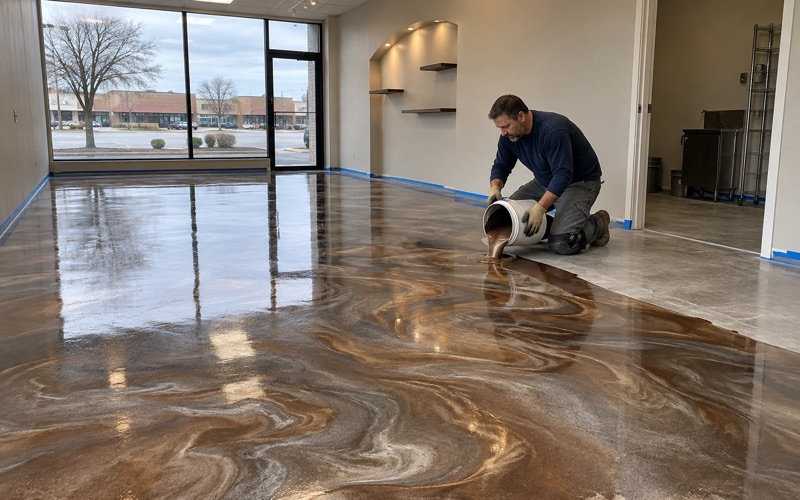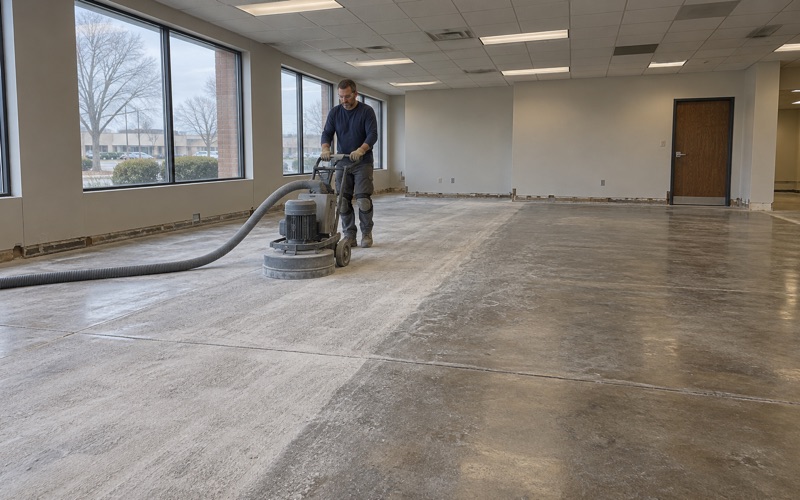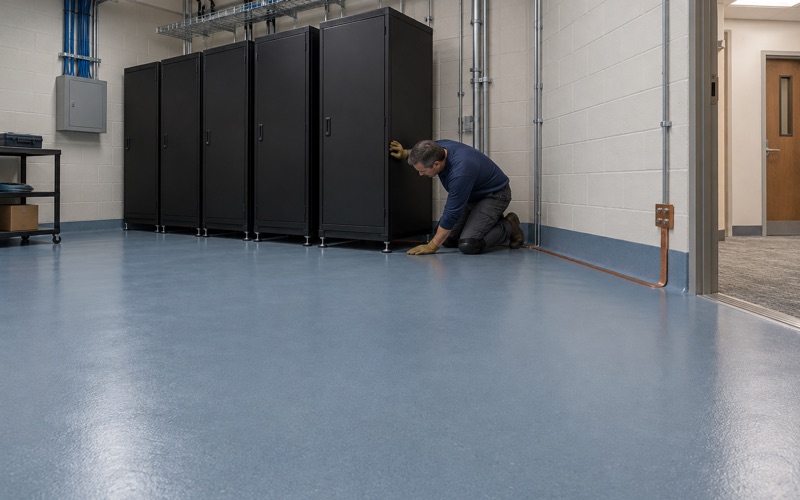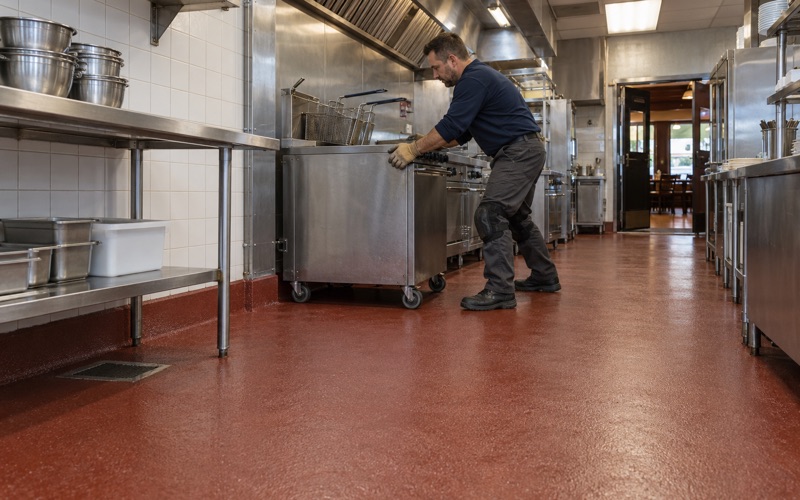
Oak Lawn Epoxy Flooring brings more than 20 years of epoxy flooring work to Forest Park, and the jobs that go cleanest share one trait: the floor is coated while nothing is standing on it yet. An empty slab can be ground wall to wall, tested where it matters and cured without a forklift waiting at the dock door. That window closes the day the first rack goes up.
We open every slab with a diamond grinder or a shot blaster rather than an acid wash, so the coating bites into a real profile instead of sitting on a smooth trowel finish. Before a price is final, the written scope includes a moisture test, and the proposal states the product line, the coat count and the finished thickness so an owner can hold the floor up against the paper.
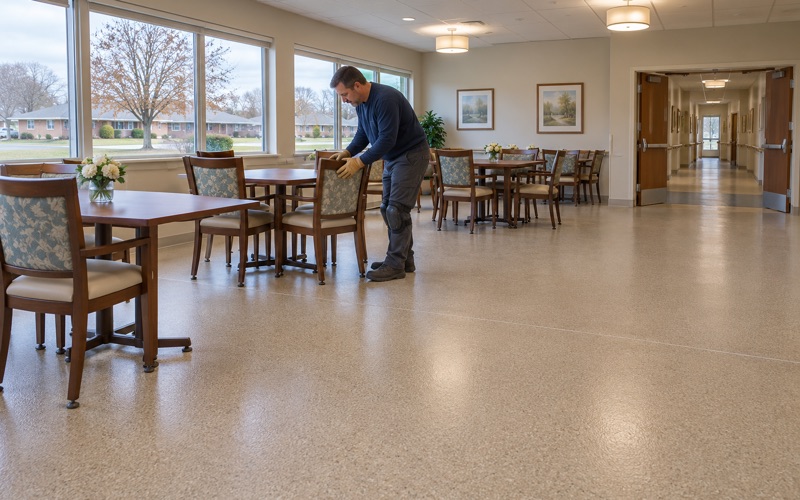
That order of work fits a warehouse, an assembly room and a two-car garage alike. What changes from one building to the next is the length of the window, the loads that follow it and who decides when the floor goes down.
A 150,316-Square-Foot Lease and the Months Before the Line Runs
Forest Park’s Industrial Drive has a new tenant on the way. In August 2026, REBusinessOnline reported that Newmark negotiated a long-term, full-building lease of 150,316 square feet at 7801 Industrial Drive for Dynamic Manufacturing, a family-owned automotive remanufacturer headquartered in Hillside. The landlord is First Industrial Realty Trust, and the stated use is warehousing, electrification and manufacturing operations.
The report gives a date as well: full operations are expected to commence in February 2027. The building sits on 5 acres in Proviso Township, with 4,509 square feet of office, a 24-foot clear height, six interior loading docks, one drive-in door and parking for 120. We have no part in that project, and nothing on this page describes what will run inside it beyond those three uses named in the lease.
Why the gap between signing and opening matters
A signed lease and a running line are months apart, and for a floor those months are the whole opportunity. Once pallet racking is bolted down, benches are leveled and machines are set on anchors, every square foot beneath them is off limits to a grinder. Coating around fixed equipment leaves seams, cut-ins and bare islands that collect grime and lift first.
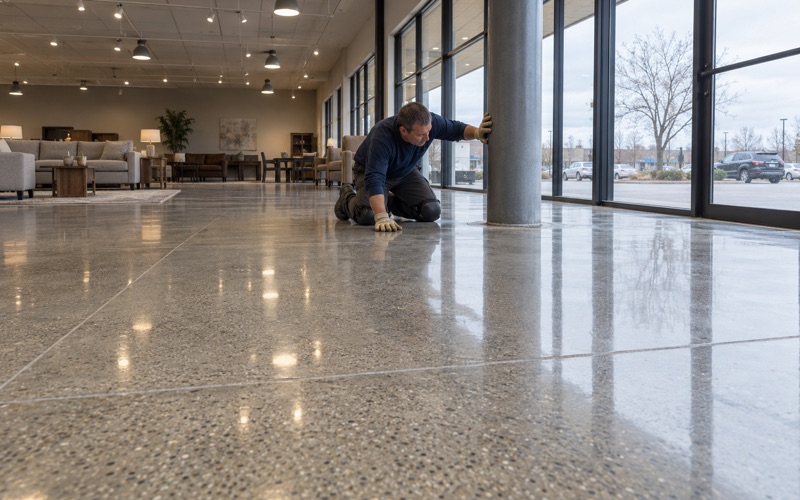
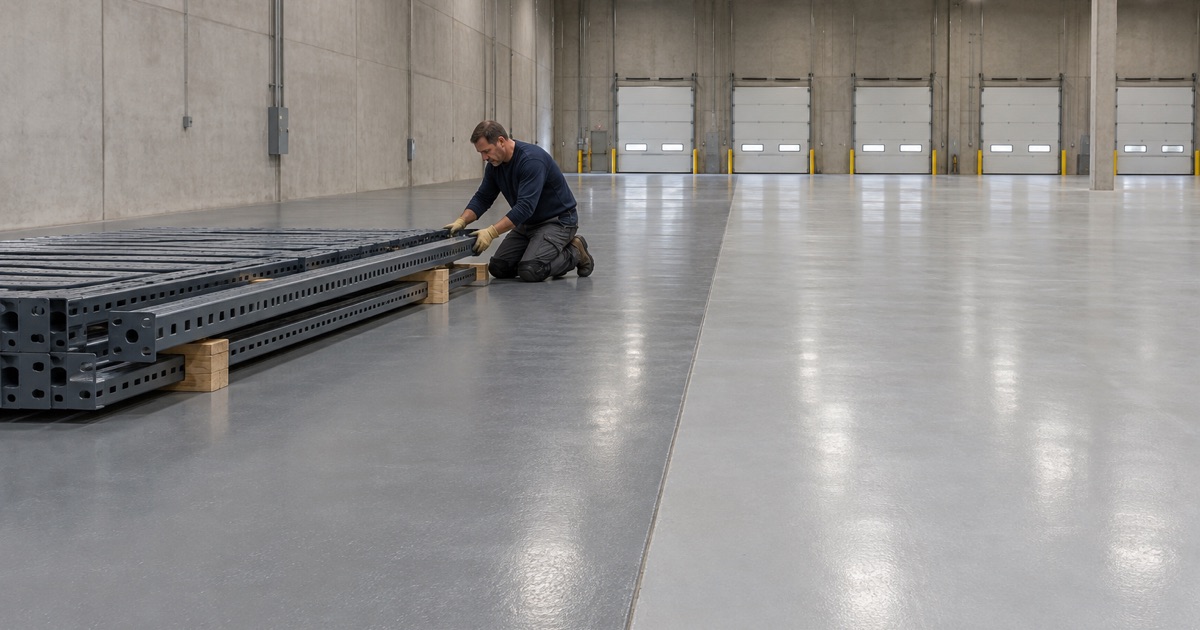
In an empty building, a crew can run a shot blaster down a full aisle without stopping, capture the dust at the machine and lay one continuous film from the dock wall to the back wall. That is a different job, at a different pace, from coating a working plant in sections over weekends while product keeps moving around the crew.
What a building of this size asks of the schedule
At roughly 150,000 square feet, a floor is rarely one pour or one condition. Expansion joints, saw cuts, patched trenches and old anchor holes from a previous occupant all need to be found and mapped before a product is chosen. We walk the slab with a plan in hand, mark cracks and spalls, and say plainly where a section needs repair before it is worth coating.
Looking for epoxy-flooring closer to Homewood? See Epoxy-Flooring Services in Homewood.
Zoning One Slab, Then Coating Before Anything Is Anchored
A lease that names three uses points to a floor that is really several floors. Storage aisles, assembly areas and any space set aside for electrical work tend to want different systems, and the time to draw those lines is before anything is installed. We treat the slab as a set of zones and write each one into the proposal separately.
Warehouse aisles and dock approaches
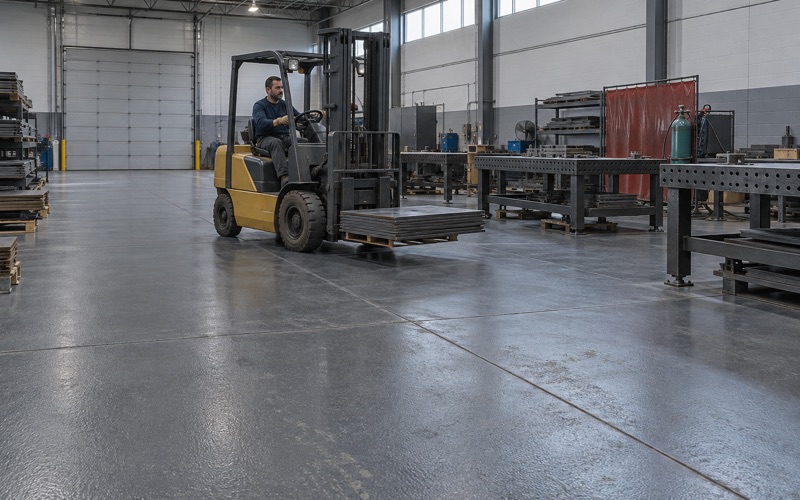
Forklift and pallet jack wheel loads concentrate on small contact patches, and the worst wear lands at dock plates, turning points and rack ends. In those lanes, a thicker 100% solids epoxy with a quartz aggregate broadcast gives tires something to grip and the coating a body to wear into. Six interior docks mean six thresholds where traffic squeezes through the same few feet every shift.
Where racks will stand on bare concrete, some owners choose a lithium silicate densifier instead of a film coating. It hardens the surface and cuts dusting without adding a layer that rack anchors would later have to punch through.
Assembly benches and electrical work areas
Bench areas take dropped tools, rolling carts and spilled fluids rather than steady forklift traffic. A high-build epoxy with a chemical-resistant topcoat keeps these zones easy to clean, and it takes aisle lines and bench outlines well. Striping laid into the coating outlasts floor tape that peels at the first scrub.
Any zone meant for electronics or electrical assembly raises the question of static-dissipative or ESD flooring. Those systems are specified to a resistance range, tested after installation and only worth the cost where the work above them needs it. That requirement belongs in an owner’s written specification, and we coat to it when it is there rather than assuming it.
Coat first, anchor second
The order of trades in an industrial fit-out decides how long the floor lasts. When racking crews drill through a finished coating, each hole is a small break in a film that stays bonded all around it. When the coating comes after the racks, every upright becomes a cut-in edge, and every edge is a place where wheels catch and peel.
Preparing an empty slab properly
Industrial slabs often carry curing compounds, sealers or old coatings from earlier occupants. We grind or shot blast to the ICRI CSP profile the chosen product’s data sheet calls for, and we check the result against profile chips before mixing anything. Dust is captured at the machine by a vacuum rather than swept or rinsed toward a floor drain.
Moisture comes next. On a large slab we place ASTM F2170 in-situ relative humidity probes at several locations, sometimes alongside ASTM F1869 calcium chloride tests, because one reading on a floor this size says little about the rest. Where readings run high, a moisture-mitigation primer goes into the scope before the price is set, and moisture is the first warranty exclusion we explain.
Anchors, embeds and trench lines
Before coating, we ask for the rack layout and equipment plan, even in draft. Knowing where heavy machines will sit lets us build the system thicker under them, leave clean termination lines at pits and trenches, and skip decorative work where a machine base will be grouted. When the layout is not ready, we coat continuously and leave the anchoring to the installers.
An Air-Conditioned Building and What It Means for Cure
The lease report notes that the fully air-conditioned warehouse was one of the key factors in the tenant’s decision. For a coating crew, conditioned air is a real advantage, because slab temperature and dew point decide how epoxy cures far more than the date on a calendar does.
Temperature, dew point and amine blush
We read the slab surface temperature and the dew point before mixing, and we want a comfortable spread between the two. When a slab sits too close to the dew point, moisture can condense on the fresh film and leave amine blush, a waxy residue that weakens the bond of the next coat. A building that holds a steady temperature through the cure takes most of that risk off the table.
Conditioned air does not remove every variable. Dock doors opened for deliveries pull outside air across the first bays, so we schedule those zones last or ask that the doors stay shut until the coating can take light foot traffic. In an enclosed building, product choice also has to sit inside the Illinois VOC limits for floor and industrial coatings, which bind whoever applies them.
Planning backward from an opening date
A thick 100% solids epoxy needs several days before forklift traffic, while a polyaspartic topcoat can return a zone to service much sooner. When an opening date is fixed months out, as February 2027 is for the building on Industrial Drive, a floor schedule runs backward from the day racks and machines arrive. Built that way, no trade stands idle waiting on a floor that is still soft.
The Same Order of Work in a Garage You Are About to Fill
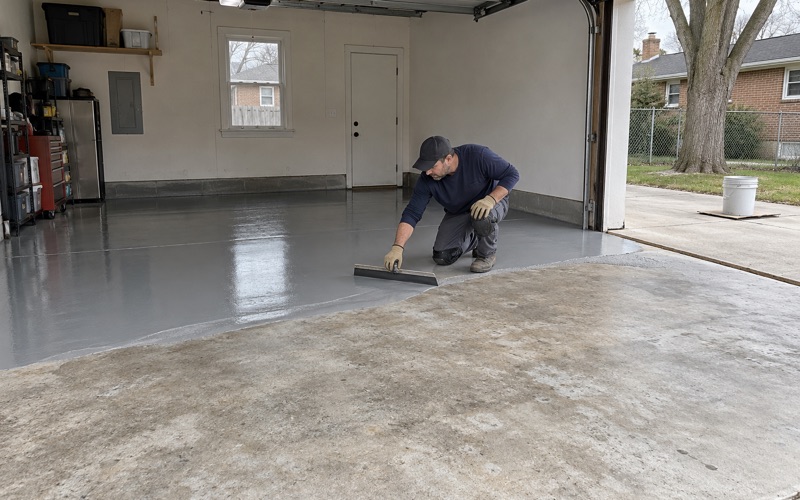
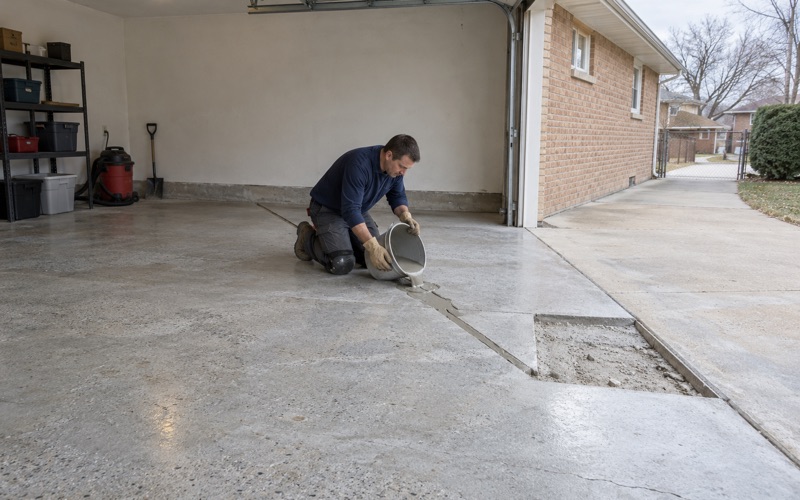
A homeowner in Forest Park faces the same choice on a smaller scale. A garage about to receive a workbench, wall cabinets, a second freezer or storage shelving is far easier to coat now than after everything is in place. Emptying a full garage costs a weekend; coating an empty one costs nothing extra.
Empty it, test it, then fill it
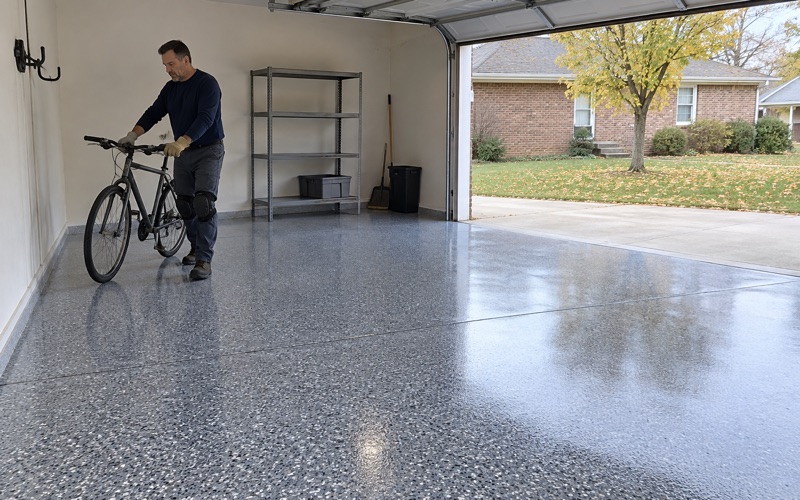
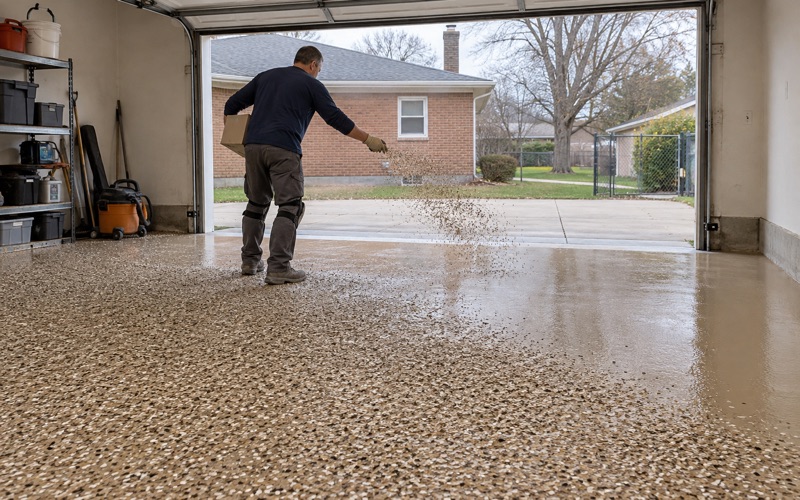
We grind a garage slab the same way we prepare an industrial floor, map its cracks and run a moisture test before the price is final. A common build is a 100% solids epoxy base with a vinyl flake broadcast and a polyaspartic topcoat that resists hot tire pickup, and the proposal spells out each layer and its thickness. Anything bolted to the floor goes in after the cure, not before.
Paperwork before the grinder starts
Illinois has no state flooring license, so before booking a job we check the Village of Forest Park’s own registration, bond and insurance rules with the Village Building Department. Home jobs above the state threshold get a written contract and the Home Repair: Know Your Consumer Rights pamphlet before any grinding begins, as the Illinois Home Repair and Remodeling Act requires.
Whether the empty space is a full industrial building or a two-car garage, the best time to coat it is the stretch between signing for it and filling it. We would rather plan that stretch with you than work around a room that is already full.
- 20+ Years Coating Concrete
- Moisture Tested Before Pricing
- Free Written Estimates