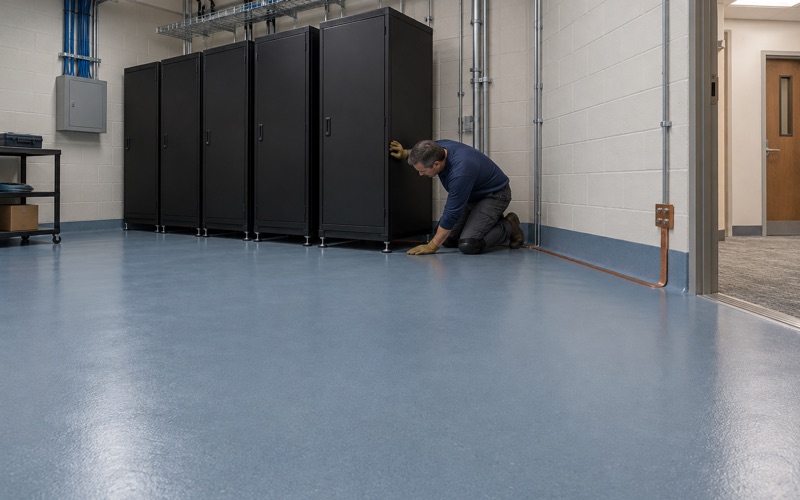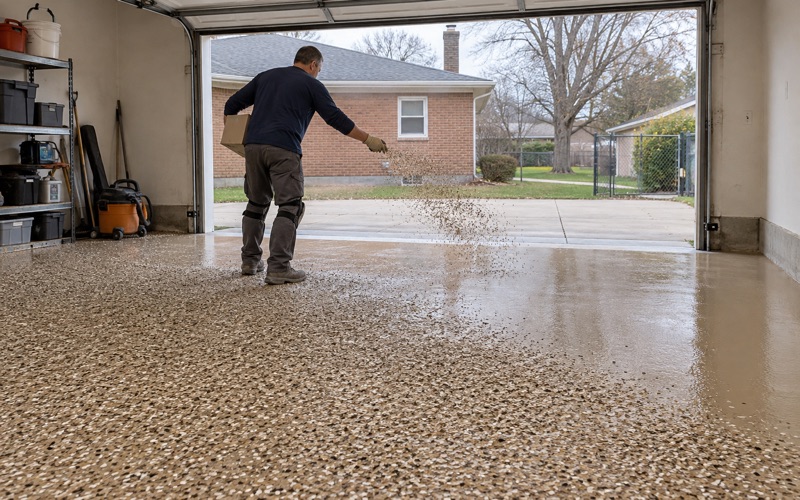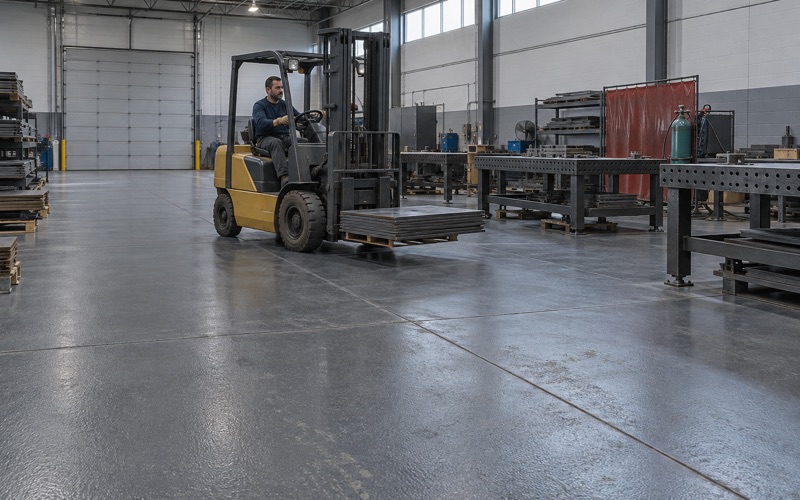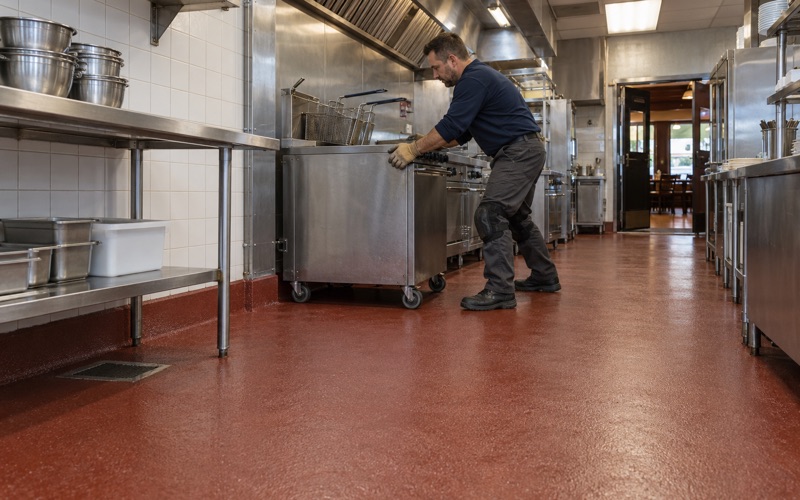
Oak Lawn Epoxy Flooring has spent more than 20 years putting down epoxy flooring in Hickory Hills, and the floors that ask the most of us here are the ones walked on by four feet as well as two. A coating that looks finished is not the same as a coating that holds a footing when it is wet. That difference shapes how we build every floor described on this page.
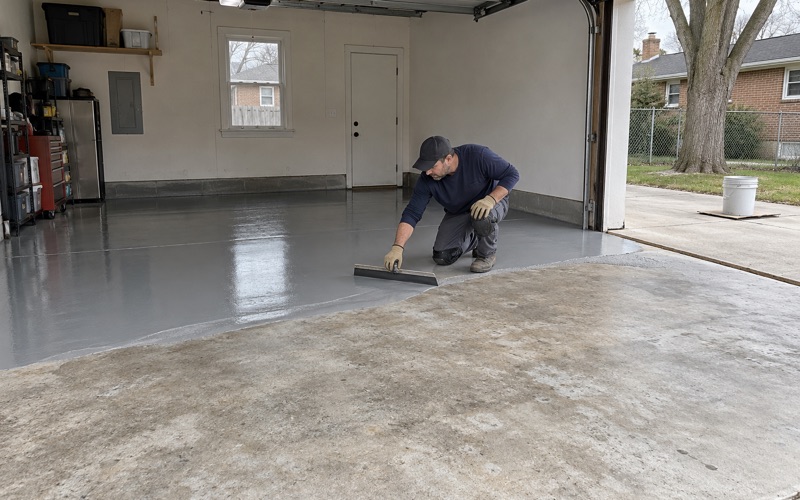
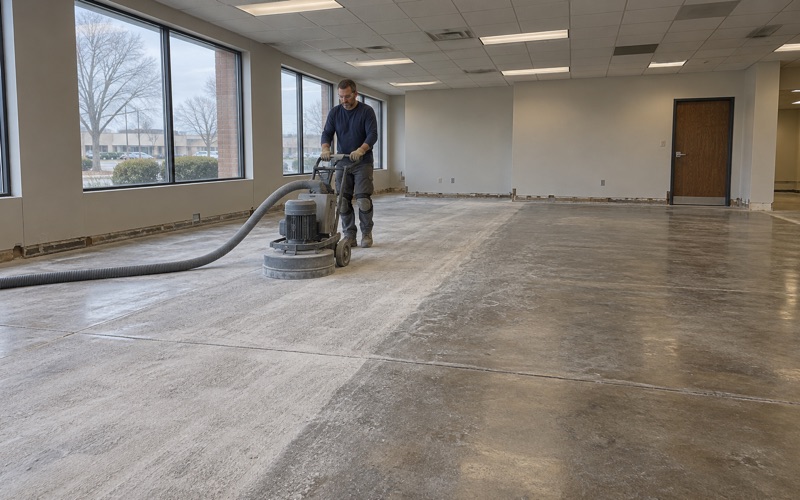
Our work starts with the slab, not the color chart. We open the concrete with a diamond grinder or a shot blaster rather than an acid etch, so the primer has a real profile to bite into, and we map cracks, spalls and old coatings before we price anything. When a slab needs repair before it should be coated, we say so in writing.
The proposal then names the product line, the number of coats and the finished thickness, along with the texture we plan to broadcast into the topcoat. That last line matters most on a floor where paws, boots and a wet mop all meet in the same hour. It is also the part of a quote most owners never think to ask about.
A Veterinary Floor on West 95th Street
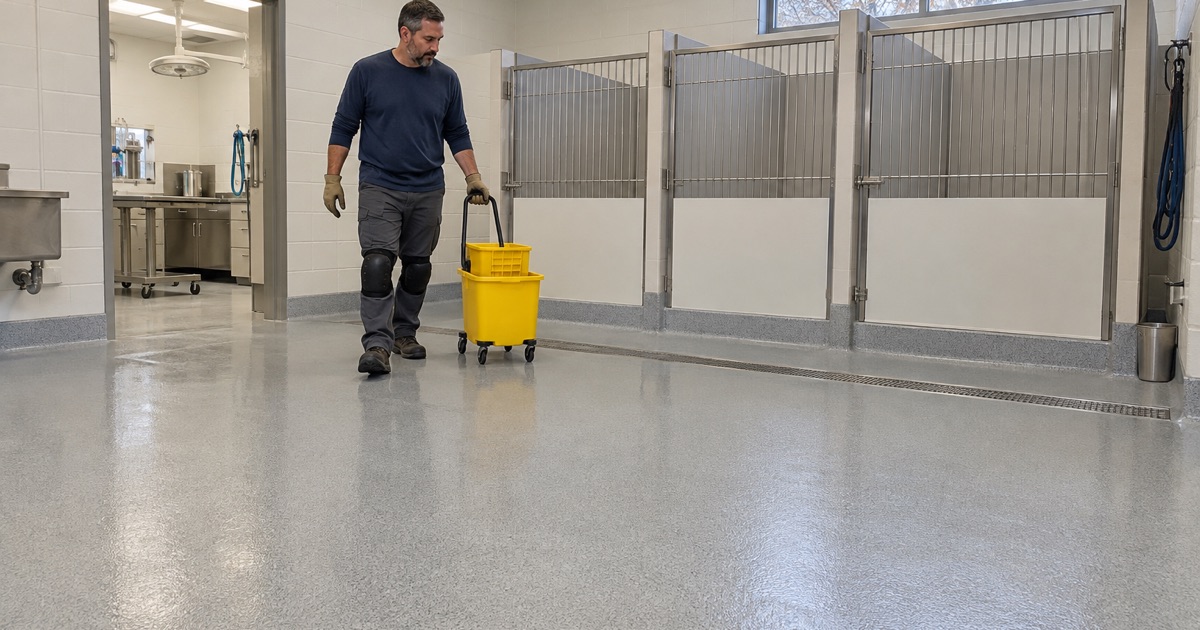
Hickory Hills is a Chicago suburb in Palos Township, Cook County, with 14,505 residents at the 2020 census and much of its commercial life strung along 95th Street. One of the working floors on that corridor belongs to Hickory Hills Animal Clinic, listed as a veterinary practice at 8717 West 95th Street, Suite B. We have not been inside it and know nothing of its floors, rooms or cleaning routine, but the kind of floor a small-animal practice needs is well documented.
A clinic floor also carries the burdens of any medical floor: spills, cleaners and a schedule that rarely pauses. The finish has to survive what the staff mops with as well as who walks across it. Chemical resistance therefore sits on our list beside traction rather than below it.
Patients on Claws
In a small-animal clinic the floor is walked by patients as well as staff. A dog crosses it on claws and pads, often frightened and sometimes pulling against a leash, and a cat may be set down on it between the carrier and the exam table. Neither animal has a shoe sole to spread its weight or a handrail to reach for.
That turns traction into a clinical question rather than a cosmetic one. An animal scrambling for footing is harder to handle and harder to examine, and the person holding the leash is walking the same surface. Through a working day that floor is mopped wet again and again, so whatever grip it has must hold in both conditions.
Why Gloss Works Against the Animal
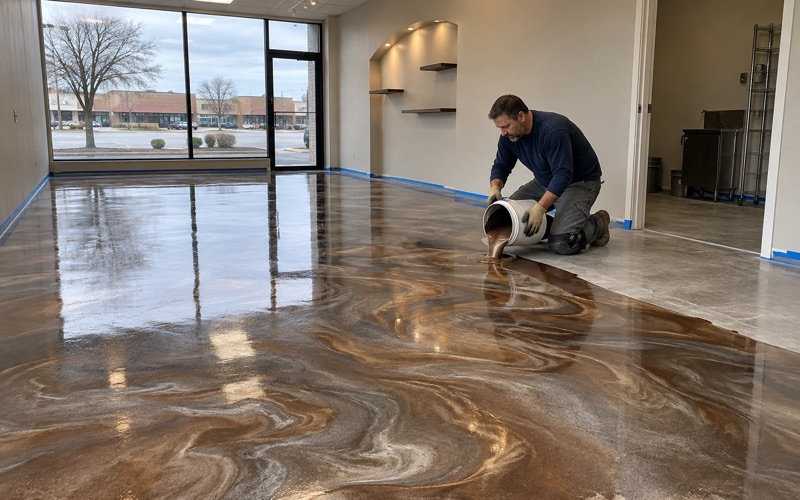
A smooth, high-gloss coating is what most people picture when they hear epoxy, and in a garage it reads as a finished floor. Under a nervous dog it is the wrong surface. Hard claws find nothing to catch on a glassy film, and a thin sheet of mop water makes that worse.
So we do not treat a clinic, grooming room or boarding space as a garage with different furniture. The coating system is chosen around a measured texture first and a finish second. Gloss is something we will dial back to get the traction right, never the other way around.
Looking for epoxy-flooring closer to Palos Heights? See Epoxy-Flooring Services in Palos Heights.
0.42 Indoors, 0.60 Where the Hose Runs
The numbers we work toward come from veterinary-hospital design guidance rather than from a flooring brochure. Writing for dvm360 in November 2024, architect Heather E. Lewis, AIA, noted that slips, trips and falls are a problem in veterinary hospitals. She set the indoor target at a DCOF of 0.42 or greater, wet and dry, and 0.60 or greater, wet and dry, for outdoor and hose-cleaned areas.
What DCOF Measures
DCOF stands for dynamic coefficient of friction, a measure of how much resistance a surface offers to something already sliding across it. A higher number means more grip once a foot, or a paw, has started to move. Testing it wet as well as dry is the point, because a floor that grips when dry can lose much of that grip under a film of water.
These figures are a designer’s guidance in a trade article, not a building code, and we present them that way. We have not tested or sourced a DCOF for any product on this page, and we will not hand anyone a number we did not measure. What the guidance gives an owner is a clear target to hold up against a manufacturer’s data sheet.
The wet result is the one to ask for first. A data sheet that lists only a dry figure says little about a floor that spends much of its working day damp. When we compare systems for a clinic owner, the manufacturer’s own wet reading is the line we look for before anything else.
Hose-Cleaned Rooms Need More
The higher 0.60 figure belongs to rooms where cleaning means a hose rather than a mop. Water stands on the floor longer there, and the people doing the washing walk through it while they work. That calls for a coarser broadcast than a lobby or an exam room would want.
In practice the two targets usually split one building into two texture zones. The front of the clinic carries a finer grit that a mop glides over, and the wash-down spaces carry a heavier one. We draw that line on the floor plan before the job is priced, so the quote reflects both.
Texture That Grips a Paw and Still Mops Clean
The tension in a clinic floor is that every bit of texture that helps a paw also gives dirt somewhere to sit. Too little and the floor misses the traction target; too much and it defeats the mop. The work is finding the grit size and broadcast rate that land between the two.
Aggregate in the Topcoat
We build slip resistance by broadcasting aggregate into the system rather than relying on the resin alone. Aluminum oxide is the usual choice for a fine, hard grit carried in the topcoat, and a quartz aggregate broadcast gives a coarser profile for wet rooms. Both are locked in by a final coat so the grit stays put instead of wearing loose.
Under that texture sits a 100% solids epoxy body coat, often finished with a polyaspartic or polyurea topcoat for wear and stain resistance. Where a floor is hosed down and sees hot water, urethane cement is worth discussing instead. Whatever we choose, the proposal names the system, the coats and the finished thickness so the floor can be checked against it afterward.
The finer the grit, the easier the mop; the coarser the grit, the more the floor holds under water. We lay out sample boards at two or three broadcast rates so an owner can drag a wet mop across each and press a hand on it before choosing. That small test settles more questions than any brochure.
Exam Room, Treatment Area, Kennel and Lobby
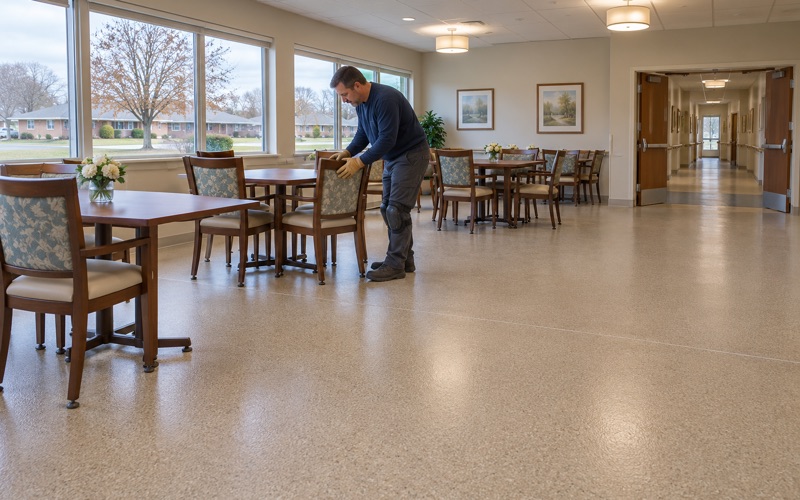
A clinic is several floors under one roof. The lobby takes tracked-in grit along with leashed dogs, and the exam rooms take the most frightened animals on the smallest footprint. Treatment areas see spills and constant cleaning, and kennel spaces are where hose-down is most likely.
Each of those rooms can carry its own texture inside one continuous coating, which avoids seams that collect debris. Seamless sheet vinyl is the usual alternative in veterinary work, and the same guidance describes it as affordable, sanitary and seamless. We will tell an owner plainly where vinyl is the better fit and where a broadcast coating earns its place.
Working Around Patients
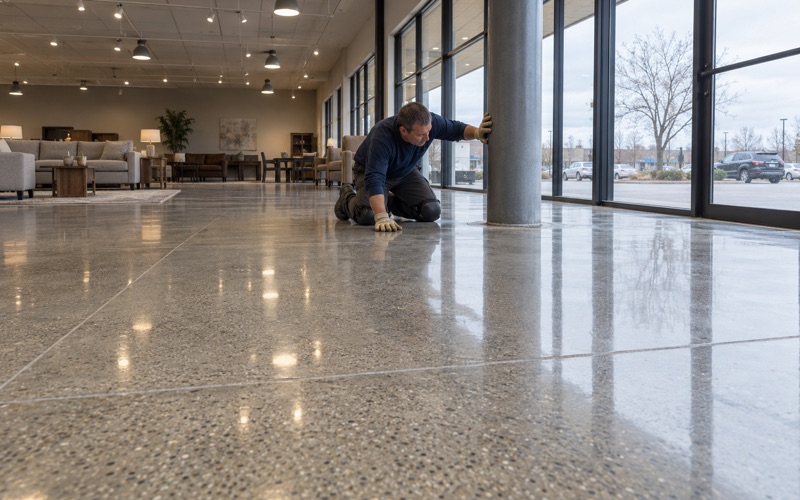
A clinic cannot simply close for a week. We phase medical and retail floors around opening hours, working overnight and on weekends when a space has to stay open. Grinding dust is captured at the machine with a vacuum instead of being rinsed toward a floor drain, and cure times follow slab temperature and dew point rather than a calendar date.
The Dog That Slides on the Garage Floor at Home
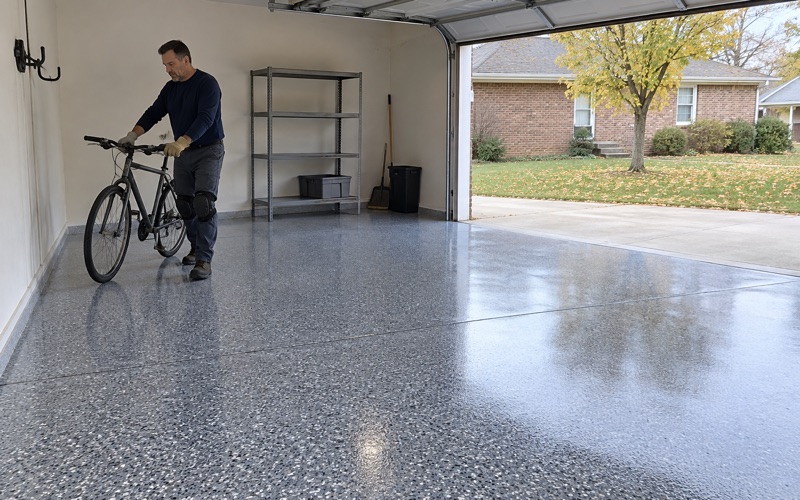
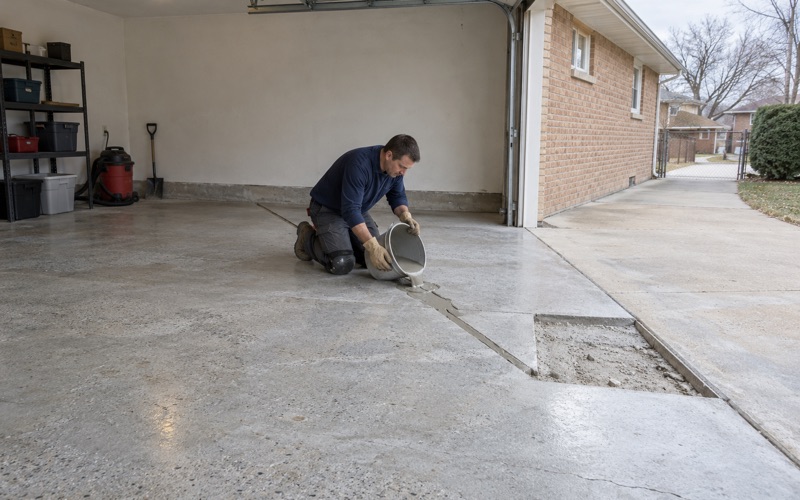
The same problem follows pet owners home. Census tables count 3,275 owner-occupied detached houses among the city’s 4,005 owner households, and plenty of those homes have a garage or basement that doubles as the dog’s mudroom. A glossy flake floor that looks right with the car parked on it can be a skating rink for a dog coming in from the yard.
Grip Without the Showroom Shine
For a garage or basement the dog uses every day, we suggest a fine aggregate in the clear topcoat over a vinyl flake broadcast. It gives up a little of the mirror finish and gives paws something to hold, while the floor still sweeps and mops like a smooth one. Most owners stop noticing the texture within a week.
Where the dog comes in matters as much as the floor itself. The run from the yard door to the water bowl and the step down from the house into the garage take most of the wet paw traffic. We can concentrate a heavier broadcast there while keeping the rest of the floor easier to clean.
We are careful about what that texture can promise. A rougher topcoat gives a pet better footing than a glassy one, but no coating can rule out a slip, and we never sell it that way. What we can do is match the grit to how the room is actually used.
Moisture Before Texture
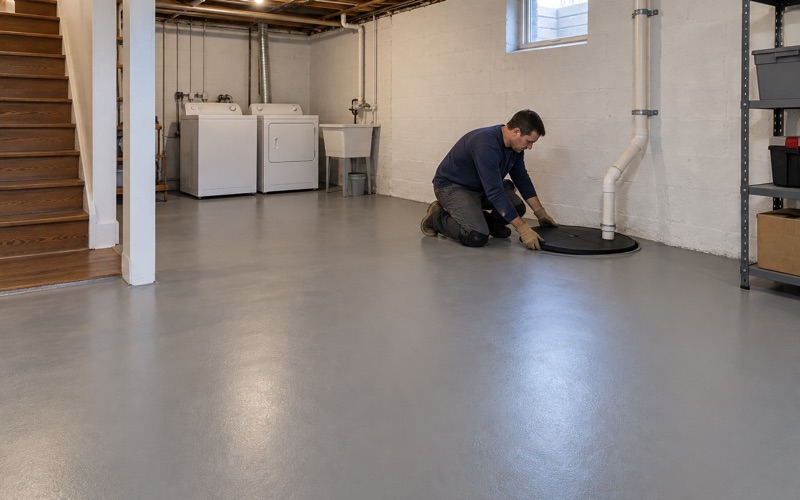
Before any coating goes down at home, a moisture test is part of the written scope: an ASTM F2170 in-situ relative humidity probe or an ASTM F1869 calcium chloride test, depending on the slab. Moisture is also the first warranty exclusion we name, before the job is sold. A textured topcoat does nothing for a floor that is losing its bond from below.
The Paperwork in Hickory Hills
Illinois licenses no flooring or coatings contractor, so the binding rule here is the city’s own. The City of Hickory Hills requires a contractor license at $100 per calendar year with no half-year option, plus a certificate of insurance naming the city and a copy handed to the owner before work begins; no bond is required. Home jobs over the state threshold also get a written contract and the Home Repair: Know Your Consumer Rights pamphlet before any grinding starts.
- 20+ Years Coating Concrete
- Moisture Tested Before Pricing
- Free Written Estimates