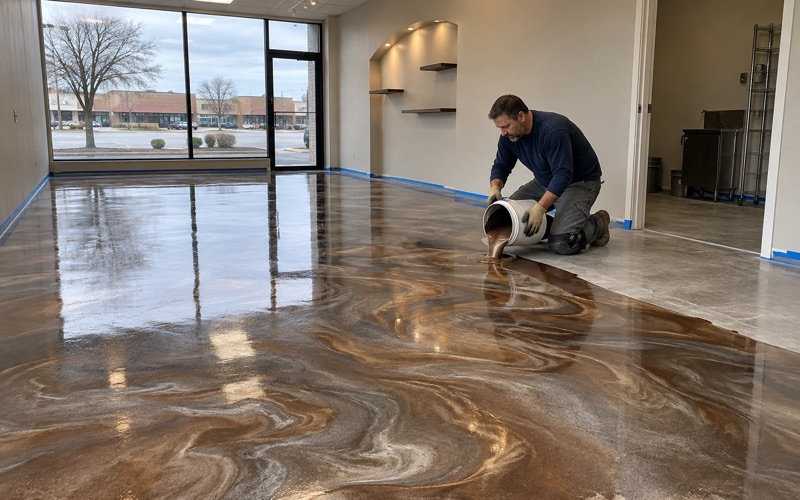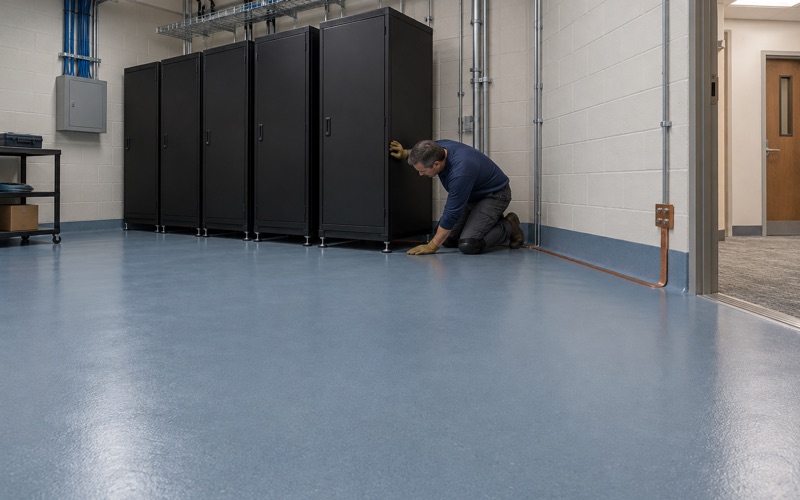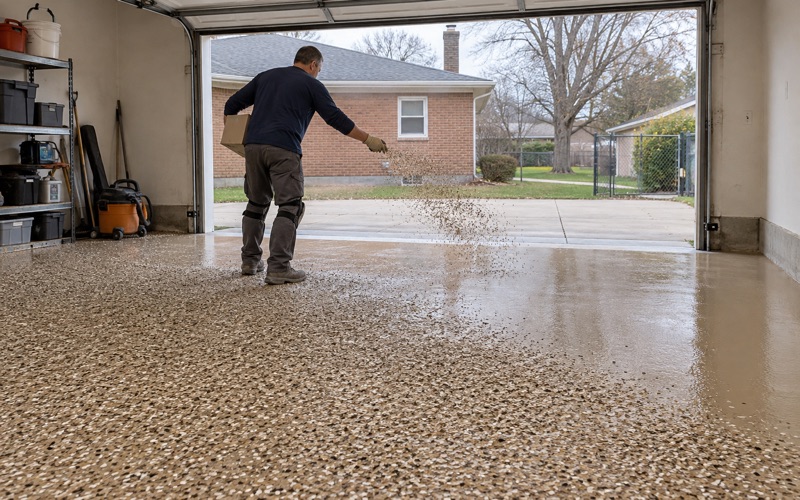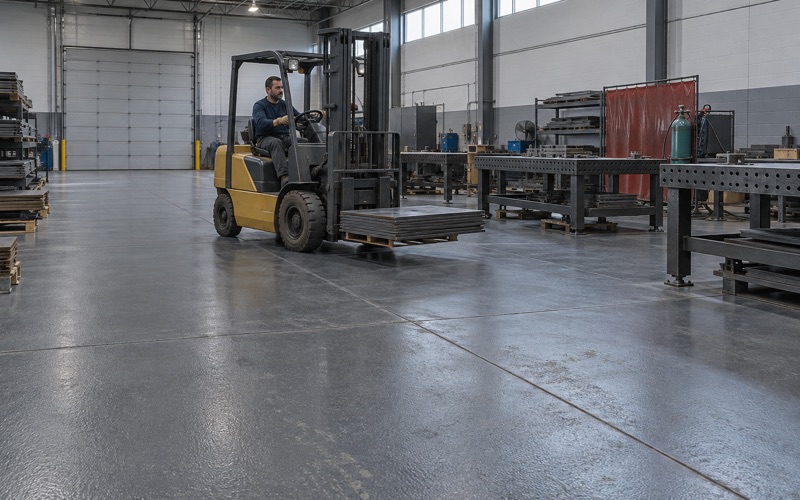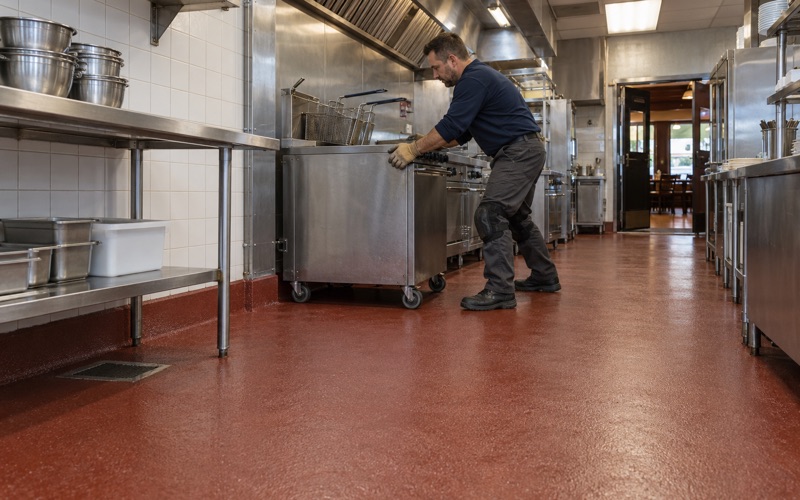
Oak Lawn Epoxy Flooring has spent more than 20 years on epoxy-flooring in Homewood and the surrounding south suburbs, and the floors we are called to fix here tend to fail in a predictable place. It is rarely the open middle of the slab. It is the few square inches under a jack stand, a kickstand or a parked floor jack, and the patch of concrete where oil has been dripping for years.
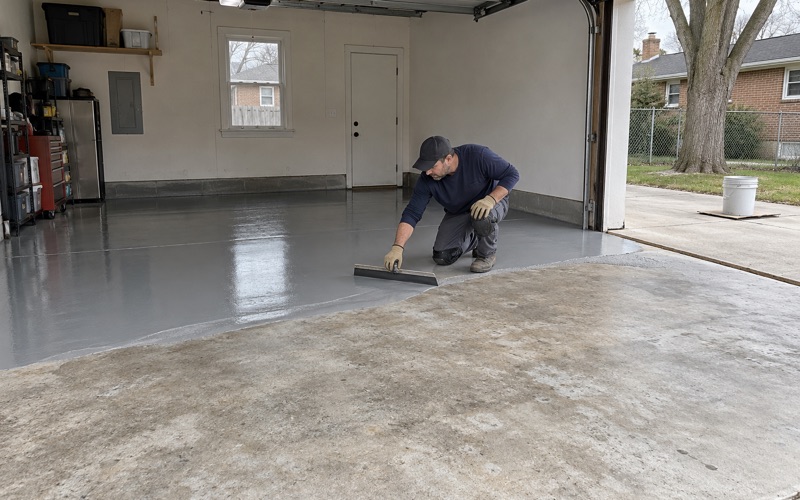
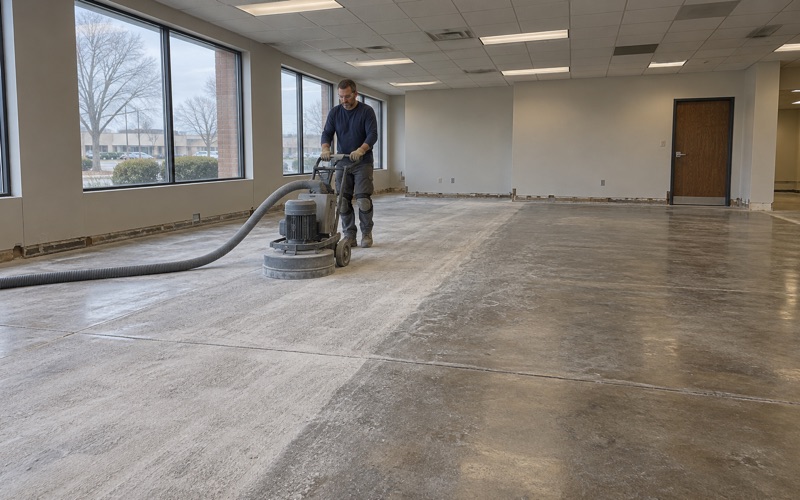
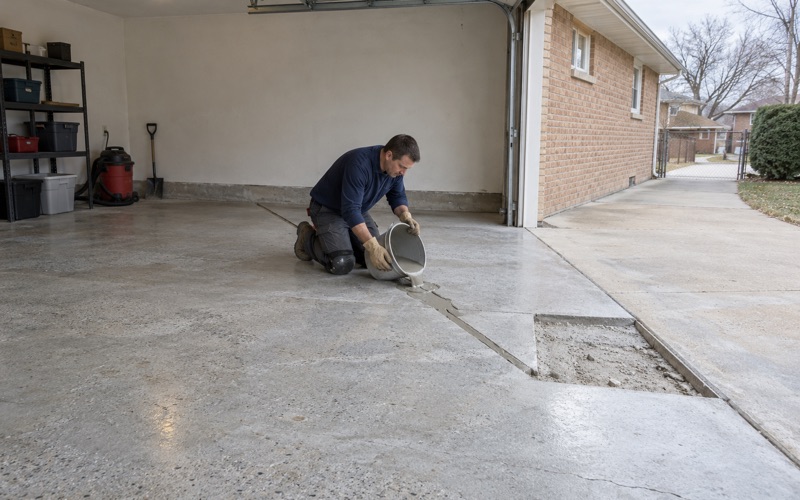
That pattern shapes how we scope a garage or small shop floor in this village. We map cracks, spalls and any old coating first, we test moisture before the price is final, and we open the concrete with a diamond grinder or a shot blaster rather than an acid wash. The written proposal names the product line, the coat count and the finished thickness, so you can hold the finished floor to the paper.
The rest of this page explains why point loads and oil, not foot traffic, decide which system belongs on a floor here. As it happens, Homewood has a full-size example of that rule at work inside its own limits, and it is a useful way to see what a garage floor is really up against.
A Railroad Maintenance Shop on Ashland Avenue
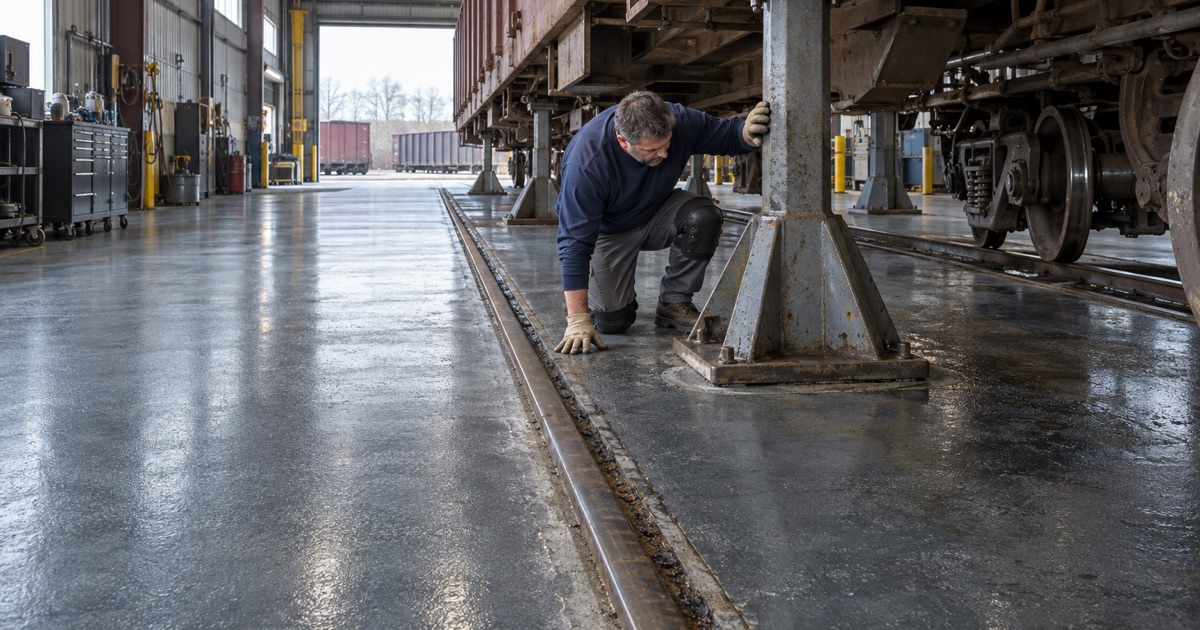
Homewood is a Cook County village of 19,463 people at the 2020 census, and it still keeps a working railroad shop inside its limits. CN’s Woodcrest locomotive shop sits on Ashland Avenue, and beside it is the CN Campus, the railroad’s training center. Addresses on that stretch of Ashland Avenue geocode inside the village, in Thornton Township.
Woodcrest opened section by section between 1970 and 1972 as a diesel locomotive maintenance shop in a corner of the old Illinois Central Markham Yard. The training center next to it opened in October 2014, a 55,000-square-foot, $25 million building described at the time as adjacent to CN’s Woodcrest mechanical shop. It was constructed over an old railroad turntable and roundhouse.
What CN’s Own Campus Map Shows
CN’s 2023 Investor Day factsheet maps the campus, and its key reads like an inventory of heavy mechanical work. It lists hands-on training labs, thermite welding tracks, the Woodcrest locomotive shop and a mechanical car jacking and wheel change-out station. The name of that last station describes the job plainly: a railcar is jacked off its wheels so the wheels can be changed.
We want to be clear about our part in this. CN is not a customer, we have never worked at the Woodcrest shop or the CN Campus, and we have not seen which floor systems the railroad uses there. The railroad’s own engineers and environmental staff set those rules, and what we take from the campus is a lesson in where floors fail, not a project credit.
Why a Rail Shop Is a Useful Example
Most homeowners judge a garage floor by how it looks across the open slab. A rail mechanical floor is judged by what happens under a handful of steel contact points and in the places where running gear drips. That is the same test a Homewood garage floor faces at a much smaller scale, and it changes which coating makes sense.
Looking for epoxy-flooring closer to Westchester? See Westchester Epoxy-Flooring.
Jacks, Stands and Oil: Where a Mechanical Floor Gives Up
A coating on a shop floor seldom wears through first in the walkway. It fails where weight sits still, under a jack pad, a stand foot or a wheelset resting on blocks. A load that would be harmless spread across a tire’s footprint becomes a crushing force when it is concentrated under a few small points for hours or days at a time.
Compressive Strength Under Point Loads
On a floor that takes stationary jacks and stands, the system is chosen for compressive strength first. A thin roll-on paint can dent, crack or shear loose under a pointed foot, especially if it was laid over a weak or poorly prepared surface. A 100% solids epoxy built to a stated thickness and bonded into a ground profile spreads that load into the concrete instead of carrying it alone.
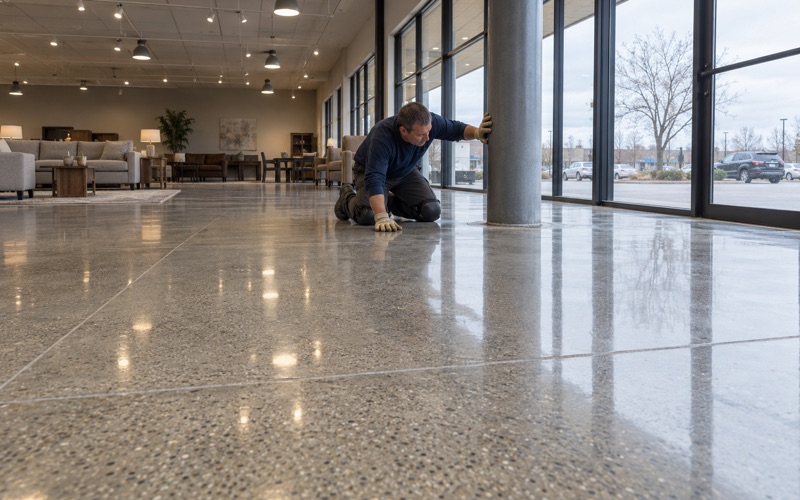
Surface profile matters as much as the resin does. We grind or shot blast to a measured ICRI concrete surface profile so the coating locks into sound concrete rather than sitting on a smooth, sealed skin. Where cracks or spalls run under the spot a jack will live, we repair them first, and we tell you when a section of slab should be replaced before anything goes over it.
Lube Oil, Fuel and Degreasing
The second place a mechanical floor fails is wherever lubricating oil and fuel drip from running gear. Oil that soaks into bare concrete keeps wicking back up long after the surface looks clean, and a coating rolled over it will lift in a patch shaped like the old stain. On a floor that is already coated, the question becomes how cleanly it can be degreased, again and again, without softening the finish.
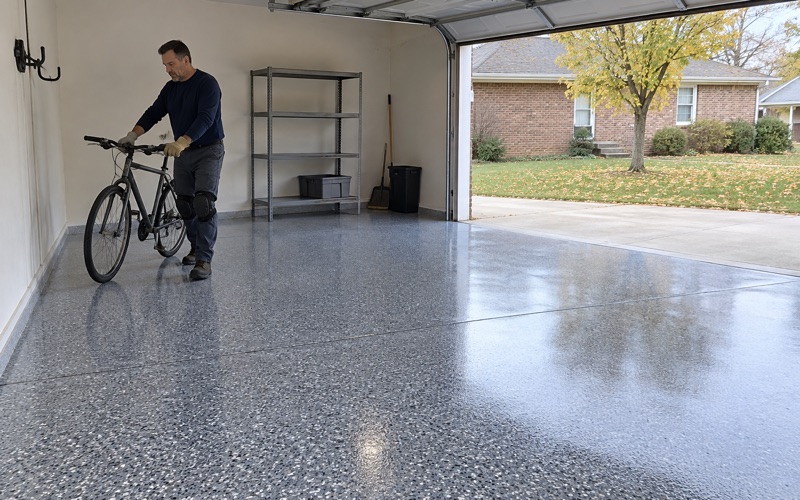
That pushes us toward dense, chemical-resistant topcoats and away from very rough textures in drip zones. A heavy quartz aggregate broadcast gives strong grip but holds oil in its valleys, while a vinyl flake broadcast sealed under a polyaspartic topcoat can be wiped and scrubbed more easily. We match the texture to how often a spot sees oil and how it will be cleaned.
Before any of that, old oil has to come out of the slab. We degrease, grind through the contaminated surface and check the cleaned area before we coat it. A bond is only as good as the concrete under it, and oil-soaked concrete is a poor partner for any resin.
The Same Loads in a Homewood Garage
Scale the rail shop down and you have a home garage or a small workshop in Homewood. The failures we see show up in matching places: the four squares under jack stands, the track of a floor jack’s steel wheels, and the small dent where a motorcycle or lawn-tractor kickstand rests all season. Point load and oil, not traffic, is the local lesson.
Jack Stands and Floor Jacks
A car owner who does their own brake or suspension work puts the most concentrated load the floor will ever see under a jack stand. A floor jack adds narrow steel wheels that pivot and scrub as the car rises. We plan for that with enough thickness in the epoxy base coat, and we suggest steel or plywood pads under stands as a cheap habit that protects any floor.
Kickstands and Parked Equipment
A motorcycle or lawn-tractor kickstand is a tiny contact patch carrying real weight, often in the same spot for months. On a soft or thin coating it leaves a crater, and on a poorly bonded one it can pop a chip loose. A kickstand plate costs very little, and a floor built with proper thickness is far less likely to need one.
Parking adds a different stress. Warm tires can lift a weak coating in a pattern called hot tire pickup, which is usually a bond or product problem rather than wear. Proper grinding, a full-strength base coat and a topcoat cured on the slab’s own schedule, not the calendar’s, are what keep it from happening.
The Drip Zone in Front of the Bench
Most garages have one spot where a car leaks or where the mower gets serviced. We look closely at that spot before we write the scope, because a stain that has soaked in deep changes both the prep work and the price. Oil left in the concrete is the most common reason a coating lifts in one patch while the rest of the floor stays sound.
Mid-Century Houses and a Damp-Basement Check
Homewood’s housing is mostly mid-century and mostly lived in by its owners. Census figures show 74.3 percent of homes were built between 1950 and 1979, and 87.2 percent of owner-occupied homes are single-family detached houses. That adds up to a large stock of family-owned houses whose garage and basement slabs are now several decades old.
Shoreline Sand and Limestone Ground
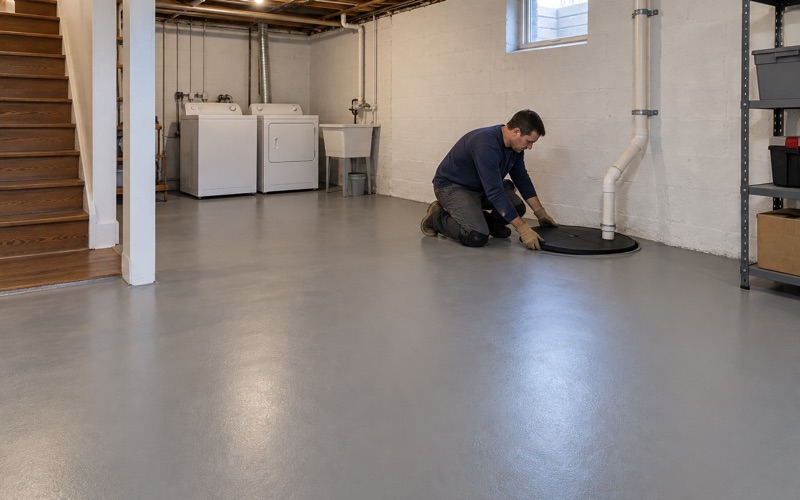
Ground conditions are not uniform across the village. Ridge Road follows the sandy beach line of prehistoric Lake Chicago, while the area is also rich in limestone and neighbors Thornton Quarry. A damp basement floor near the old shoreline and one away from it may have different causes, so we test moisture instead of assuming it.
That testing is written into the scope before the price is final. Depending on the slab, it may be an ASTM D4263 plastic sheet test as a first look, ASTM F1869 calcium chloride vapor emission testing, or ASTM F2170 in-situ relative humidity probes. If the readings call for it, a moisture-mitigation primer goes under the system, and moisture is the first warranty exclusion we explain.
What a Floor Coating Will Not Do
The village names its own flood spots along Ridge Road and Chayes Park Drive, and it lists basement back-ups when sewer lift stations lose power. Those are drainage and power problems the village is working on, not ones a floor finish can solve. A coating is not flood protection, and we never sell it as a way to keep water out of a basement.
Nor is a coating radon reduction. In Illinois that is licensed mitigation work, and if a basement has a water or radon issue, the right trade handles it before we coat anything.
Village Rules Before the Work Starts
Homewood’s building code is Chapter 22 of the Municipal Code, and the village records that its building and zoning codes were updated in 2022-23. We have not confirmed which edition was adopted or whether a slab repair needs a permit, so we ask the Homewood Community Development Department at 2020 Chestnut Road before we book the work. Illinois has no state flooring license, so the village’s own registration, bond and insurance rules are what we check.
On a home job over the state threshold, you get a written contract and the Home Repair: Know Your Consumer Rights pamphlet before any grinding starts. Grinding dust is captured at the machine with a vacuum, never rinsed toward a floor drain or a storm inlet.
- 20+ Years Coating Concrete
- Moisture Tested Before Pricing
- Free Written Estimates