
Oak Lawn Epoxy Flooring installs industrial epoxy flooring in Oak Lawn, IL, serving surrounding cities including Chicago Ridge, Evergreen Park, Worth, Alsip and Bridgeview. After 20+ years of preparing and coating concrete, we build heavy-duty floors for warehouses, light manufacturing, fleet maintenance shops and distribution spaces where the floor has to keep up with forklifts, pallet jacks, chemicals and constant traffic.
An industrial floor is a working surface, not a decoration. A coating that looks fine at handover but wears through in the forklift lanes within months is costing the business money in downtime, dust and repairs. Our job is to choose a system that matches the real loads and exposures on your slab, and to install it in a way that keeps your operation running.
Every industrial proposal names the product system, the number of coats or layers, the finished thickness and the phasing plan. The slab is shot blasted or diamond ground, tested for moisture and repaired before any coating is applied, and the floor can be checked against the specification afterward.
Systems Built for Industrial Loads
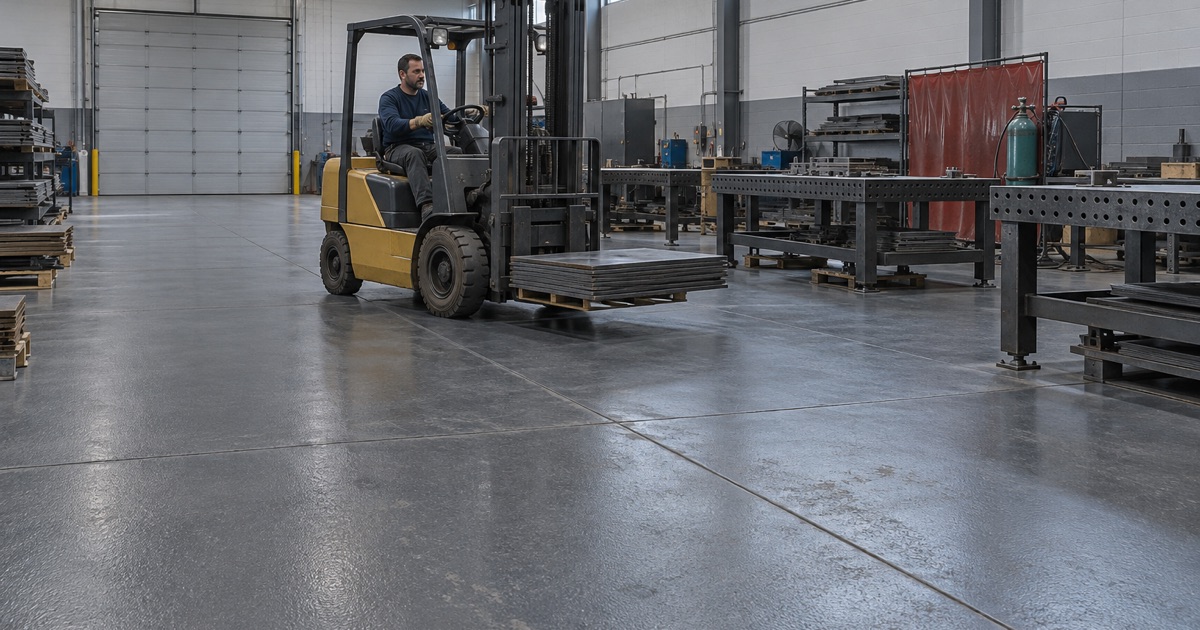
High-Build Epoxy for Forklift and Pallet Jack Traffic
Forklift and pallet jack wheels concentrate heavy loads onto small contact areas, and hard polyurethane wheels grind thin coatings to bare concrete in traffic lanes. High-build 100% solids epoxy systems put far more material between the wheels and the slab.
We size the build to the traffic. Storage areas with occasional pallet jack use need less than main forklift aisles, loading dock approaches and turning zones, where the wear is concentrated.
Troweled Epoxy Mortar and Quartz Systems
Where impact, heavy loads or dragged equipment are routine, troweled epoxy mortar systems provide a thick, dense surface that resists gouging and chipping. Quartz broadcast systems add aggregate for both strength and slip resistance.
These systems are common in fabrication shops, loading areas and maintenance bays. They cost more than thin-film coatings, but they survive conditions that would destroy a thinner floor.
Urethane Cement for Heat, Moisture and Chemicals
Urethane cement combines cement and urethane resin into a tough, heat-tolerant floor. It handles hot water washdowns, steam cleaning, thermal shock and many chemicals better than standard epoxy, and it tolerates more moisture in the slab.
Food processing, dairy, beverage and wet manufacturing areas often need urethane cement. We recommend it where the conditions call for it, rather than putting an epoxy into a space where it is likely to soften or crack.
Preparing an Industrial Slab
Shot Blasting and Grinding
Large, open industrial floors are often prepared with shot blasting, which creates a uniform profile quickly and recovers the shot and dust in one pass. Edges, corners and areas around equipment are diamond ground to match.
Old coatings, curing compounds, oil and contaminants must come off before the new system goes down. Industrial slabs often have years of oil and chemical exposure, and we degrease and test those areas before coating.
Joints, Cracks and Damaged Concrete
Broken joint edges are a major cause of floor damage in warehouses. As wheels drop into a damaged joint, they chip the edges further, and the impact damages both the floor and the equipment.
We rebuild damaged joint edges and fill joints with semi-rigid fillers in traffic areas. Cracks, spalls and impact damage are repaired with industrial repair mortars, and severely damaged areas are cut out and replaced where needed.
Moisture Testing on Older Slabs
Many older industrial slabs were poured without vapor retarders, and moisture coming up through the concrete can cause coatings to blister and delaminate. We test with calcium chloride or in-situ relative humidity methods before pricing.
Where moisture is high, a moisture-mitigation primer is added, or urethane cement may be specified, since it tolerates more moisture. The results and the chosen approach are recorded in the proposal.
Safety, Compliance and Operations
Line Striping and Safety Zones
Forklift lanes, pedestrian walkways, hazard zones, storage areas and loading bays can be marked with lines and colors built into the coating system. Built-in markings last longer than paint applied to a finished floor and do not need repainting every year.
Slip resistance is added with aggregate where floors get wet or oily, balancing grip against ease of cleaning. Lighter floor colors also reflect overhead lighting into aisles and under racking, which helps staff read labels and spot spills or debris before a wheel finds them.
Illinois VOC Rules
The Chicago region is an ozone nonattainment area, and Illinois limits VOC content in industrial maintenance and floor coatings. Those limits apply to the applicator, so we select compliant products for every industrial project.
Compliance also covers the paperwork your facility may need. We provide product data sheets and safety data sheets ahead of the work, confirm the village’s contractor registration and insurance requirements, and supply certificates of insurance to owners, landlords and property managers before the first crew arrives.
Phasing Around Production
Industrial floors are scheduled around shifts, shipping and production. We plan zones with your operations team, move racking and stock in stages and use fast-curing systems where downtime is tight, so the business keeps moving while the floor is replaced.
Dust is captured at the grinder and blaster with industrial vacuums, and slurry and debris are collected rather than washed into floor drains or storm inlets. That keeps the work area clean for staff and avoids clogging the drains your facility depends on.
Planning an Industrial Floor
Cost and Value
Industrial floor pricing depends on floor area, slab condition, joint and crack repair, moisture mitigation, the system thickness and the phasing required. Very large floors usually price lower per square foot than small ones because setup costs are spread over more area.
We list each item separately, so you can compare the system, preparation and thickness across quotes rather than just the bottom line. Before the contract is signed, we explain the warranty and its exclusions, with moisture from below the slab first among them.
- 20+ Years Coating Concrete
- Moisture Tested Before Pricing
- Free Written Estimates