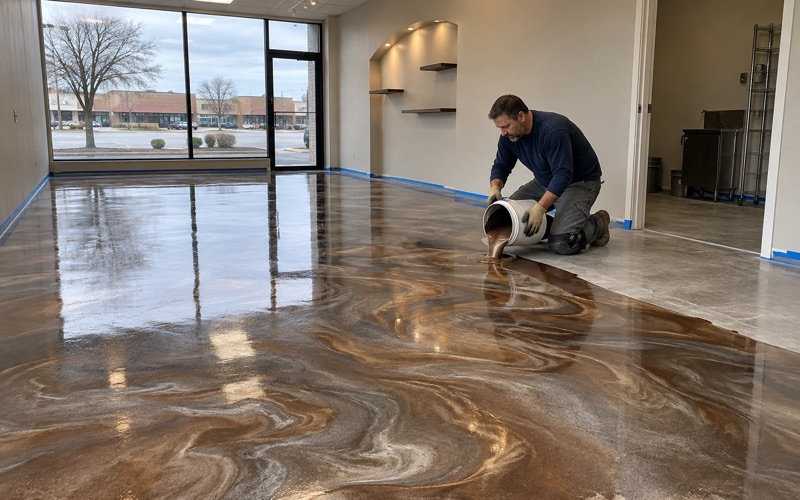
Oak Lawn Epoxy Flooring has handled epoxy flooring in Lyons and across our service area for more than 20 years, and the floors that teach us the most are the ones that change jobs. A slab poured for one use and handed to another carries both histories into the coating. We read that history before we pick a product, because the wrong guess shows up as a failed floor.
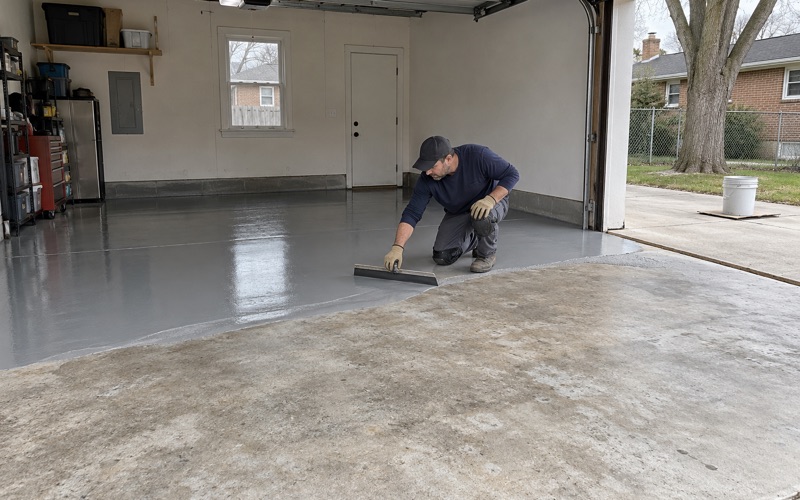
Our scope starts the same way on every slab. We open the surface with a diamond grinder or a shot blaster rather than an acid etch, map cracks, spalls and old coatings, and run a moisture test that goes into the written scope before a price is final. If the slab needs repair or replacement before it should be coated, we say so.
The proposal then names the product line, the coat count and the finished thickness, so you can check the floor against the paper. That matters most on production floors, where the wrong system can fail in weeks rather than years. Hot liquid, harsh cleaners and buried contamination each call for a different answer, and plain epoxy is not always it.
A Brewery in a Former Auto Shop on 47th Street
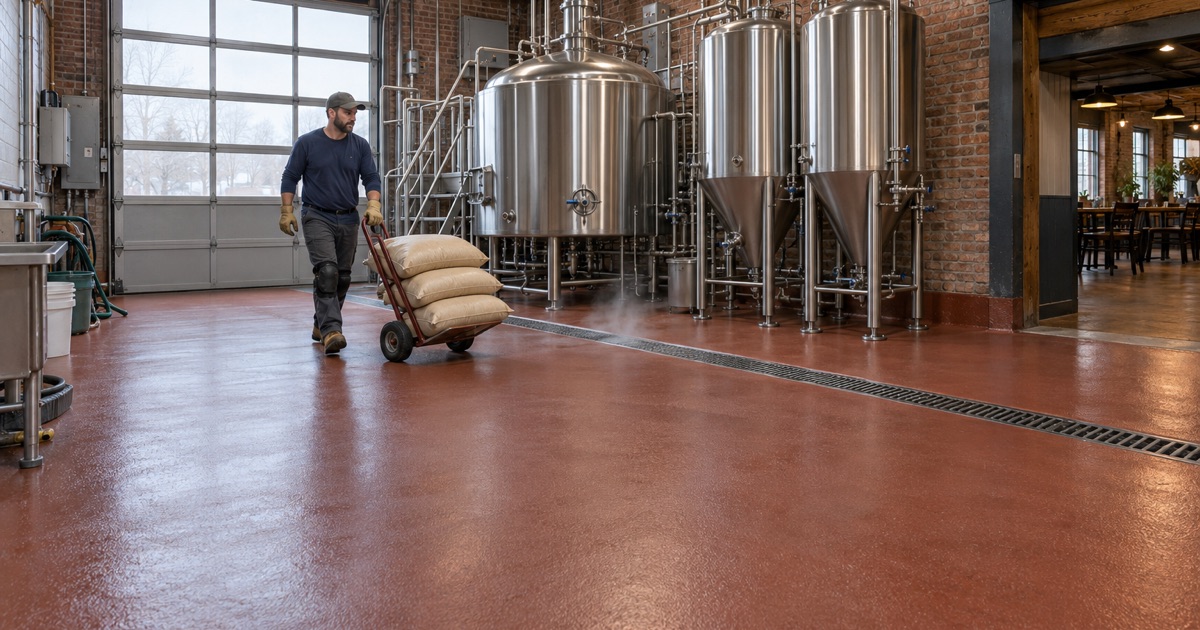
Two histories under one roof
BuckleDown Brewing has brewed at 8700 W. 47th St since its founding in January 2013, when Ike Orcutt and Sean Mahoney found a building in Lyons suitable for production that also allowed for retail. The building is a 1940s structure that was formerly an auto body shop, and the owners built much of the taproom themselves. A 2013 report had the brewery awaiting delivery of a 15-barrel brewhouse.
We have no relationship with BuckleDown and have not seen its floor, so this page is not a description of it. It is a description of the kind of building it occupies. A former auto shop turned brewhouse is one of the hardest conversions a floor coating can face, because the slab arrives with one set of problems and the new use adds another.
What a shop slab may already hold
A typical auto shop slab spends decades under engine oil, transmission fluid, brake fluid and solvent. Concrete is porous, and those fluids can soak below the surface where a quick wash never reaches them. Oil in a slab is a general risk of any former shop, not a finding about a particular building, and the only way to know is to test.
A brewhouse then adds heat, water and chemistry on top of whatever the shop left behind. That combination is why we treat this kind of floor as two jobs in sequence: clean and prove the slab, then choose a system rated for what brewing does to it.
Brewing has deep roots in Lyons
The address sits inside the Village of Lyons, in Lyons Township, Cook County, and the address geocodes inside the village line on the 47th Street side of town. Brewing has a longer history here than one taproom. Hofmann Tower was built in 1908 by brewer George Hofmann Jr. as part of a pleasure park beside a dam, and it was added to the National Register in 1978.
A production floor in this village answers to the Village of Lyons Building Department at 4200 Lawndale Avenue, which handles plan review, inspections, permits and occupancy certificates. Food and drink sanitation in suburban Cook outside Evanston, Oak Park, Skokie and Stickney Township falls to the Cook County Department of Public Health. We name both early so a floor schedule does not collide with an inspection.
Looking for epoxy-flooring closer to Riverdale? See Epoxy-Flooring Services in Riverdale.
Hot Wort, Caustic Cleaning and Thermal Shock
What lands on a brewhouse floor
Brewing puts liquid on the floor at temperatures most coatings never see. Hot wort runs at 180 degrees and up, kettles and lines are rinsed with boiling water, and clean-in-place cycles push hot caustic solutions through the system before they drain across the slab. Each of those can land on concrete that was cold a minute earlier.
Caustic cleaners attack a coating chemically while the heat attacks it physically. Where an acid rinse follows the caustic, the floor sees both ends of the pH range in a single cleaning cycle. A system that tolerates one but not the other will soften, stain or etch along the drain paths first.
We ask a brewer for the actual cleaning chemistry before choosing a product, not a general description of it. The concentration, the temperature it runs at and how long it sits on the floor all change which system holds. That conversation takes a few minutes and saves a floor that would otherwise be chosen on a brochure.
Why rigid epoxy cracks under thermal shock
Thermal shock happens when 180-degree-plus hot wort or boiling water is spilled or hosed onto a cold floor, or during a hot CIP cycle. The concrete surface expands fast while the slab below it stays cool. A rigid epoxy cannot move with the concrete, so it cracks or delaminates, and once a crack opens, hot liquid and cleaner get under the film and finish the job.
That is why plain epoxy is the wrong answer in a brewing room even though it is a sound answer in many garages and warehouses. The failure rarely shows on day one. It shows after a run of brew days, as hairline cracks around the kettle and lifted edges where hot water collects.
Urethane cement as the working answer
Urethane cement is the system the trade promotes for this exposure, rated for continuous cycling from below freezing to over 200 degrees. One coating maker’s president recommends heavy-duty urethane cement in brewing rooms because of the caustic chemicals and the thermal shock together. It goes down far thicker than a thin-film epoxy and bonds into a properly profiled slab.
We specify build for heat exposure rather than for appearance, with heavier sections where hot liquid lands and a textured finish where wet floors need traction. The proposal states the product line, the number of coats and the finished thickness for each zone, so a brewer can hold the installed floor against what was quoted.
Getting Old Shop Oil Out of the Slab First
Testing before the coating is quoted
On a converted auto shop we test before we price the coating. Oil shows up as dark staining, as water that beads instead of soaking in, and as test patches that release instead of bonding. We also run moisture testing, either ASTM F1869 calcium chloride or ASTM F2170 in-situ relative humidity probes, because a wet floor and an oily floor fail a coating for different reasons.
Those results go into the written scope. If the contamination runs deeper than surface prep can reach, we say so and talk through cutting out and patching the worst areas before any coating is priced. Nobody should learn about buried oil from a floor that lifts six months after the brewhouse goes back into service.
Degreasing comes before grinding
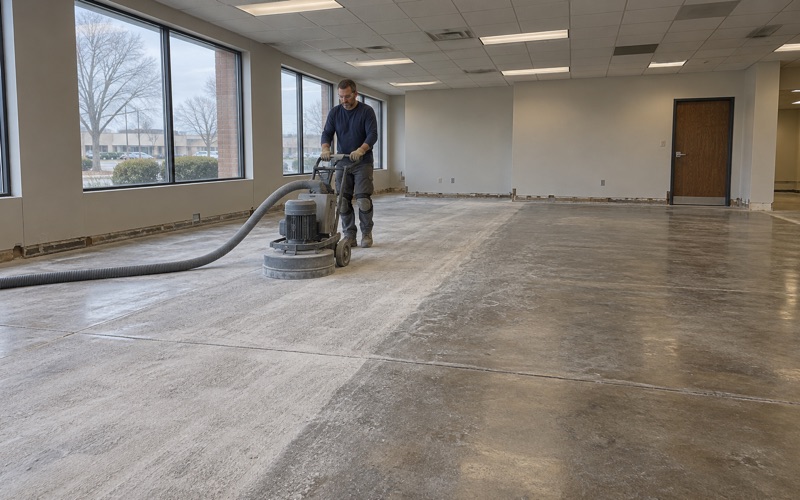
We degrease before we grind, because a grinder run over an oily surface spreads the contamination and loads the diamonds. Once the slab is clean, we open it with a diamond grinder or a shot blaster to the ICRI CSP profile the chosen system calls for. A heavy urethane cement needs a deeper profile than a thin garage coating does.
Grinding dust is captured at the machine by a vacuum. Nothing is rinsed toward a floor drain or a storm inlet, which matters in a building whose drains already carry production water.
When the slab is not worth coating
Some old shop floors carry spalls, settled sections or cracks that keep moving. We map those before the coating discussion goes further, because urethane cement over a failing slab only delays the failure. Where repair or replacement should come first, the proposal says that plainly.
On a production floor that call is about uptime as much as money. A patch that fails under a kettle means another shutdown, and a brewery would rather take one longer outage than two short ones.
The Taproom Floor Beside the Brewhouse
A different floor next door
A building that allows for retail as well as production has two floors with two jobs. The brewhouse floor needs heat and chemical resistance above everything, while the taproom floor sees foot traffic, spilled beer, chair legs and a mop at closing. Putting the brewhouse system everywhere spends money the taproom does not need, and a decorative finish near a kettle invites cracks.
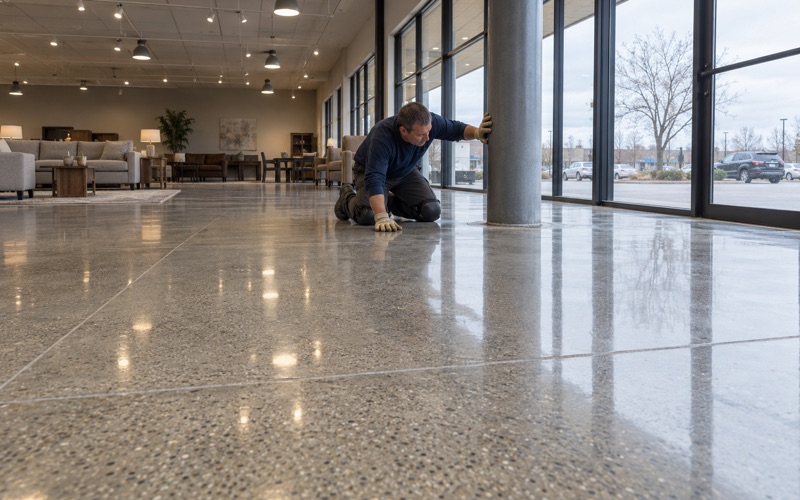
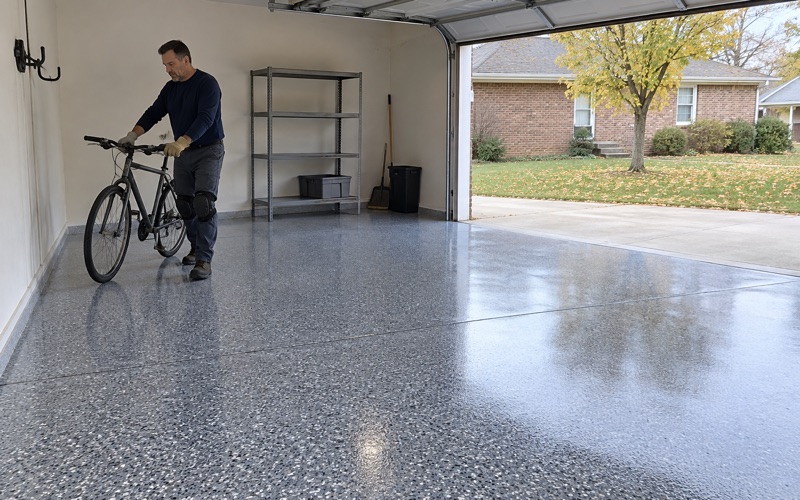
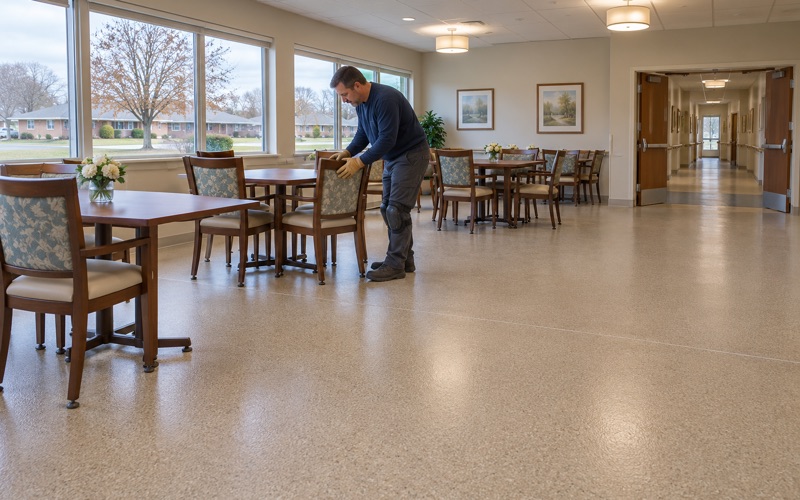
In a taproom we often look at 100% solids epoxy with a quartz aggregate or vinyl flake broadcast, sealed with a polyaspartic topcoat for wear and stain resistance. The broadcast gives traction for wet shoes without the aggressive texture a production floor needs. The color can also suit the room, which counts where guests sit for an evening.
Where the two systems meet
The line between production and taproom is where a mixed floor most often fails. We stop each system at a defined edge, usually a doorway, a joint or a change in use, rather than feathering one into the other. That edge is detailed so hot water from the production side cannot run under the taproom coating.
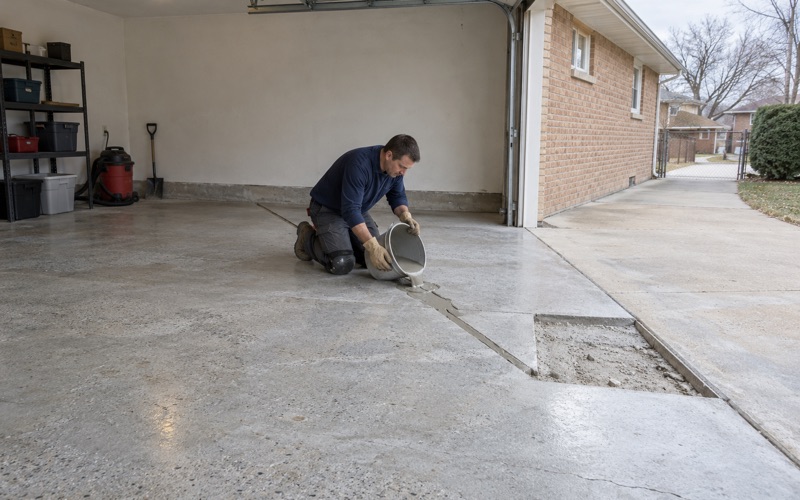
Where the old shop slab has a control joint or a crack that keeps moving, we do not fill it solid with rigid resin and hope. A joint filled solid can crack straight through the new floor, so working joints are usually kept and sealed with a flexible caulk such as polyurea. We show those lines on the floor plan before work starts.
Scheduling around open hours
A taproom earns its money when it is open, so we phase the work around service hours, with overnight and weekend windows where a space cannot close. Cure schedules follow slab temperature and dew point rather than the calendar, and a cold building in deep winter may need heat before any resin goes down.
Before booking, we check the Village of Lyons’ current requirements, since the village issues its own contractor license application and Illinois has no state flooring license. Products are chosen inside the Illinois VOC limits for floor and industrial coatings. What the warranty leaves out, starting with moisture, is explained before the job is sold.
- 20+ Years Coating Concrete
- Moisture Tested Before Pricing
- Free Written Estimates