Oak Lawn Epoxy Flooring installs metallic epoxy floor systems in Oak Lawn, IL, serving surrounding cities including Chicago Ridge, Evergreen Park, Worth, Alsip and Bridgeview. With 20+ years of concrete preparation and coating work behind us, we pour metallic floors for showpiece garages, finished basements, bars, salons and showrooms where the floor is meant to be the first thing people notice.
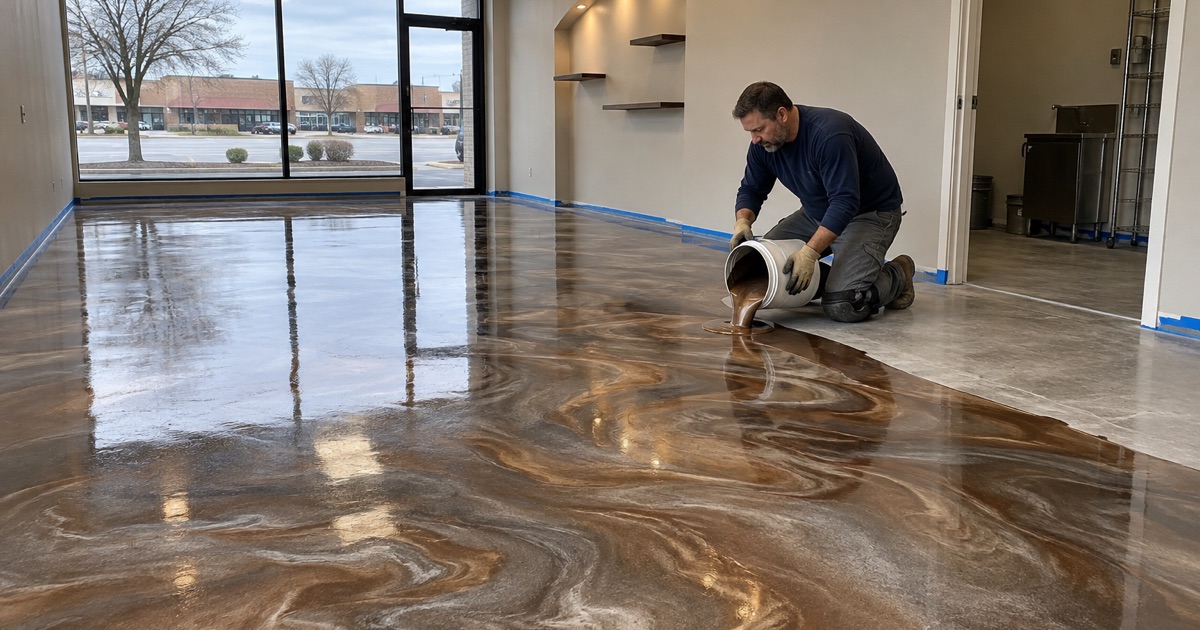
A metallic epoxy floor uses fine metallic and pearlescent pigments suspended in a clear epoxy. While the resin is wet, the pigments move, settle and catch light, leaving a marbled, almost three-dimensional surface that looks like polished stone, flowing water or lava depending on the colors and technique. It is the most dramatic finish we install, and also the least forgiving.
Every flaw in the slab and every mistake in the pour shows through a reflective floor. That is why our method is built around preparation and samples: the slab is diamond ground, repaired and smoothed before any color goes down, and the proposal names the product line, the number of coats and the finished thickness, so the floor can be checked against what was quoted.
How a Metallic Floor Is Built
Grinding and Repair to a Flawless Base
Metallic floors magnify what is underneath them. A crack, a patch line or a low spot that would disappear under a flake broadcast shows clearly through a glossy, flowing finish. We diamond grind the slab to the profile the system needs, then fill cracks, spalls and pits and grind the repairs flush so the surface is as continuous as possible.
Old paint, sealers and adhesives are removed completely, and the slab is vacuumed clean of dust. Any contamination left on the floor can cause fisheyes and craters in the metallic layer, and those defects cannot be sanded out later without disturbing the pattern.
Moisture Testing Under a Showpiece Floor
A metallic floor is a significant investment, and moisture coming up through the slab is the most common reason a coating blisters or lifts. We test before pricing, using a plastic sheet test and, where needed, calcium chloride or in-situ relative humidity testing, and the results go into the written scope.
Where readings are high, a moisture-mitigation primer is added under the base coat. That is especially important in basements, where many older slabs were poured without a vapor barrier and a beautiful floor can be ruined by vapor pressure within months.
Base Coat, Metallic Layer and Topcoat
A tinted base coat goes down first, giving the metallic layer a consistent background color and a sealed surface. The metallic layer is then poured and worked with rollers, brushes, sprayers or trowels, depending on the effect we are creating, while the resin is still fluid.
Once cured, the floor is sealed with a clear topcoat. In garages and sunlit rooms we use a UV-stable polyaspartic or urethane topcoat, because standard epoxy ambers in sunlight and can turn a cool silver or blue floor yellow along a window line.
Designing the Look
Colors, Pigments and Movement
Metallic pigments come in a wide range of colors, from silver, pewter and charcoal to copper, bronze, ocean blues and deep reds. Mixing two or three colors creates depth and movement, and contrasting colors produce a more veined, stone-like look than a single tone.
We make sample boards with your colors and technique before the job, and we look at them under the lights in your space. Pearlescent pigments shift with the viewing angle, so a sample that looks right in daylight may read differently under warm garage lights or basement fixtures.
Marble, Lava, Water and Cloud Effects
Technique matters as much as color. Light, broad roller movements create soft clouds, while tighter work and solvent sprays create veining that resembles marble. Heavier movement produces cell-like lava effects, and directional work can mimic flowing water.
The pattern forms in minutes while the resin is wet, so the installer’s experience shows directly in the finished floor. We plan the layout, the starting points and the crew positions before mixing, so the floor flows continuously rather than showing seams where one batch met another.
Sheen and Texture Choices
Most metallic floors are finished in high gloss to show off depth and reflection. A satin topcoat softens the look and hides scratches better, but it also mutes some of the three-dimensional effect, so the choice comes down to how the room is used.
Where grip matters, we add a fine anti-slip aggregate to the topcoat. It slightly dulls the gloss up close, but from standing height the floor still reads as deep and glossy, and it is much safer when wet.
Where Metallic Epoxy Works Best
Showpiece Garages
Car collectors and hobbyists choose metallic floors to turn a garage into a showroom. The system is built with a thick base and a hard, UV-stable topcoat to handle hot tires and the winter brine that rides in from salted streets around Oak Lawn.
We are honest about the tradeoffs. A glossy metallic garage floor shows tire marks, dust and salt film more than a flake floor, so it suits owners who keep their garage clean and are willing to squeegee and wipe it through the winter.
Finished Basements and Living Spaces
In basements, metallic epoxy creates a modern, seamless floor for family rooms, bars and home theaters. It works well with area rugs and cleans easily, and its sealed surface can be dried quickly if water ever reaches the floor.
Basements need the moisture conversation first, and sometimes a mitigation primer. With that handled, a metallic basement floor is one of the most striking finishes we install, and it brightens rooms with limited natural light by reflecting what light there is.
Bars, Salons, Offices and Showrooms
Commercial spaces use metallic floors to create a signature look for customers. Bars and restaurants, salons, boutiques, offices and showrooms choose it for a seamless, designed surface that is easy to clean.
Commercial installs are scheduled around business hours, with overnight and weekend windows when a space cannot close. We choose products within Illinois VOC limits for floor coatings and plan cure times so the floor is ready when the doors open.
Planning a Metallic Floor
What a Metallic Epoxy Floor Costs
Metallic floors cost more than solid color or flake systems because they use more expensive pigments, need more preparation and depend heavily on installer skill. Installers around the south suburbs advertise metallic floors starting at about $7 per square foot installed, and the actual price moves with slab condition, size, design complexity and topcoat.
Our proposal lists each step, from grinding and repairs to the base coat, metallic layer and topcoat, so you can compare quotes on the same terms. Home jobs above the Illinois Home Repair and Remodeling Act threshold get a written contract and the consumer-rights pamphlet before work begins.
Warranty and Care
We explain what the coating warranty covers and what it leaves out, with moisture first among the exclusions, before you sign. Care is straightforward: dust mop often, clean with a neutral cleaner, use felt pads under furniture and keep grit off the floor with mats at the door.
Avoid harsh acidic or citrus cleaners and soaps that leave a film, since both dull a gloss topcoat over time. When the topcoat eventually shows wear in traffic areas, it can be lightly abraded and recoated, which refreshes the shine without disturbing the metallic layer underneath.
Timing the Install Around the Seasons
Metallic resins need a stable slab temperature during the pour so the pigments move evenly and the coating cures without blush. We check slab temperature and the dew point spread before mixing, and an unheated garage in deep winter is scheduled for warmer weather rather than rushed.
Basements and heated interiors can be poured year-round, as long as the space stays at a steady temperature for the install and the cure. We ask that heat is left on and the room kept closed during that window, which keeps dust and drafts off the wet floor.
- 20+ Years Coating Concrete
- Moisture Tested Before Pricing
- Free Written Estimates