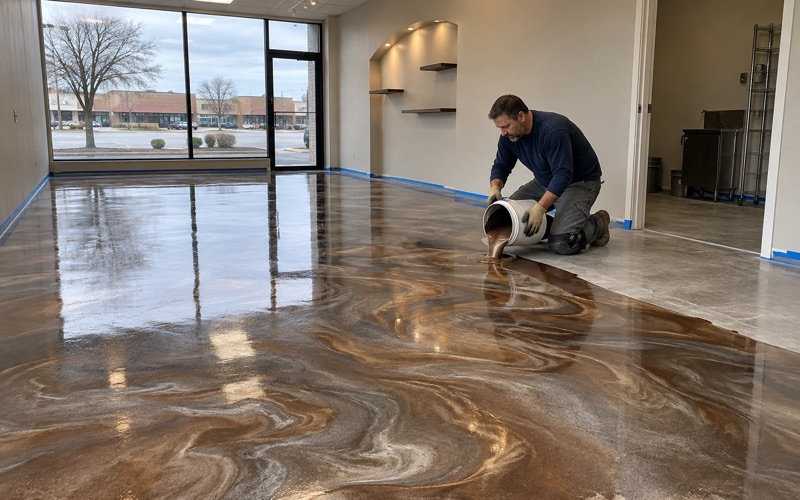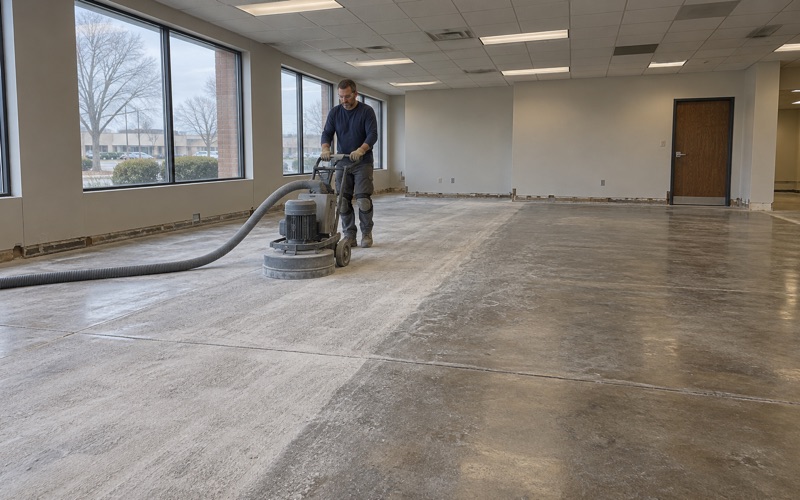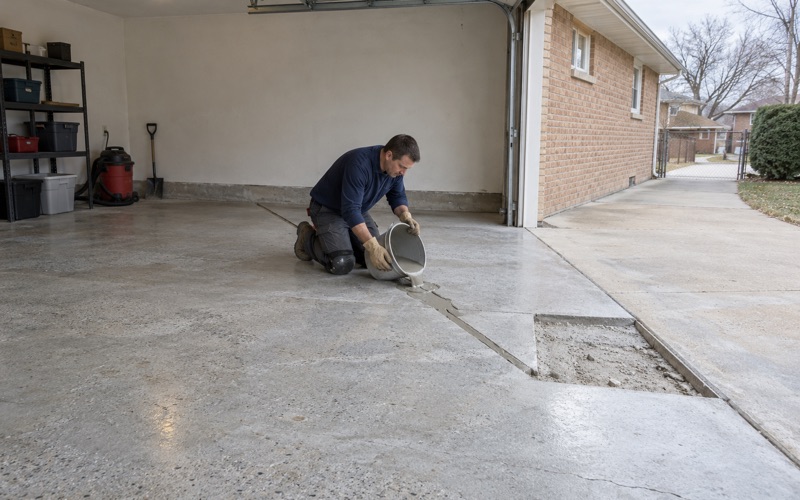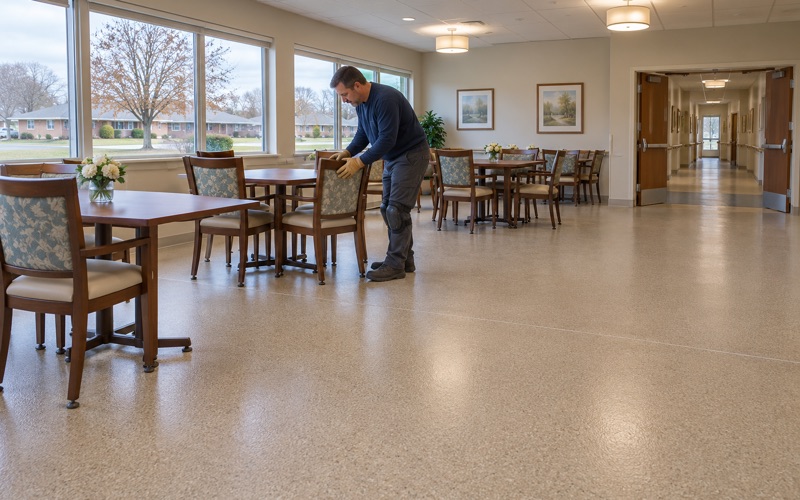
Oak Lawn Epoxy Flooring has spent more than 20 years on epoxy-flooring in Palos Hills and the surrounding southwest suburbs, and the floors that teach us the most are the ones cleaned the hardest. A room mopped every day with an oxidizing disinfectant shows within months whether its coating was chosen for the chemistry or only for the color chart. That is the lens this page uses, from a clinical ward down to a back-door mudroom.
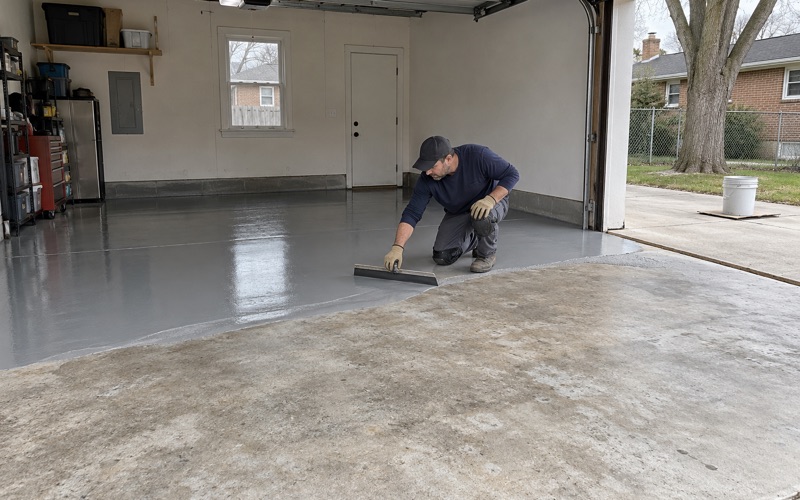
Our method does not shrink with the size of the room. We open the slab mechanically, put a moisture test into the written scope before the price is final, and spell out the product line, the coat count and the finished thickness in the proposal. Cracks, spalls and old coatings are mapped before anything is quoted, so a repair shows up as a line item rather than a surprise.
What follows is about one demanding kind of floor: a surface that has to take repeated bleach or peroxide cleaning and still give contamination nowhere to settle. It covers the coating chemistry, the seams and wall junctions where these floors usually fail, and how the same thinking scales down to a pet-wash corner at home.
An Animal Hospital on 111th Street, Inside Palos Hills
VCA Worth Animal Hospital sits at 7727 W. 111th Street, and despite the name on the sign, that address geocodes inside Palos Hills city, in Palos Township, Cook County. The hospital lists a surgical suite, an in-house laboratory, a pharmacy, digital dental x-rays and an isolation ward, and it is AAHA affiliated. It is open weekdays from 7:00 a.m. to 6:00 p.m. and Saturdays from 8:00 a.m. to 2:00 p.m.
We name it here as a local landmark, not as a customer. We have not seen its floors, its ward layout or the products its staff use, and nothing on this page describes them. What its published room list does is make a useful point concrete: one building can hold several kinds of floor under one roof, and the isolation room asks the most of its coating.
What an isolation ward is for
An isolation ward exists to keep contagious patients apart from everyone else in the building. In veterinary practice the classic example is a dog with parvovirus, a hardy virus that many routine cleaners do not reliably handle. Whatever a given ward holds on a given day, it is designed and cleaned on the assumption that the next patient could be that one.
That assumption shapes the floor more than any other surface in the room. Walls get wiped, but the floor takes the spills, the bedding contact and the most frequent mopping. A floor that softens, stains or opens at a joint under that routine stops being a cleanable surface, and in a ward that is the only job it has.
Three rooms, three different specifications
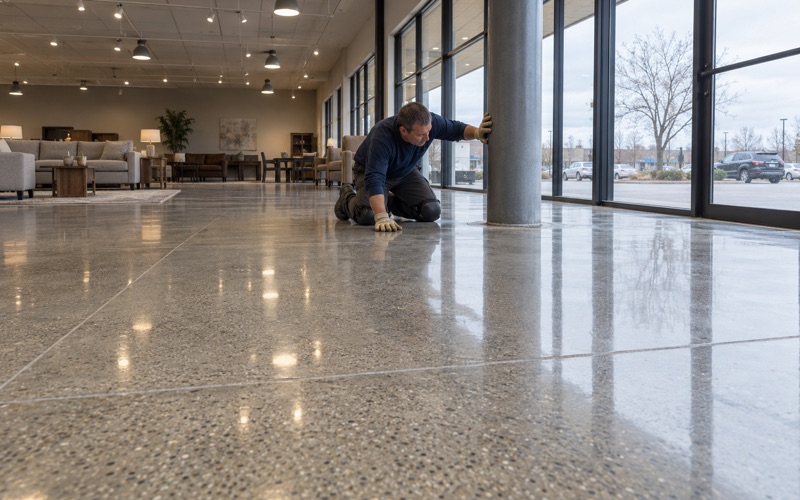
The surgical suite, the laboratory and the isolation ward sit side by side in that published list, but they would not get the same specification from us. A surgical floor is judged on seamlessness and on how cleanly it meets the wall and equipment bases. A laboratory floor sees reagent drips and rolling stools, so stain resistance and wear along chair paths matter most.
Isolation adds the chemistry problem on top of both. The disinfectant is not an occasional spill there; it is the cleaning routine itself, repeated shift after shift. That is why we treat a ward as its own scope line, with its own data sheet review, rather than extending whatever system went down in the corridor.
Looking for epoxy-flooring closer to Hickory Hills? See Epoxy-Flooring in Hickory Hills.
Bleach and Accelerated Hydrogen Peroxide on a Coated Floor
Veterinary infection-control guidance published by dvm360 puts it plainly: for parvovirus, bleaches or accelerated hydrogen peroxides are very important to have in the hospital, and the products should be tested against the virus. Both are oxidizers. A floor in a room cleaned that way is exposed to an oxidizing solution on purpose, day after day, and the coating has to tolerate it without softening.
Where the resistance has to come from
No floor coating kills parvovirus, and none is rated against it. The disinfectant does that work, and the floor’s job is to survive the disinfectant and stay intact. So the question we put to any candidate system is narrow: what does the manufacturer’s own chemical-resistance data say about sodium hypochlorite and hydrogen peroxide, at what concentration and for what contact time?
If a product line cannot answer that from its own published data, it is not the right product line for an isolation room, however well it performs in a garage. We would rather name that gap in the proposal than install a system and learn its limits from a stained, chalky floor a year later.
How the layers divide the work
A typical clinical build starts with 100% solids epoxy as the body coat, because it bonds hard to a properly profiled slab and builds thickness quickly. The topcoat is where cleaning chemicals land first, so its selection carries the most weight in a ward. Polyaspartic and polyurea topcoats each have their own resistance tables, and we read those against the actual products a facility uses.
Urethane cement earns a place in rooms that are mopped heavily and may see hot water. It handles thermal shock and a damp substrate better than most thin films, and it can be troweled up into a cove. Which system fits depends on the room’s temperature, its moisture readings and the cleaning products on the shelf.
Cure time before the first mopping
Chemical resistance is a property of a fully cured film, and a coating mopped with bleach too early can fail where the same coating, given time, would not. We set cure schedules by slab temperature and dew point rather than by the calendar, and we put the return-to-service date for cleaning chemicals in writing. A medical space that cannot close is phased into overnight and weekend windows instead of being rushed.
Seams, Cracks and Cove Gaps: Where a Virus Waits
Chemistry is half of a disinfected floor. The other half is geometry, because any open joint, crack or gap at the wall gives a virus somewhere the mop does not reach. A coating that stands up to bleach perfectly but leaves a hairline seam at the base of the wall has still failed the room.
Mapping and closing cracks first
Before we price a clinical floor, we map every crack, spall, control joint and patch of failed coating on the slab. Moving cracks and static cracks are repaired differently, and a crack that is still moving will telegraph through any film laid over it. When a slab is too far gone to coat reliably, we say so and recommend repair or replacement instead.
Control joints in a seamless room are a decision, not an afterthought. Where a joint can be filled with a rigid, coatable material, the floor reads as one continuous surface. Where movement makes that unwise, the joint is sealed with a compatible flexible material and flagged as a maintenance item for the owner.
Integral cove at the wall
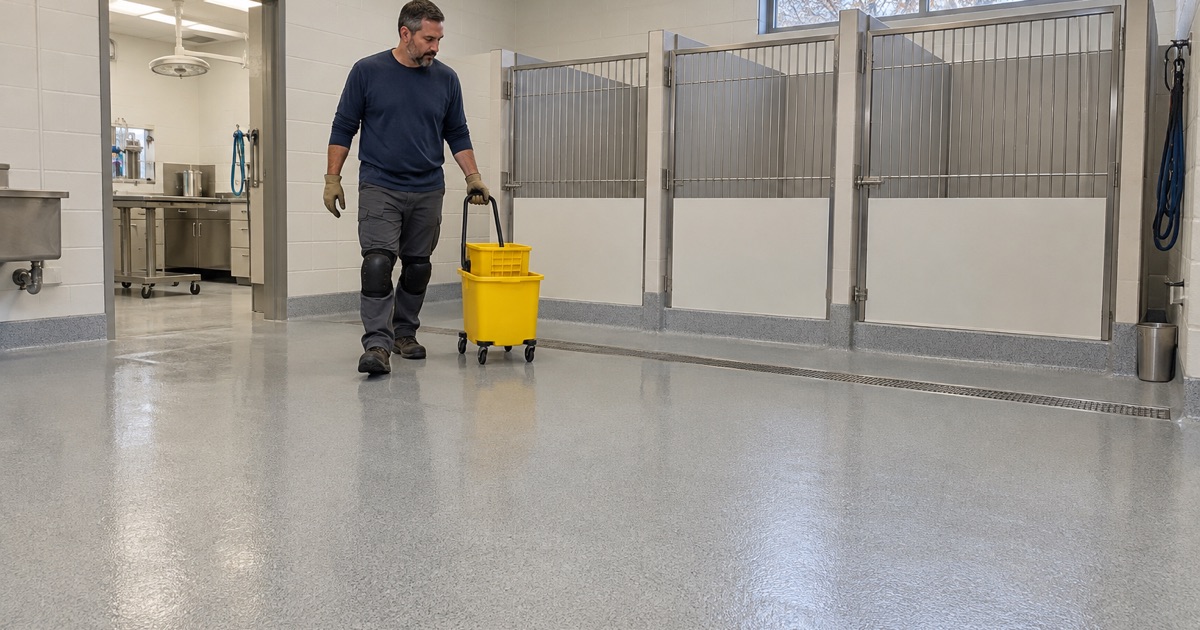
Integral cove carries the floor system up the wall in a continuous curve, so there is no right-angle corner for liquid and debris to collect in. The FDA Food Code calls for coved floor and wall junctures in food establishments for the same cleanability reason, and that logic carries straight into a room mopped with disinfectant. A separate rubber or vinyl base, by contrast, leaves one seam along its top edge and another underneath.
The cove is shaped over a cant strip or troweled from a cove mortar, then coated as part of the same system as the floor. Getting a clean, sealed termination at the top edge is detailed hand work, and it is the line most worth inspecting when the job is handed over.
Prep that gives the coating something to hold
None of this works on a slab that was only acid-etched. We open every floor with a diamond grinder or a shot blaster to a measured ICRI concrete surface profile, and the dust is pulled into a vacuum at the machine rather than rinsed toward a floor drain. Moisture is read with ASTM F2170 in-situ relative humidity probes or ASTM F1869 calcium chloride testing, whichever the slab calls for.
A slab carrying too much moisture can push a coating off from below, and in a room mopped this often, every blister becomes a new place for contamination to sit. Where readings run high, a moisture-mitigation primer goes into the scope. Moisture is also the first exclusion we explain before any warranty is signed.
Mudrooms and Dog-Wash Areas at Home
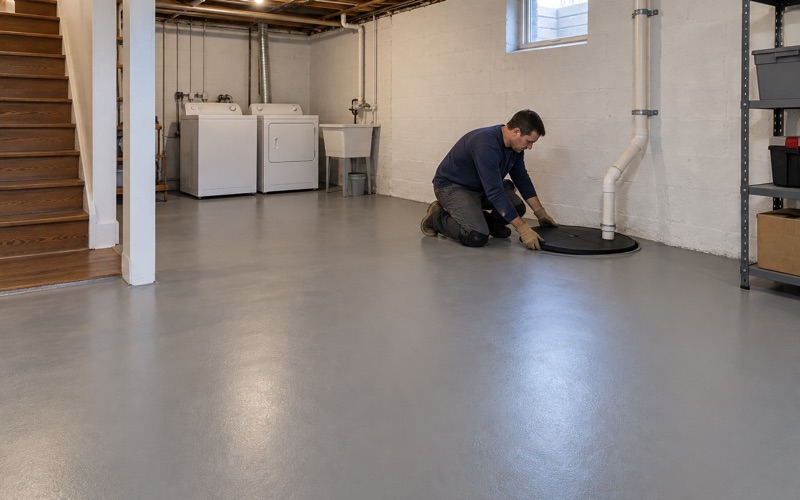
The same two questions apply on a much smaller scale in a Palos Hills house: what will this floor be cleaned with, and where can water and grime hide? A mudroom by the back door or a dog-wash corner in the garage or basement sees muddy paws, shampoo, standing water and often a diluted bleach solution after an accident or a sick pet.
What we would put down
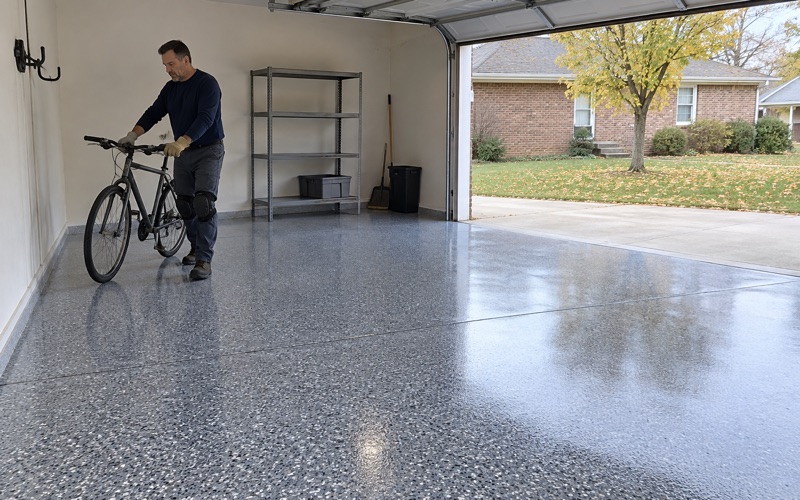
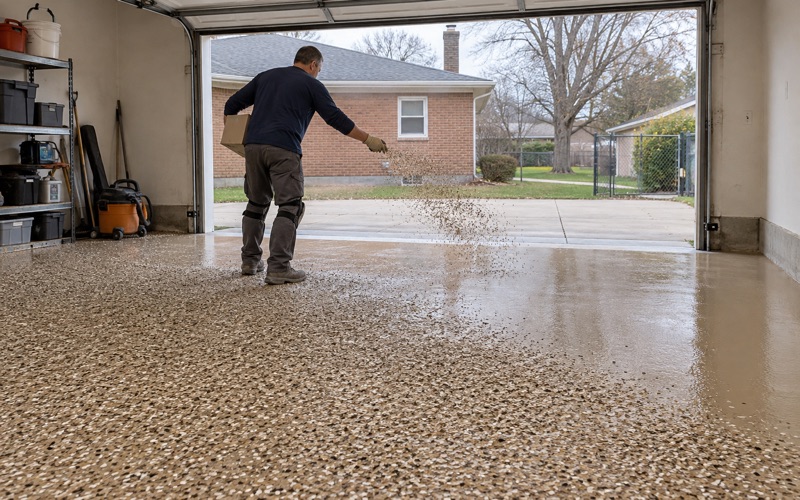
For a home wash area, we usually look at 100% solids epoxy with a vinyl flake or quartz aggregate broadcast and a chemical-resistant topcoat. The broadcast adds texture and hides everyday scuffing, while the topcoat takes the cleaning. A short integral cove around a tub or wash station keeps water from working into the drywall line.
If that area sits in an unheated garage, timing matters as much as product. We tell owners to wait out deep winter rather than coat a cold slab, and garage systems are chosen to hold up against the brine and rock salt that ride in on tires once the season turns.
Registration and the paperwork before work starts
Illinois licenses no flooring or coatings contractor, so the binding rules here are the city’s. The City of Palos Hills Building Department registers general contractors for $50 with a $25,000 surety bond and a certificate of liability insurance, good for two years, and its permit page requires registered contractors on commercial property. We confirm that registration before a job is booked.
Home jobs above the state threshold get a written contract and the Home Repair: Know Your Consumer Rights pamphlet before any grinding starts. Products are selected inside the Illinois VOC limits for floor coatings, which bind whoever applies them. And we never sell a floor coating as radon reduction, because in Illinois that is licensed mitigation work.
- 20+ Years Coating Concrete
- Moisture Tested Before Pricing
- Free Written Estimates