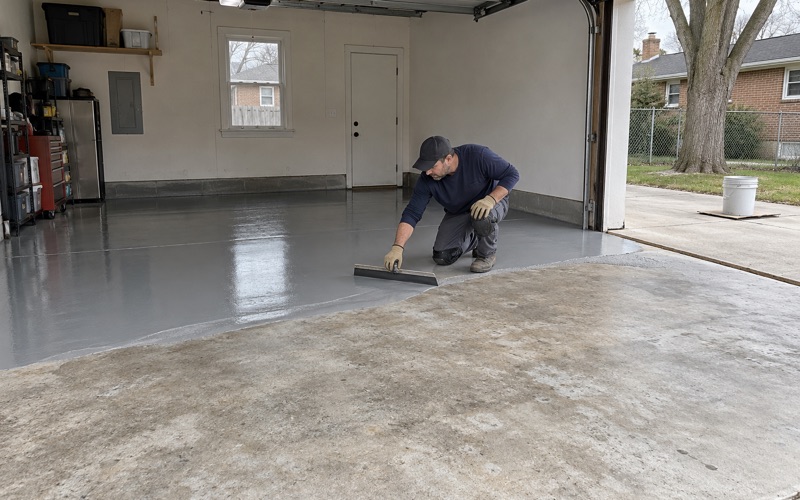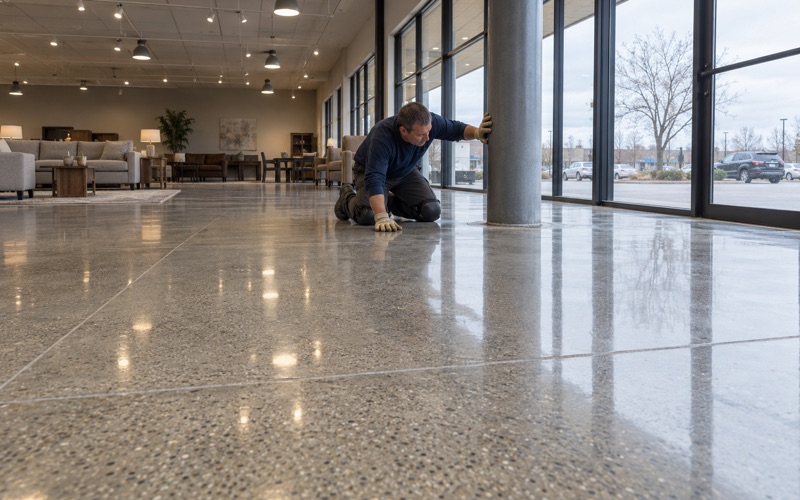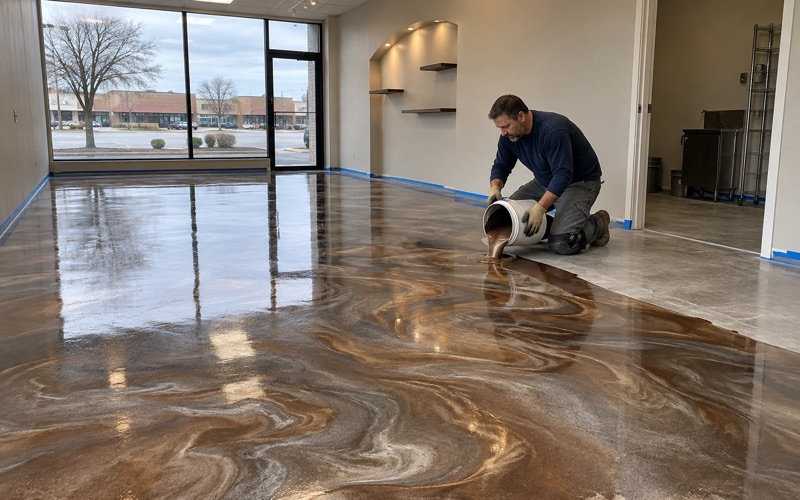
Oak Lawn Epoxy Flooring has spent more than 20 years on epoxy flooring in Worth and across our corner of Cook County, and the jobs that ask the most of a coating are rarely the biggest ones. A small medical suite with a draw chair, a centrifuge and a sharps container can be harder on a floor than a warehouse, because every spill on it has to be handled as a possible exposure.
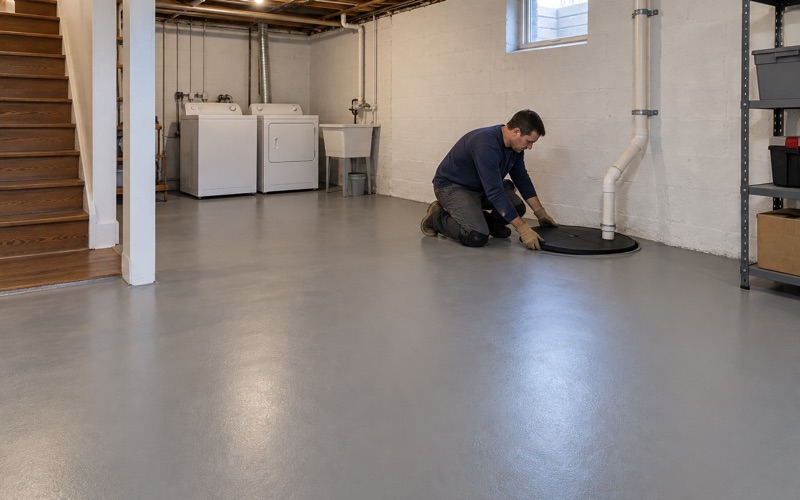
That is the floor this page is about: clinical and lab rooms where blood is drawn and handled, and where cleanup is set by federal workplace rules rather than by taste. We coat garages, basements and shops here too, and the same preparation applies to all of them. The difference in a clinical room is that the surface has to sweep clean, take a disinfectant without dulling, and leave nowhere for contamination to settle.
Our approach starts with the slab, not the color chart. Every floor is opened mechanically, tested for moisture and quoted with the product line, the coat count and the finished thickness written down, so the owner can hold the result against the paperwork.
A Walk-In Blood-Draw Lab on Harlem Avenue
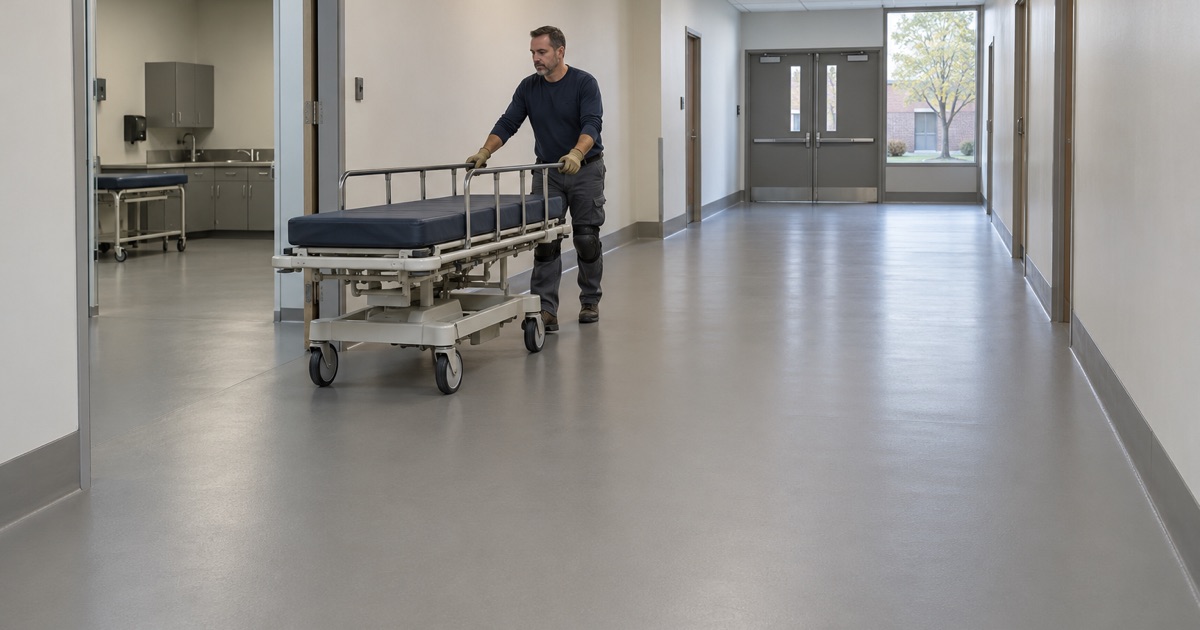
Sinai Laboratory Corp operates at 11111 S. Harlem Avenue, in a Suite A storefront that geocodes inside the village on the Worth Township side of Harlem. The federal NPI registry lists it as a Clinical Medical Laboratory, enumerated in January 2022, and its listings say walk-ins are welcome alongside appointments. It is a useful local example of a kind of space that rarely gets discussed in flooring terms.
We have not been inside it and are not describing its floor. What matters is what a lab like that does on an ordinary weekday: patients arrive off the street without notice, specimens are drawn into tubes, labeled, spun and packed, and the room has to be ready for the next person within minutes. The floor takes foot traffic, rolling chairs, carts and the occasional dropped tube.
Storefront suites, not purpose-built clinics
Most medical and lab tenants along Harlem Avenue occupy retail storefronts that were finished for some other use. Under the existing finish there is usually a commercial slab carrying vinyl composition tile, sheet goods or ceramic tile, each chosen for a shop rather than a clinical room. Converting the suite means deciding whether that finish can be cleaned the way the new use demands, or whether it comes up.
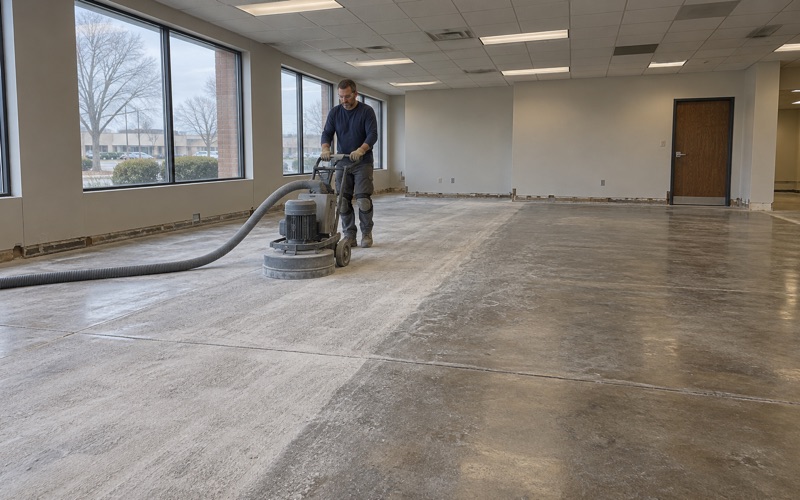
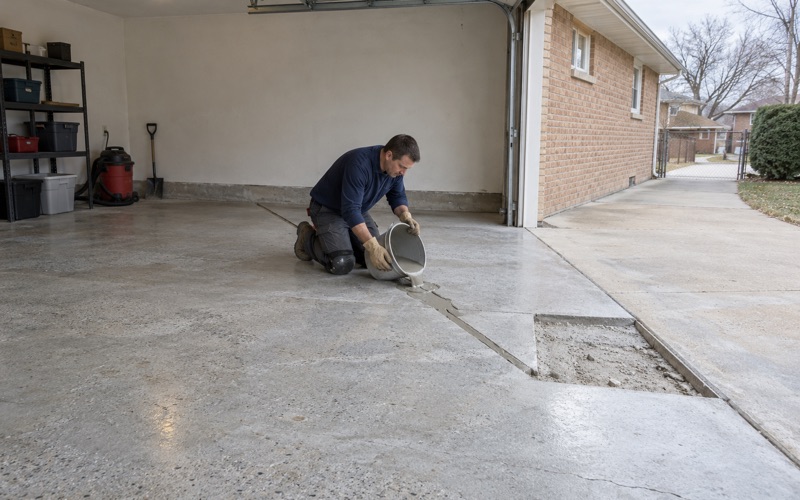
When it comes up, the slab underneath is what we coat. We grind or shot blast off the adhesive residue, map the cracks, spalls and old patches, and tell the tenant or landlord plainly if a section needs repair before any coating should go over it. A seamless floor only stays seamless if the concrete under it is sound.
Who signs off in Worth
The Village of Worth requires contractors working in town to register: a $110 annual fee, a certificate of insurance naming the village and a $10,000 surety bond. Illinois itself has no flooring license, so that registration is the local requirement we confirm before booking. The building department’s permit list names remodeling projects but does not mention flooring either way, so we ask before starting rather than assume.
Looking for epoxy-flooring closer to Alsip? See Epoxy-Flooring in Alsip.
What the Bloodborne Pathogens Rule Asks of a Floor
OSHA’s bloodborne pathogens standard, 29 CFR 1910.1030, governs workplaces where employees can reasonably expect contact with blood. Its housekeeping section is short and direct: all equipment and environmental and working surfaces are to be cleaned and decontaminated after contact with blood or other potentially infectious materials. A floor in a draw room is an environmental surface under that sentence.
The rule is specific about timing as well. Contaminated work surfaces are decontaminated with an appropriate disinfectant after procedures, immediately when overtly contaminated or after any spill, and at the end of the shift if contaminated since the last cleaning. In a walk-in lab, that can mean the same few square feet get wiped and disinfected several times in one day.
What OSHA does not say
The standard names no floor material and approves no coating. No epoxy, urethane or polyaspartic system makes a lab meet the rule on its own, and none of them kills anything. What a coating can do is make the required cleaning practical: a closed, nonporous surface that a disinfectant can wet completely and that dries without residue trapped in its texture.
That is the honest way to frame the decision. The lab’s exposure control plan, its chosen disinfectant and its staff training do the work the standard requires. The floor either supports that routine or fights it, and a worn tile floor with open joints and pitted grout fights it every shift.
Disinfectant every time
Repeated disinfection is chemically harder on a floor than an occasional mop. Bleach solutions, quaternary ammonium products, hydrogen peroxide blends and alcohol-based cleaners each attack some finishes, dulling a topcoat, softening a wax layer or lifting a sealer. Before we specify a system, we ask which product the lab actually uses and check the topcoat manufacturer’s chemical resistance data against it.
For a clinical room we generally build on a 100% solids epoxy body coat and finish with a polyaspartic or urethane topcoat chosen for that chemical exposure. The proposal names the product line, the number of coats and the finished thickness, so whoever manages the suite can check the installed floor against what was quoted.
A Dropped Tube: Broken Glass and a Brush and Dust Pan
The most routine incident on a draw-room floor is a dropped specimen tube. OSHA’s rule is specific about what happens next: broken glassware that may be contaminated shall not be picked up directly with the hands. It is cleaned up by mechanical means, such as a brush and dust pan, tongs or forceps, and the surface is then decontaminated.
That sentence turns into a floor requirement. Broken glass has to sweep cleanly into a dust pan in a few passes, with no fragments lodging in heavy texture, chipped tile edges or a gap at the base of a wall. Anything the brush leaves behind is a sharp fragment that someone may later find with a knee or a glove.
Texture versus a clean sweep
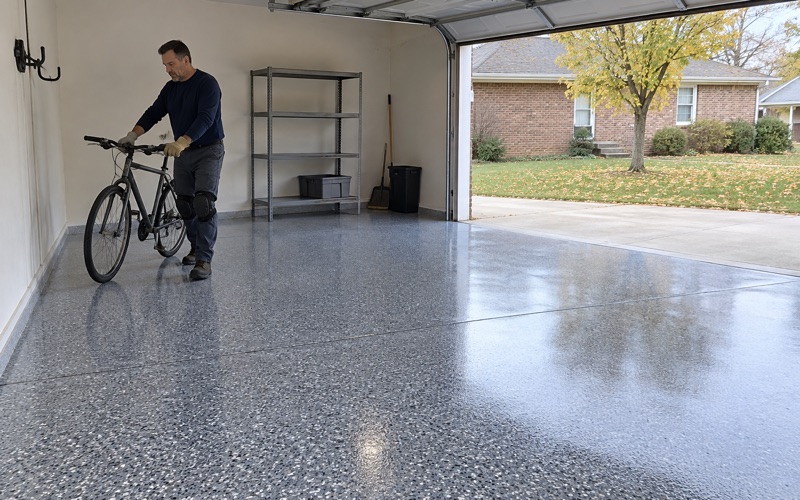
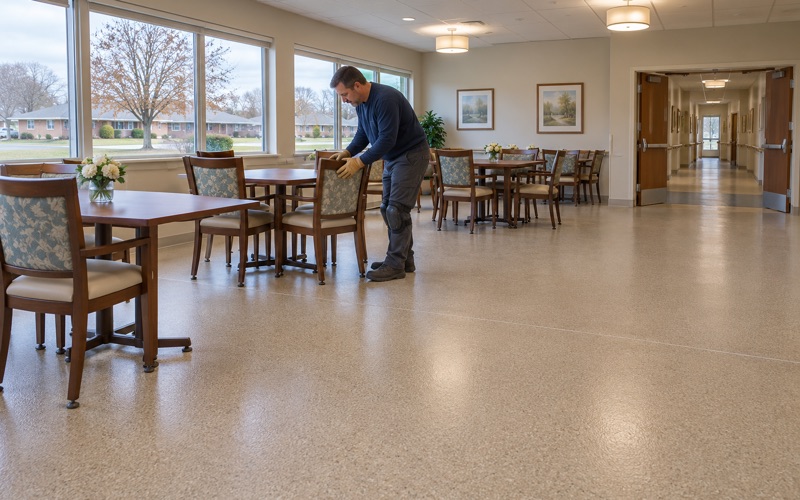
Slip resistance and sweepability pull in different directions. A heavy quartz aggregate broadcast gives excellent grip but leaves a sandpaper surface that holds small slivers of glass. A full vinyl flake broadcast looks good, but an undersealed flake floor has raised edges a brush can catch on. For a draw room we lean toward a fine, fully encapsulated texture in the topcoat, enough for footing and smooth enough to sweep.
We talk through that tradeoff with the owner rather than picking a default. A processing area with frequent wet cleaning near a sink may want slightly more texture, while the space around the draw chair can stay smoother. Either way, any broadcast is locked under enough topcoat that the surface reads as one closed film.
Color and visibility
A floor that hides dirt also hides a fragment of clear glass or a small spot of blood. Mid-tone solid colors or a light flake blend make spills and shards easier to spot on a quick visual check after a sweep. We show samples under the suite’s own lighting before the color is final, because a showroom panel reads differently under storefront fixtures.
No Grout Lines, No Open Seams
Most storefront suites we see in Worth were finished with vinyl composition tile or ceramic tile, and both share one weakness in a clinical room. VCT is a field of twelve-inch squares with a seam every foot, and those seams open as the adhesive ages and the floor is wet-cleaned. Ceramic tile is hard and cleanable on its face, but its grout joints are porous and sit below the tile surface.
Fluid that reaches a seam or a grout line does not get the same contact with disinfectant as the open face of the floor. It sits in the joint, wicks under the tile edge or dries into the grout. A seamless resin floor removes those joints altogether, so the surface the staff disinfects is the whole surface.
Where walls meet the floor
The wall junction is the other place seams hide. A rubber cove base glued to drywall leaves a gap at the toe that collects debris and sweeps poorly. Where a client wants it, we run the coating up the wall as an integral cove over a formed radius, so the floor and base become one continuous surface with no gap for a brush to miss.
Doorways, drains and transitions to carpet in a waiting area get the same attention. Each edge is terminated in a cut keyway or a metal strip so the coating has a defined end, rather than being feathered out where it will chip and leave a lip that catches glass and holds fluid.
Preparation the seamless claim depends on
None of that works on a weak bond. Every slab is opened with a diamond grinder or a shot blaster to a measured ICRI concrete surface profile, never acid etched, and the grinding dust is captured at the machine by a vacuum rather than washed toward a drain. Old tile adhesive comes off completely, because a coating laid over residue fails at the residue.
Moisture testing is part of the written scope before the price is final. We use ASTM F2170 in-situ relative humidity probes or ASTM F1869 calcium chloride testing, and if the readings call for it, a moisture-mitigation primer goes into the proposal. Moisture is also the first exclusion we name when we explain what a coating warranty does and does not cover.
Working around a walk-in schedule
A lab that takes walk-in patients cannot simply close for a week. We phase medical and retail floors around business hours, using overnight and weekend windows and fast-cure polyaspartic topcoats where the schedule is tight. Cure times follow slab temperature and the dew point spread at the surface rather than a calendar promise, so the room reopens when the coating is ready.
Products are picked within the Illinois VOC limits for floor and industrial coatings, which bind the person applying them, and that matters in a storefront whose neighbors stay open next door. If you run a draw station, a clinic or another storefront in Worth where the floor has to be cleaned like this, we will walk the space, test the slab and put the scope in writing.
- 20+ Years Coating Concrete
- Moisture Tested Before Pricing
- Free Written Estimates